A Scoundrel's Dream: Crafting Star Wars Outlaws as a Love Letter to the Galaxy
Star Wars Outlaws, the first open-world adventure by Ubisoft and Massive, delivers an immersive galaxy-spanning experience for lifelong fans.
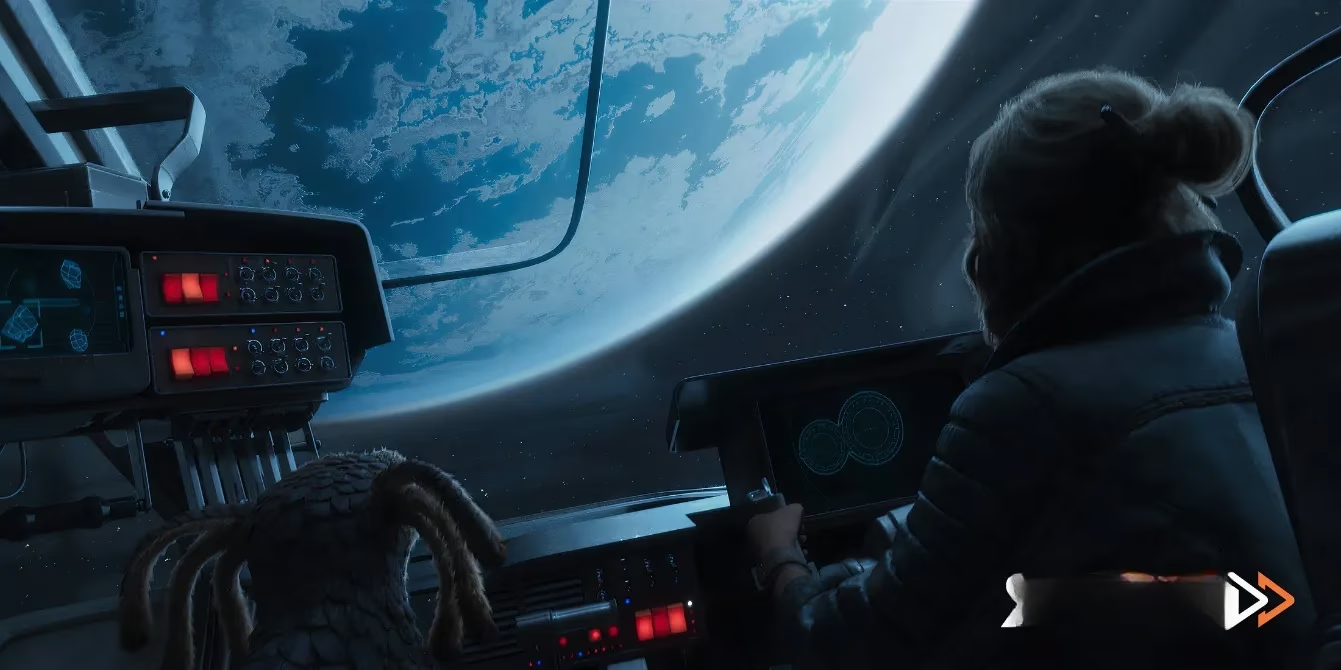
The hum of hyperdrive is a lullaby I've known since childhood. As I look out from the cockpit of the Trailblazer, the swirling nebulas and distant stars aren't just pixels on a screen; they are the realization of a lifelong dream. To step into the boots of Kay Vess, to navigate the grimy underworld between the shadows of the Empire and the Rebellion, is to answer a call I've felt since I first watched a starship streak across a desert sky. What is it about this galaxy, so far away, that feels so intimately like home? The team at Massive and Ubisoft asked themselves this very question every single day, pouring a lifetime of fandom into creating Star Wars Outlaws, the first open-world adventure in this beloved universe.
A Foundation Forged in Nostalgia
When we began, the question wasn't just "how do we make a Star Wars game?" It was deeper, more personal: What did Star Wars mean to us? The answers were a symphony of shared memories. For Creative Director Julian Gerighty, it was the wild imagination sparked by the original trilogy. For Narrative Director Navid Khavari, it was an obsession born from nearly melting a VCR with repeated viewings of The Empire Strikes Back. That film, a recurring touchstone for the entire team, wasn't just a favorite; it was the gold standard—a perfect blend of high stakes, character growth, and iconic, meaningful action. Art and World Director Benedikt Podlesnigg marveled at its industrial design, from the lumbering AT-ATs on Hoth to the ethereal gas-mining city of Bespin. "It added a floating city in the clouds," he recalled, "something visually striking but also so different from all we had seen before." This wasn't mere research; it was returning to the source of the magic that first captured our hearts. Can you build a new story without understanding the soul of the old ones?
Iconic Inspirations and Beloved Misfits
Our love for this galaxy extends far beyond the films. It's in the hours spent piloting an X-Wing on a clunky 386, the frantic races across Episode I courses, and the complex storylines of comics like Doctor Aphra. This rich tapestry informed everything. But inspiration also came from unexpected places. When asked about favorite characters, a surprising consensus emerged around a certain blue Elephont from Jabba's palace. 😄 "Max Rebo is my favorite character," Gerighty said with a laugh, "I mean he can play keyboards with his feet!" This affection for the galaxy's quirky denizens speaks volumes. It’s not just about the heroes and villains; it's about the entire, lived-in ecosystem. Of course, the iconic figures left their mark too. Associate Art Director Marthe Jonkers pointed to Darth Vader's tragic depth and Princess Leia's unshakable courage as foundational. Khavari's journey mirrored many of our own: childhood awe for Luke Skywalker, teenage aspiration to be as cool as Han Solo, and adult empathy for the complicated choices of Lando Calrissian. These characters aren't just templates; they are proof that this universe holds stories for every phase of life.
Building a Galaxy, One Biome at a Time
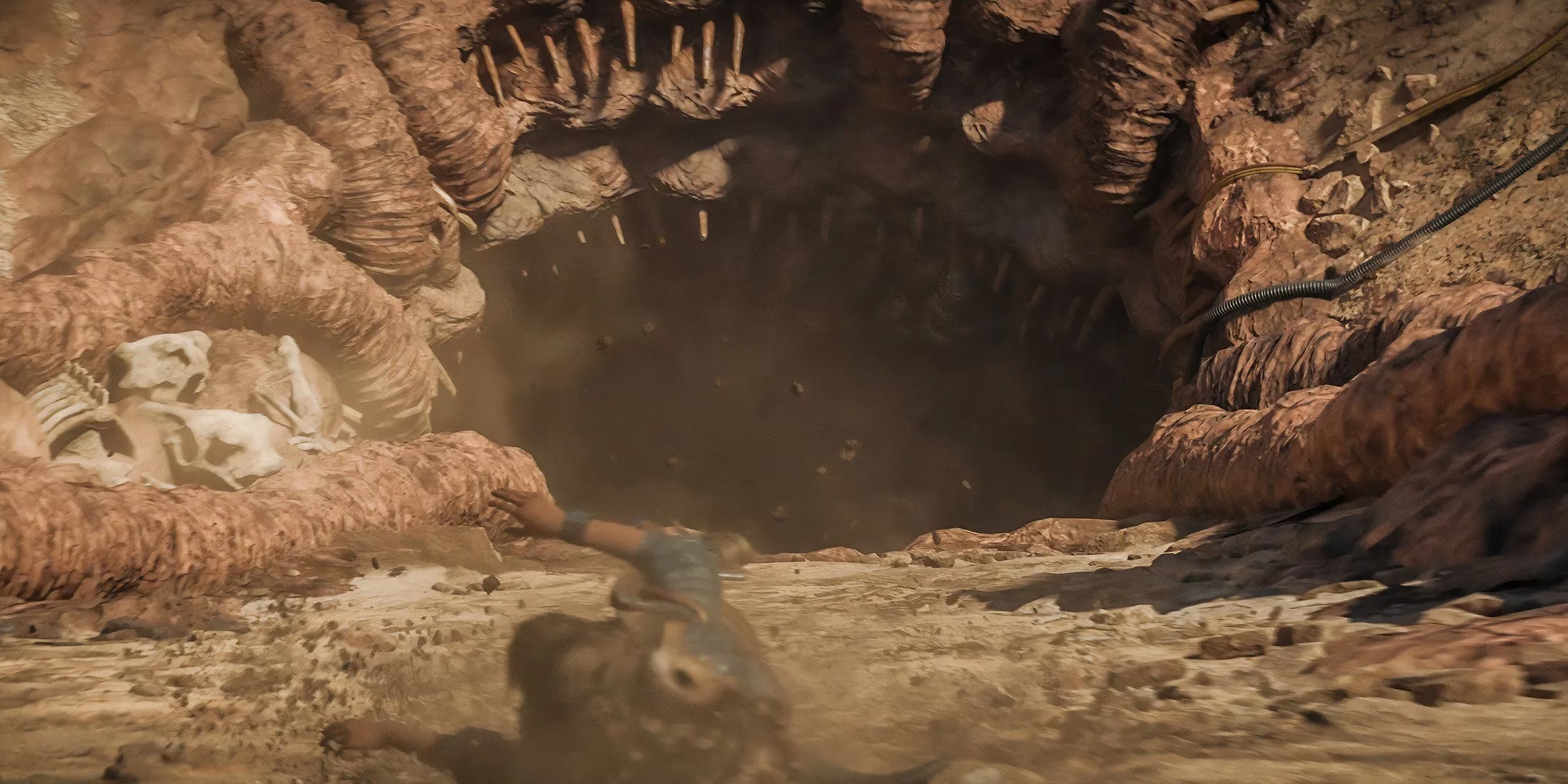
Creating an open world for Star Wars presented a unique, thrilling challenge. The goal was never to make "just another open-world game." The mandate was to deliver a true galaxy-spanning adventure. Podlesnigg emphasized the sheer variety required: "Every location has a completely different biome with its own weather, time of day cycles, architecture, characters, etc." This complexity was our guiding star. We wanted players to feel the gritty sand of Tatooine, the humid air of Akiva's jungles, and the chilling void of an asteroid field—all within a cohesive journey. The process was deeply collaborative with our partners at Lucasfilm Games. They didn't just give notes; they were co-creators, suggesting the ideal time period (between The Empire Strikes Back and Return of the Jedi) and ensuring every new creature, ship, or moon felt authentically Star Wars. Gerighty described the revelation: "You really think you know Star Wars until you start working on it and then you realize how much attention to detail they really put into every shot, every location."
The Heart of the Scoundrel: Kay Vess and Nix
At the center of this vast galaxy is a story of two outsiders: Kay Vess and her loyal companion, Nix. This is a heist story, a scoundrel's tale, but what does that mean in 2026? We looked to icons like Han and Lando, but Kay is her own person. She grew up in the Worker's District of Canto Bight, watching the rich get richer while she had nothing. Her drive is simple, powerful, and deeply relatable: to carve out a life where she and Nix answer to no one. When posed the classic scoundrel's dilemma—would she shoot first?—Khavari's answer was immediate and fierce: "Kay would shoot first. Period. Forget protecting herself, is she gonna let someone hurt Nix? No way." This bond is the emotional core of the game. It's a story of found family and survival in a galaxy where the epic war between Rebellion and Empire is merely a backdrop. Isn't that the ultimate fantasy? To write your own story in the margins of a galactic legend?
A Ship with a Soul: Designing the Trailblazer
A scoundrel is nothing without her ship. The Trailblazer is more than transportation; it's Kay's home, her sanctuary, and her key to freedom. Designing it with Lucasfilm was a lesson in Star Wars philosophy. Gerighty noted that starships here are iconic because of their striking silhouettes. For the Trailblazer, we drew inspiration from the tactile, analog feel of the original trilogy era. We looked at toys from the 70s and 80s, the robust shells of turtles, and the armored plating of trucks. The result is a vessel that looks like it has a history—a journey of its own before Kay "permanently borrows" it. It feels rugged, lived-in, and ready for anything, a perfect reflection of its pilot.
The DNA of an Adventure
While our roots are firmly in Star Wars soil, we looked beyond for lessons in immersion and player agency. Gerighty cited Ghost of Tsushima as a key reference, a game that masterfully wraps its player in a cohesive fantasy from start to finish. That focus on a seamless, evocative experience was crucial. But the true DNA of Outlaws comes from a desire players have voiced for years: the freedom to explore this galaxy at their own pace, to meet syndicate bosses, bargain with bounty hunters, and simply live in the underworld. As Khavari put it, "Players, myself included, have been asking for that kind of immersion for years."
A Dream Released into the Stars
As the release date drew near, the feeling was electric. This wasn't just another project launch. For so many of us, it was a childhood dream crystallizing into reality. The collaboration, the painstaking detail, the love for a blue elephant musician—all of it has been channeled into creating a new corner of the galaxy for fans to explore. We've built a world where you can truly lose yourself, a love letter written not just by developers, but by lifelong fans. The galaxy is vast, but now, it feels a little more like home. The question is no longer if we can travel there, but where will you go first?
| Key Inspiration | Manifestation in Outlaws |
|---|---|
| The Original Trilogy (70s/80s Era) | Authentic aesthetic, ship design, and narrative tone. Everything feels tactile and grounded. |
| The Underworld & Scoundrels | Focus on syndicates, heists, and characters operating outside the main Rebel/Empire conflict. |
| Iconic Character Relationships | The core bond between Kay and Nix, a story of survival and found family. |
| Open-World Immersion | A galaxy built with diverse, hand-crafted biomes to encourage exploration at your own pace. |
| Player Fantasy | The dream of being a scoundrel, making your own rules, and writing your own story in the Star Wars universe. |