Between a Queen and Crimson Dawn: Kay's Impossible Choice on Kijimi
Star Wars Outlaws' 'The Hive' forces a pivotal choice: side with Queen Ashiga for reputation boost or her daughter Krisk to align with Crimson Dawn.
The walls of the Ashiga hive hummed with ancient energy, a low thrum that felt like the heartbeat of a creature too large to see. Kay Vess stood at its core, a lone spark in a cavern of ice and incense, her fingers tight around the Origin Strand. It was a relic the Ashiga clan would kill for—literally. Two women wanted it, and both believed they alone could shape the future of their people. Kay, a scrapper turned reluctant player in the galactic underworld, was a thread pulled taut between two opposing gravitational fields, each promising to fling her starship into an entirely different orbit. This was the moment in Star Wars Outlaws where the game stopped dictating the rhythm and let the player feel the weight of the conductor’s baton.
In the mission called “The Hive,” Kay was offered a choice that many guides reduce to a simple reputation reward comparison. But to see it as a transaction is to miss the frost settling over the scene. Back Queen Ashiga, the matriarch who has kept the clan breathing amid the toxic winds of Imperial pressure, or hand the strand to her daughter Krisk, a fierce contender backed by Crimson Dawn and its enigmatic leader, Qi'ra. The screen held two faces, and each promise glowed like a different kind of flame—one a steady hearth-fire, the other a seductive blaze.
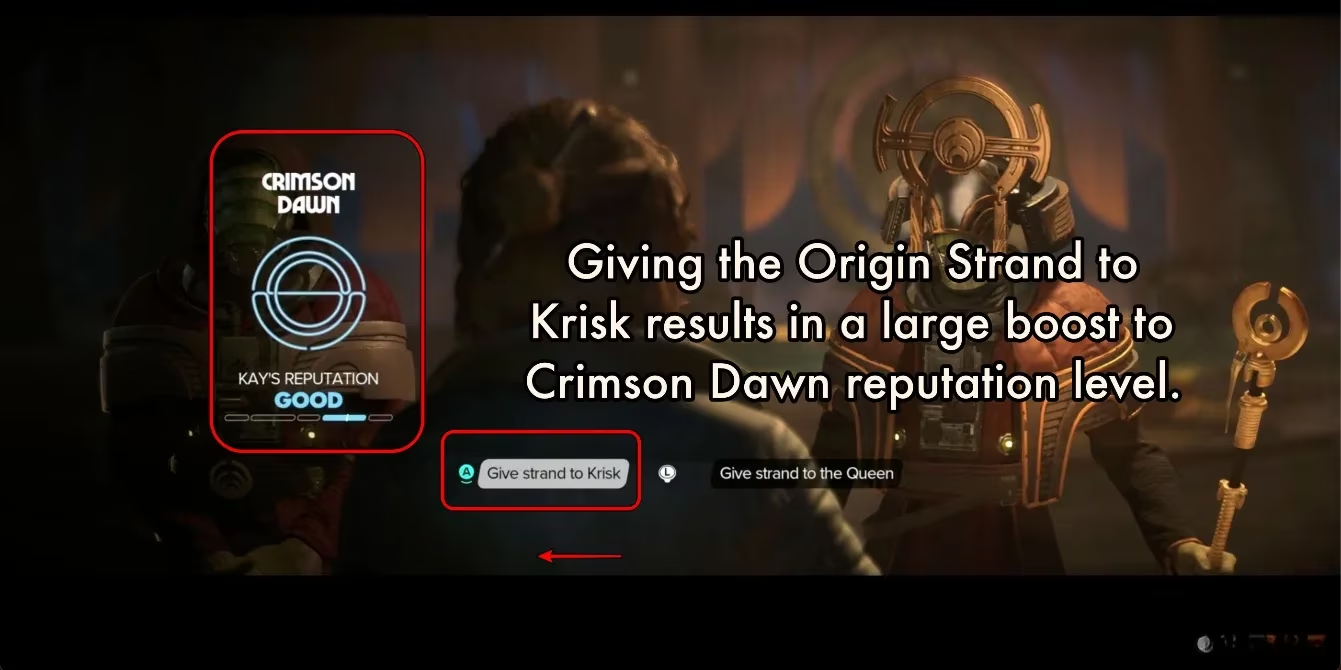
Krisk’s argument coiled around Kay like a serpent made of half-truths. She claimed the Queen had bent the knee to the Empire, that the clan was rotting from within, and only a violent cleansing could save it. Qi'ra, always a silhouette with a smile, added her own velvet pressure. But Crimson Dawn does not cultivate gardens; it harvests them. To align with Krisk was to accept a sudden reputation surge with that syndicate, a jolt of acceptance that could open doors in the criminal corridors. Yet, when the blade fell and the Queen crumpled, the silence that followed was not a victory anthem. It was the gasp of a machine that just lost a vital gear. The story summary later whispered what Kay already suspected: she had been a rook in a Dejarik game played by experts.
If Kay chose the other path—if her trembling hand extended the Origin Strand toward the Queen—the outcome was no less bloody. The royal guards cut Krisk down where she stood, a daughter who mistook rebellion for salvation. The Queen’s eyes held no triumph, only the heavy weight of a monarch forced to bury her own blood. Kay’s Ashiga reputation soared, a fast climb up a cliff that would make her welcome in the frozen city, but the emotional ledger remained stained. Qi'ra’s face, when they spoke afterward, revealed nothing. No rage, no disappointment. Only the quiet confirmation that her true aim had been to weaken the Ashiga by fathering a war between hearts.
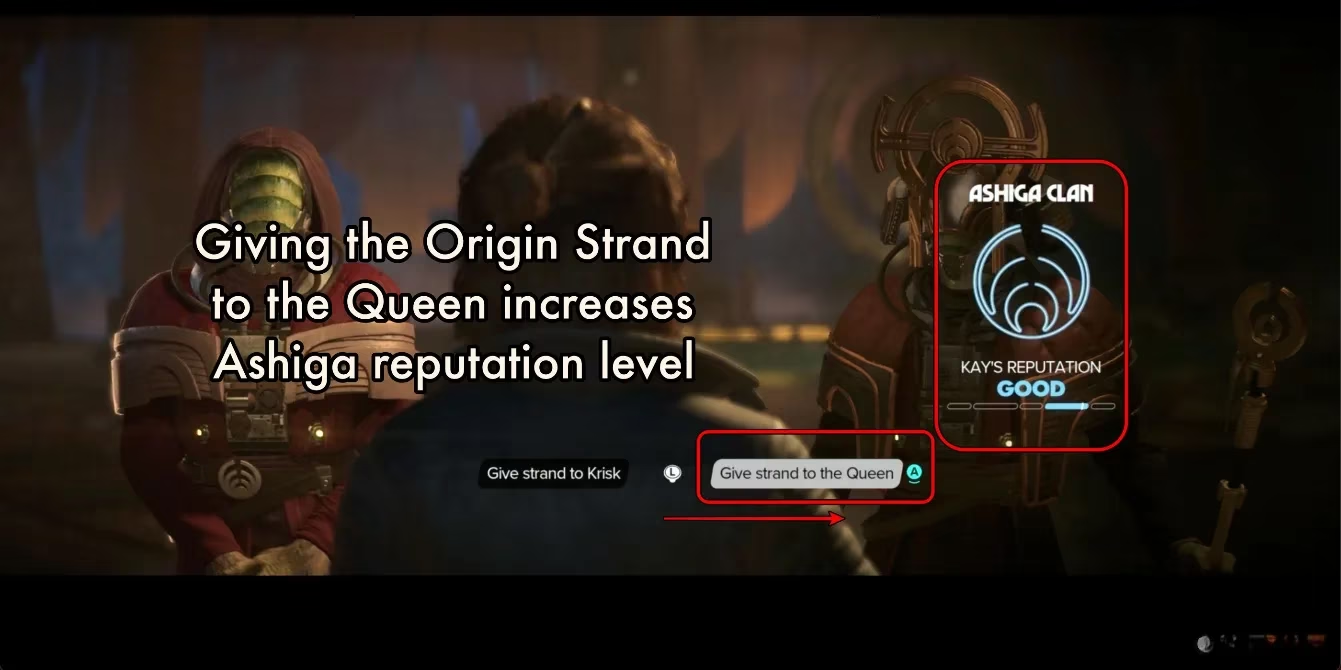
The brilliance of this moment lies in its refusal to offer a clean plate. Both choices are like swallowing stars—they burn all the way down, but one leaves a little more light. Gameplay-wise, the decision does not fracture the main story into bleeding halves. Instead, it reshapes the social geometry around Kay. Reputation tier rewards glow on the horizon, tempting the player with practical loot. Want to explore the Ashiga district without a blaster to your back? Backing the Queen makes sense. Need Crimson Dawn’s smuggler routes? Then Krisk is the brutal key. The immediate reward is a reputation boost so large it can vault Kay into a new named tier, unlocking vendors, contracts, and that delicious max-level exclusive reward every syndicate dangles like a ripe fruit on a high branch.
But the true compass is moral, not mechanical. After Kijimi shrinks to a blue marble in the rear viewport, the hyperdrive summary screen acts as a mirror. When Kay sided with Krisk, the text painted her as a puppet whose strings were woven by Qi'ra’s fingers. When she chose the Queen, the words framed it as a moment of clarity, a messy restoration of order. Yet no lasting punishment or gift arrives in the gameplay. The galaxy does not bow to Kay’s guilt or pride. Only the ambient dialogue and glances from her companions suggest that aligning with Crimson Dawn was, to them, a sorrowful misstep.
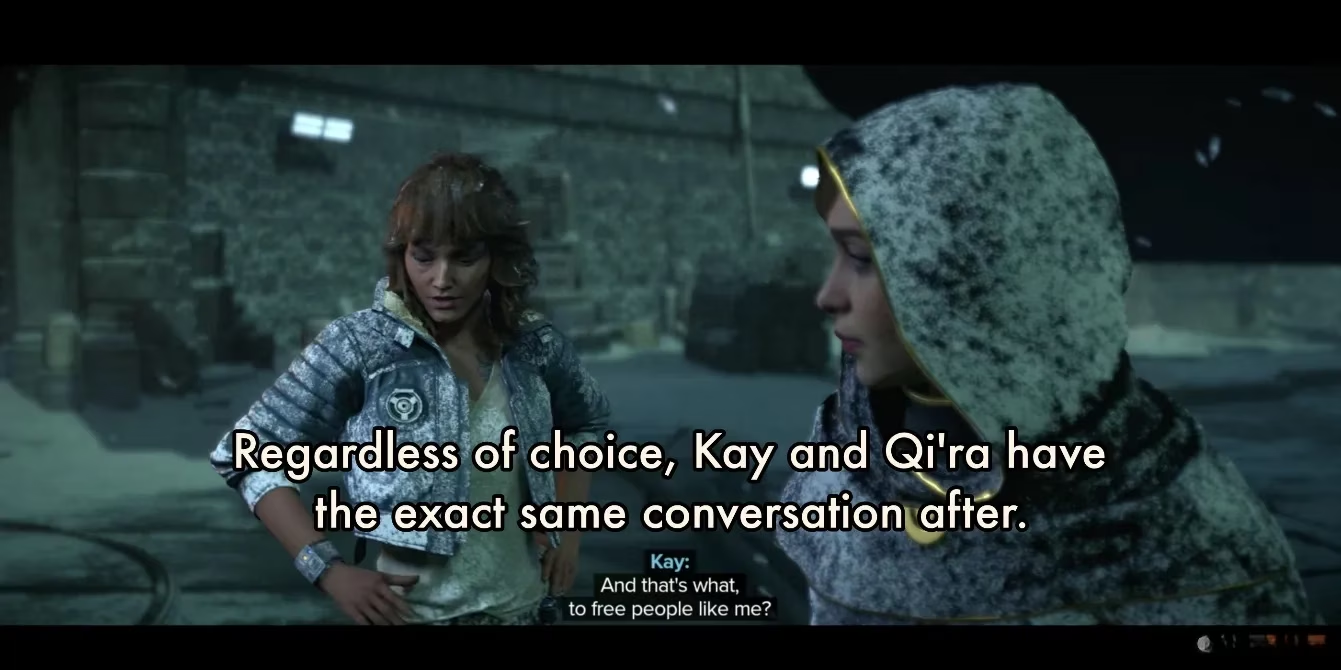
Perhaps that is the most honest design choice. In a galaxy where the sarlacc pit of syndicate politics consumes everything, there is no right answer—only bad and worse, two storm clouds offering different kinds of rain. Kay Vess, a thief chasing a clean slate, becomes a mirror for the player’s own ethics. Do you trust the matriarch’s weary eyes, or the daughter’s desperate fire? Do you side with stability, or the chaotic promise of change? The game does not judge. It merely shows the body on the floor, the blood on the snow, and Qi'ra’s unchanged smile.
For the explorer who wants to walk unharassed through every alley, the choice might tip toward whichever faction currently glares red on the reputation meter. For the story-seeker, the Queen’s path carries a subtle echo of rightness, as if the narrative itself leans toward the ancient rather than the new. Yet neither path blocks the stars ahead. Kay’s journey continues, carrying the scar of Kijimi like a shard of ice that never quite melts. And that, in the end, is what separates Star Wars Outlaws from a simple moral checkbox: it makes sure the weight of the crown—or the blood staining it—stays with you long after the hyperdrive engages.