Beyond the Fray: Star Wars Outlaws' Kay Vess and the Art of Authentic Character Design
Ubisoft's Assassin's Creed Shadows and Star Wars Outlaws spark fervent discourse, redefining video game protagonists with bold, authentic character design.
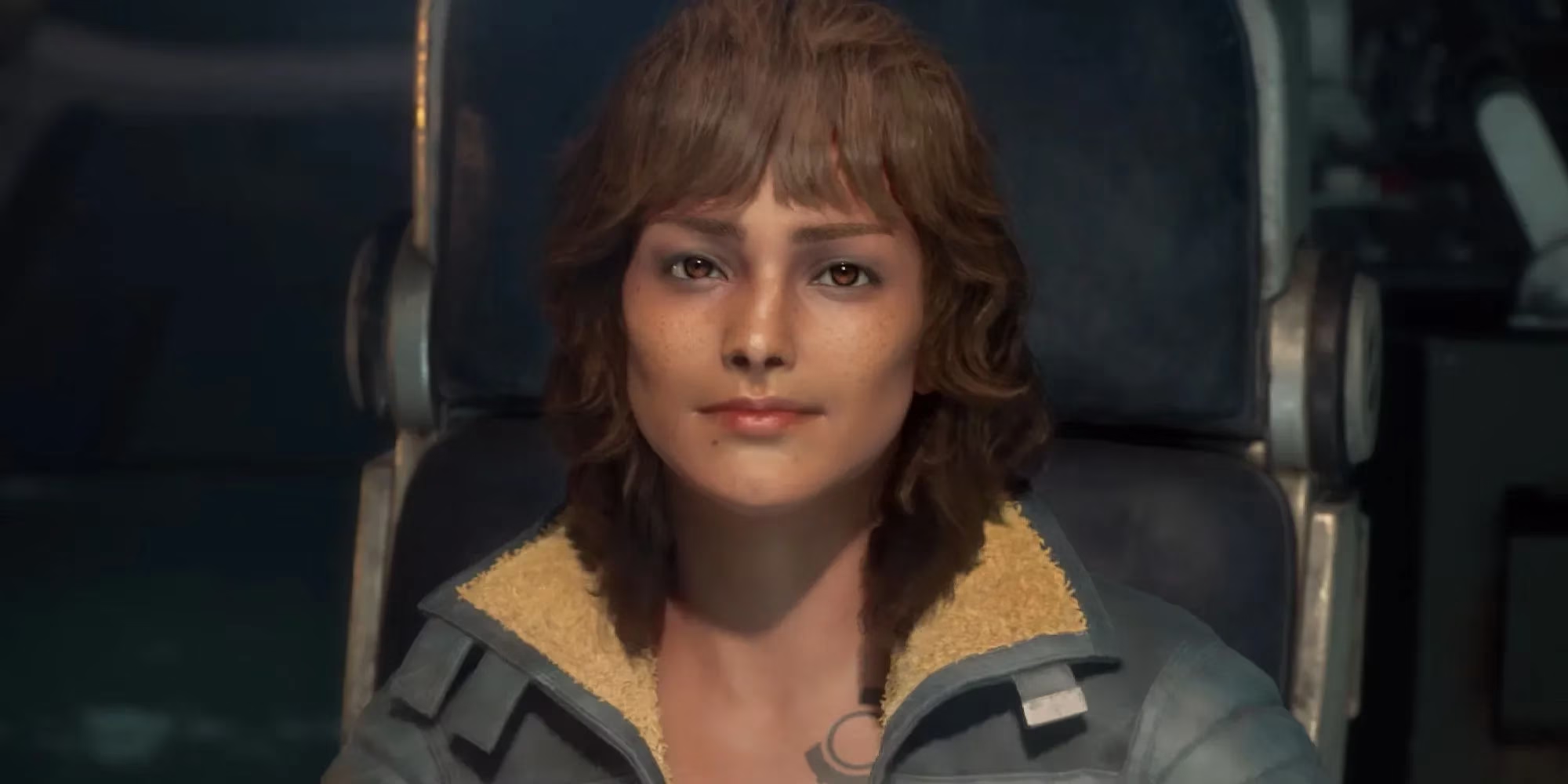
In the vast, often cacophonous galaxy of online discourse, the reveal of a new video game protagonist has become a familiar theater for controversy. As the year 2026 unfolds, the echoes of these digital skirmishes still resonate, particularly around the figures forged in the fires of major studio releases. Ubisoft found itself navigating this very terrain with two of its flagship titles, Assassin's Creed Shadows and Star Wars Outlaws. While debates can sometimes touch on historical nuance or narrative ambition, a more superficial, yet persistently loud, faction often fixates on something else entirely: the physical form of a character. For Kay Vess, the scoundrel at the heart of Star Wars Outlaws, the initial tumult wasn't about her skills as a thief or her place in the galactic underworld; it was, bafflingly, about her appearance—specifically, that she was a woman not designed according to a narrow, hypersexualized archetype. The noise was, as they say, a real tempest in a teapot.
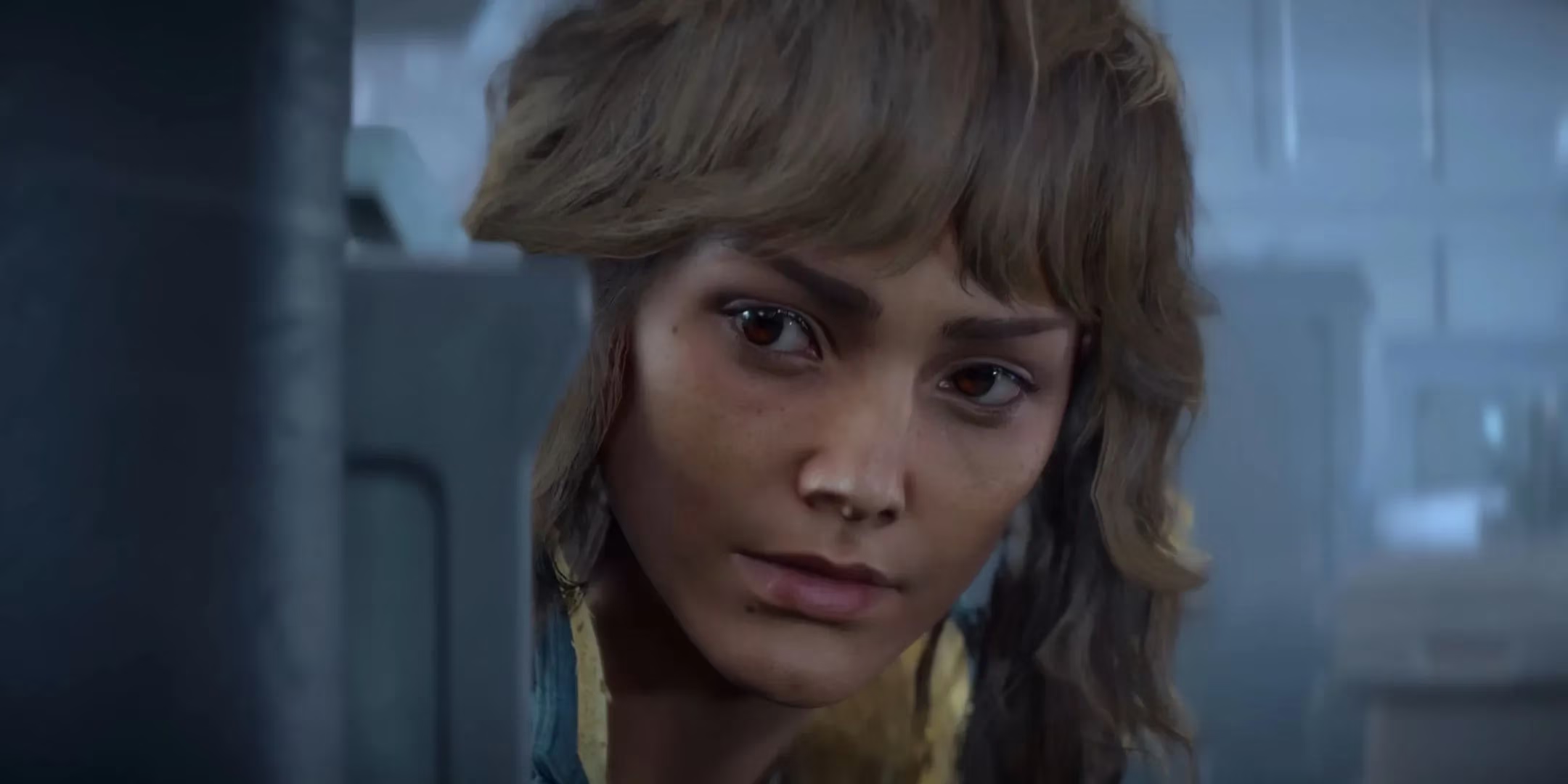
For Creative Director Julian Gerighty and the team at Massive Entertainment, this static was nothing but background noise from what he termed "bad-faith people." In a landscape where discourse can often devolve into disorder, Gerighty's stance was a beacon of clarity. "It makes no sense to me, and it’s not worth engaging with," he asserted, cutting through the fog of performative outrage. His focus, and that of his team, remained unshakably fixed on the essence of the character. "Kay is meant to be approachable, a petty thief who ends up barreling through this story, making bad decisions and centered with a lot of humor, humility and toughness. That’s what’s important to me. And she’s beautiful, come on." This philosophy represents a quiet but firm rebellion against a trend of designing characters primarily as objects of gaze rather than as vessels for story.
The drama surrounding Kay Vess was, sadly, not an isolated incident. It joined a dubious hall of fame that includes:
-
Aloy from Horizon Forbidden West: Criticized for having facial features deemed "unrealistic" for a post-apocalyptic hunter.
-
Joanna Dark in the Perfect Dark reboot: Subject to scrutiny over her updated design, moving away from her original, more stylized look.
-
A multitude of others: This pattern reveals a recurring tension between creative intent and a segment of the audience's rigid expectations.
Gerighty's refusal to entertain the nonsense was a strategic and philosophical choice. Engaging, he suggested, offered "no nuance and no possibility of real dialogue." Instead, the directive for the studio was singular: to "make the best game possible." This required batting away not just complaints about character design, but other equally confounding criticisms, such as calls to delay the game over its perfectly competent graphics—a move that felt like searching for problems in paradise.
Understanding the broader context is key. The cautiousness, or even skepticism, from the Star Wars fanbase wasn't born in a vacuum. Ubisoft's reputation for a sometimes formulaic open-world approach had led to franchise fatigue for some. The fear was that Star Wars Outlaws might simply be another Ubisoft game with a Star Wars skin—a valid concern given the industry's past. However, Gerighty was quick to distinguish the project. He emphasized a deliberate shift in design principles, particularly a focus on quality over quantity and a fresh approach to progression and leveling. The promise was a crafted experience, not a checklist of map icons. This was the substantive conversation—the one about gameplay, world-building, and respect for the IP—that the team wanted to have, a far cry from the reductive debates about a character's physique.
As the game launched and the dust settled, the narrative around Kay Vess transformed. Players who stepped into her boots discovered a character defined not by her proportions, but by her personality: her scrappy resilience, her moral ambiguities, and her relatable flaws. The initial controversy began to look exactly like what it was: a fleeting, superficial blip. The real deal, the lasting impression, was her journey through the galactic underworld. The game's commitment to her as a fully realized person, an "approachable" every-scoundrel, ultimately shone brighter than any manufactured outrage.
In the final analysis, the saga of Kay Vess's reception is a modern parable for creative industries. It highlights the challenge of navigating an online ecosystem where loud, bad-faith arguments can momentarily drown out meaningful discussion. Yet, it also showcases the power of steadfast creative vision. By choosing to ignore the noise and pour their energy into authenticity and quality, the developers allowed the work itself to become the strongest rebuttal. Kay Vess stands not as a response to critics, but as a testament to a simple idea: that compelling characters are built from the inside out, from their humor and humility and toughness, and that sometimes, the most revolutionary design choice is to portray a woman as human, first and foremost. The game's success proved that when you build something with integrity, the audience willing to meet it on its own terms will always find their way to it, leaving the echo chambers of empty controversy far behind.