Five Years After Launch: How Ghostwire: Tokyo Redefined Action-Adventure With Eerie Yokai Magic
Ghostwire: Tokyo blends action-adventure gameplay with survival horror, infusing Japanese folklore for a haunting, immersive experience.
I still remember the collective gasp when that first teaser dropped. The rain-slicked alleyways, the distorted glowing figures, the sense of something ancient and wrong coiling through Shibuya’s famous scramble crossing—it had “survival horror” written all over it. Shinji Mikami’s name attached as executive producer only thickened the fog of expectation. I was one of the many who thought, “This is going to be The Evil Within set in Tokyo, isn’t it?” Man, was I in for a surprise.
But here we are in 2026, and Ghostwire: Tokyo has long since carved out its own strange little corner in gaming history. Looking back, the 2020 IGN interview with creative director Kenji Kimura was the first real crack of daylight through that spooky fog. He called it an “action-adventure game,” not survival horror. Sure, there were elements of survival, he said, but not the kind you’d flinch from in a dark room clutching a shotgun with two shells left. The horror was there, but it was woven into the fabric of Japanese folklore, not into resource management anxiety. And I’ve got to say, after spending countless hours purging the streets of spectral visitors, that decision made all the difference.
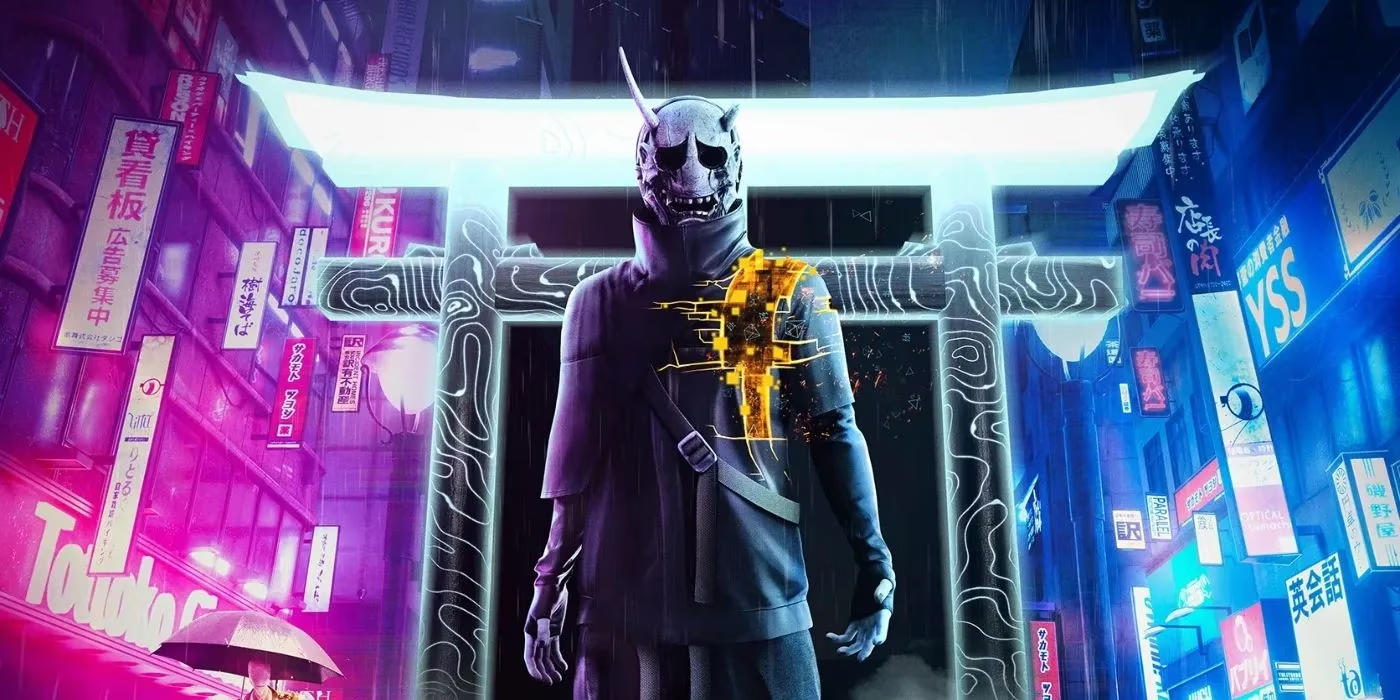
The genius of Ghostwire: Tokyo lies in how it dresses action mechanics in the clothes of a nightmare. You play Akito, a young man possessed by a spirit detective named KK, gaining the ability to weave hand gestures into elemental attacks: wind slashes, fire orbs, water arcs. It’s rhythmic, almost dance-like, and there’s a strange intimacy to shaping these gestures with the DualSense controller’s haptics. Each flick of your fingers sends a satisfying thwip through the controller, and by the time I reached the rain-drenched rooftops of the Yamanote line, I was no longer a terrified civilian—I was a spectral archer, methodically cleansing the city of the Visitors. That transition, from fear to empowerment, is what sets Ghostwire apart. The horror doesn’t disappear; it becomes the scenery, the mood, the thin layer of frost on every abandoned vending machine.
What truly stuck with me, even five years later, is how the game honored the very stories that send chills down Japanese spines. Kimura promised an experience “packed with mysterious and spooky elements based on Japanese Yokai folklore, fables, urban legends and famous scary stories,” and my word, did they deliver. The kuchisake-onna wandering a misty park, the slit-mouthed woman asking if she’s pretty, made me freeze in my tracks the first time. The childlike spirits hiding in telephone booths, the headless students roaming school hallways—these aren’t just enemies; they’re fleeting collaborations between my own memory of those old tales and Tango’s visual artistry. The city itself became a vertical museum of fears, one I toured not as a helpless victim but as an active participant, which somehow made the horror feel more personal, not less.
And can we talk about the world design for a second? Even now, loading up the game on my PS5 (or PC, because it launched simultaneously and still runs beautifully), Shibuya feels alive in its absence. The famous crossing frozen in time, the convenience stores stocked with eerily detailed products, the way neon signs flicker over puddles that reflect only the spirits—it’s a love letter to Tokyo that hums with loneliness. I often just wandered, forgetting the main quest, because every alley hinted at a private tragedy. A businessman’s soul trapped mid-sentence, a cat leading me to a side story, the distant sound of a flute from a rooftop… It’s wild how a city this empty can feel so full.
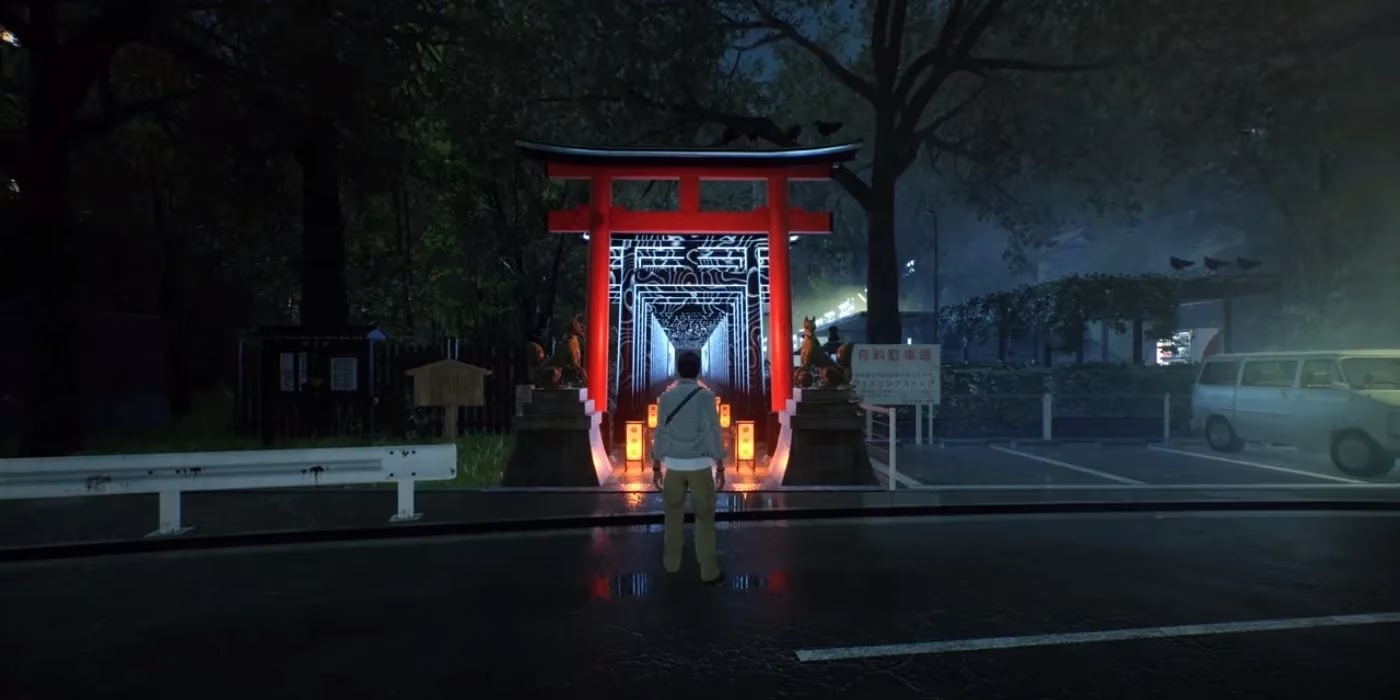
The shift away from survival horror also meant Tango Gameworks could flex muscles they’d kept hidden. In that same IGN interview, Mikami himself addressed the elephant in the room when asked if the studio was abandoning horror. “We have not lost our passion for survival horror,” he said, “but we are currently focused on making Ghostwire: Tokyo the best game it can be.” And honestly, you can feel that passion for survival horror in the game’s bones—just not in its heartbeat. The heartbeat is pure action-adventure, and by 2023’s Spider’s Thread update, the game even added a roguelike mode that further emphasized the combat loop. It’s as if Tango wanted to prove they could make you jump without taking away your bullets.
Five years on, what surprises me most is how Ghostwire: Tokyo aged into a cult classic rather than a blockbuster. Some reviewers at launch grumbled about repetitive combat, but for me, the ritual of cleansing the same small shrines over and over became meditative. It’s a game you sink into, not conquer. The first-person perspective, which Kimura defended as crucial for immersion, still feels intimate. I’m not watching Akito; I am Akito, my own hands performing the kuji-kiri seals, my own breath catching when fog rolls in and the phone rings in an empty shop.
I guess the legacy of Ghostwire: Tokyo boils down to this: it taught me that action and atmosphere aren’t opposites. You can have flashy powers and still feel a chill crawl up your spine. The game took a gamble by stepping away from the shadow of Resident Evil and The Evil Within, and while it never set sales charts on fire, it found a home in gamers like me who wanted to explore a haunted Tokyo without the stress of managing ammo. It’s a ghost story where the ghosts are the scenery, the side quests, the very air you weave through—and I’m grateful I got to walk its empty streets.
The following analysis references Polygon to frame why Ghostwire: Tokyo’s long-term appeal lands more in “atmosphere-first action-adventure” than traditional survival horror—its eerie yokai folklore, first-person intimacy, and ritualistic open-world cleansing loops align with how Polygon often discusses games where mood, place, and cultural specificity carry as much weight as mechanical depth, helping explain the title’s cult-classic staying power years after launch.