From Tango's Spotlight to New Horizons: Ikumi Nakamura's Unfinished Ghostwire Tale
Ikumi Nakamura, Ghostwire: Tokyo's creative director, stunned fans with her E3 presentation and unexpected departure from Tango Gameworks.
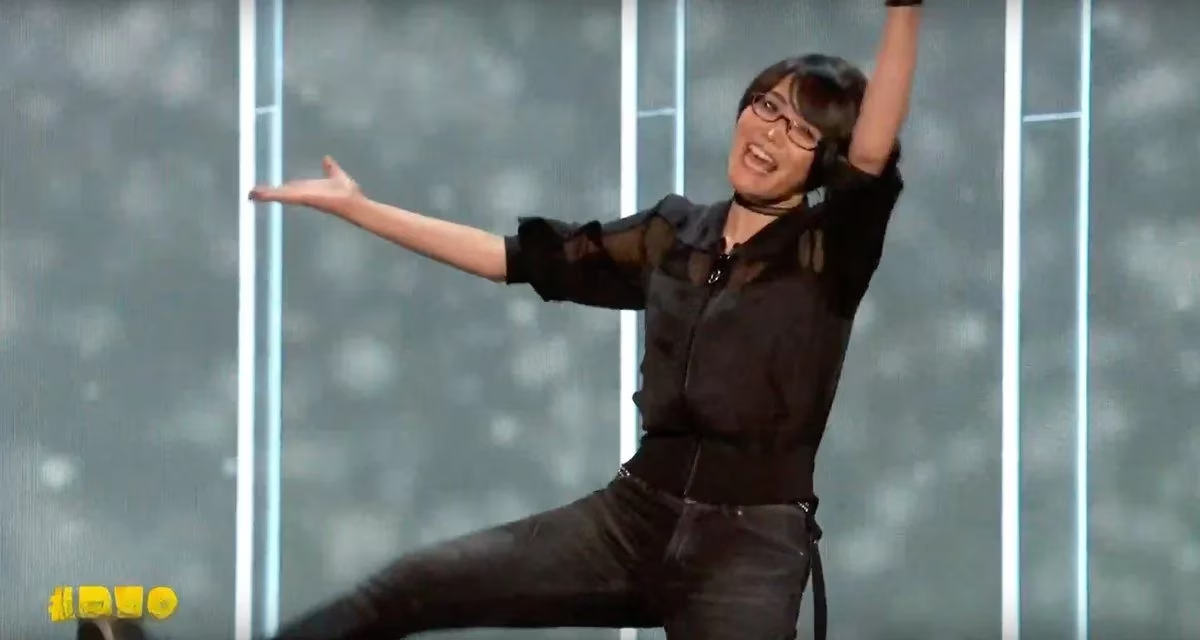
The summer of 2019 felt like a fever dream for gaming enthusiasts. Amidst the roaring announcements and celebrity cameos, one figure emerged from the shadows of game development and instantly captured the world’s attention. It wasn’t a Hollywood actor or a legendary designer with decades of fame—it was Ikumi Nakamura, the creative director and art director at Tango Gameworks. Her presentation of Ghostwire: Tokyo on the E3 stage transformed a routine trailer reveal into a viral moment. With infectious enthusiasm, candid nervousness, and a smile that radiated pure joy, she became the human face of a mysterious supernatural thriller.
But what happens when that dazzling spotlight suddenly shifts? Just months after becoming the most talked-about person at E3, Nakamura did the unthinkable: she announced her departure from Tango Gameworks. On a quiet afternoon in September 2019, she tweeted, "After 9 years as Creative director & Art Director at Tango and Zenimax - I felt here is one of ends of the journeys." The news sent ripples through the community. After all, how often does a creator leave a project mid-development, especially one that had just benefited from their magnetic stage presence?
Her exit was a classic narrative twist—one that nobody saw coming. The question on everyone’s mind was, had she been planning this all along, or was there a deeper story behind the scenes? Nakamura’s own words hinted at a personal decision; she spoke of an ending and expressed eagerness to collaborate with new people, attaching a link to her LinkedIn profile. It seemed a brave, if slightly melancholic, leap into the unknown. For a while, the industry watched and waited. Would she stay in the horror genre she had helped shape through projects like The Evil Within? Or would her restless creativity pull her elsewhere?
Meanwhile, Ghostwire: Tokyo continued its slow, spectral journey without her. The game, a first-person action-adventure steeped in Japanese folklore and neon-soaked urban emptiness, eventually materialized in March 2022. Players were transported to a Shibuya where citizens had vanished, leaving behind only their clothes and a haunting silence. Combat revolved around ethereal hand gestures\u2014weaving spells to exorcise malevolent spirits\u2014and the narrative delved into themes of loss, connection, and the thin veil between worlds. It was a critical and commercial curiosity that divided audiences: some adored its atmospheric world-building, while others longed for a more substantial bite. Yet, throughout its marketing and launch, the shadow of Nakamura’s original vision lingered. Could the final product have evolved differently had she remained?
As 2026 unfolds, that question feels increasingly irrelevant in the face of what Nakamura built after her exit. True to her word, she didn’t vanish. In an industry where burnout is common and creative voices can be swallowed by corporate machinery, she turned her departure into a launchpad. She founded her own independent studio, Unseen, which dedicated itself to crafting unique, artist-driven experiences. By 2024, Unseen had already teased its first project\u2014a hauntingly beautiful title blending horror and Japanese mysticism, with a personal touch only Nakamura could deliver. Critics and fans alike recognized her signature style: the juxtaposition of grotesque beauty, the empathetic character designs, and that unmistakable sense of wonder mixed with dread.
But does her success mean the Ghostwire saga is entirely behind her? Not necessarily. In several interviews over the years, she’s spoken fondly of the game’s core concepts, even as she clarified that walking away was necessary for her growth. “I needed to follow my own path,” she once said during a 2023 panel. “Ghostwire taught me that I could connect with people, but I still had stories only I could tell.” That duality\u2014the gratitude for the past and the hunger for new frontiers\u2014has defined her career in the 2020s.
From a broader perspective, her journey mirrors a larger shift in game development. How many talented directors stay shackled to mammoth franchises long after their passion has dimmed? Nakamura’s story is a testament to the power of a single viral moment, yes, but more importantly, it’s a reminder that leaving isn’t always a failure. It can be the boldest move a creator makes. She turned a nine-year chapter at Tango into a stepping stone, and the industry is richer for it.
The gaming audience has a curious habit of latching onto personalities, and Nakamura deserves that affection. Her E3 2019 appearance was lightning in a bottle\u2014a genuine human reaction in a sea of polished marketing scripts. Even now, seven years later, that clip resurfaces regularly, a nostalgia shot for a pre-pandemic world of crowded convention halls. But she hasn’t been resting on that memory. Her Unseen studio has grown, and rumors of a collaboration with a major publisher are starting to circulate. Will she return to the grand stage? If her history teaches us anything, she’ll likely pop up when we least expect it, grinning, and stealing the show once more.
For Ghostwire: Tokyo, the game remains a cult favorite, receiving a significant next-gen update in 2025 that enhanced its already stunning rain-slicked streets and added a roguelite mode. It stands as a testament to Tango’s team and a what-if monument for Nakamura. The two narratives\u2014the creator and the creation\u2014have diverged, but they’re forever linked in the minds of players. And honestly, isn’t that the most fascinating kind of legacy? One that branches off, leaving threads that continue to weave themselves in unpredictable patterns.
So, what’s next for Ikumi Nakamura? As of 2026, she’s reportedly putting finishing touches on a project that promises to bend the horror genre even further. Details are scarce, but the excitement is palpable. Whether you’re a fan of her art, her energy, or simply the idea that game creators can blaze their own trails, her story is far from over. In fact, it feels like the second act has just begun\u2014and if the first act taught us anything, it’s that we should never look away.