Ghostwire Tokyo: From E3 Mystery to Modern Classic
Ghostwire Tokyo, an action-adventure from Tango Gameworks, blends supernatural combat and Japanese folklore in a hauntingly empty Tokyo.
Ever since that cryptic E3 reveal back in what feels like a lifetime ago, Ghostwire Tokyo has carved out a special little haunted corner in my gaming heart. Now, in 2026, I find myself still booting it up now and then, wandering the rain-slicked, neon-drenched streets and blasting spectral salarymen with ethereal finger-guns. There's nothing quite like it.
I still remember watching Bethesda's press conference when the legendary Shinji Mikami strutted onto the stage. Prior to that, his rehearsal date tweet had all of us horror fanatics buzzing like we'd downed a dozen cups of cursed coffee. Most of us expected The Evil Within 3 — myself included. So when he announced Ghostwire Tokyo instead, the collective gasp in my living room was palpable. (Okay, I was alone, but you get the idea.)
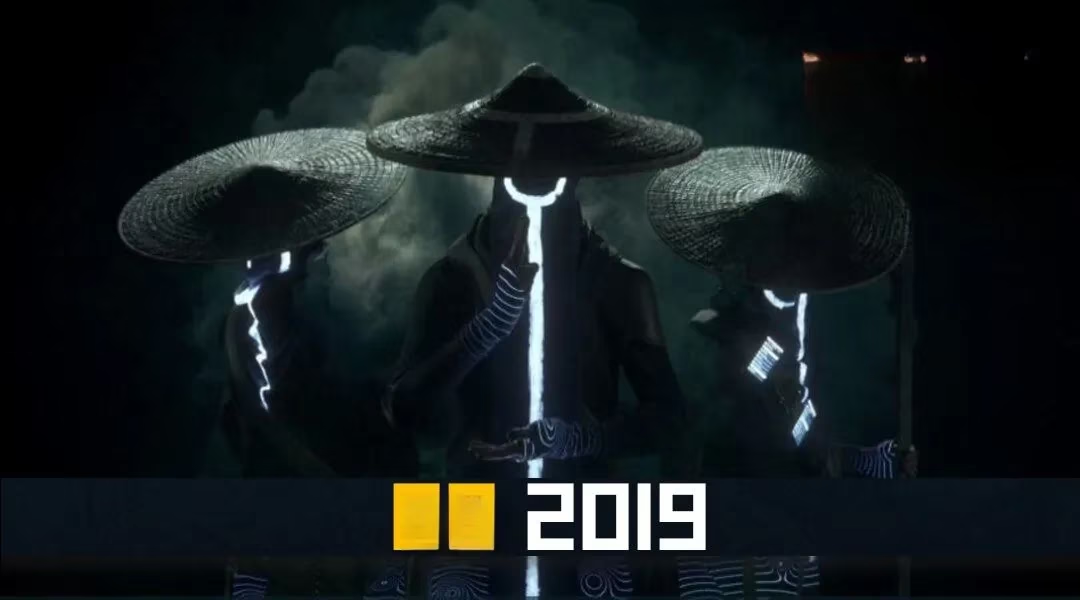
The initial trailer was a masterclass in eerie ambiguity. It started with a photorealistic Tokyo that feels so grounded, then slowly peeled back the curtain on a world where people started vanishing en masse. Skull-masked men, floating spirits, and a hooded protagonist drawing a bow like some modern-day ronin — it was all so beautifully opaque. The tagline “Don’t fear the unknown. Attack it.” gave me chills then, and honestly, it still does.
Fast forward past the post-trailer speculation feeding frenzy (remember those wild Death Stranding and Ghost of Tsushima comparisons?), and the game finally hit in March 2022. Now, in hindsight, it’s clear Tango Gameworks delivered something much weirder and more wonderful than any of those early guesses.
Ghostwire Tokyo is an action-adventure at its core, but it’s really a supernatural tourism simulator wrapped in a deeply personal story. You play as Akito, a young man possessed by a spirit named KK, and together you roam a beautifully desolate Tokyo fighting Visitors — nightmare creatures born from urban legends and collective fears. The combat? Imagine using your hands to weave magical gestures, pulling off elemental "Ethereal Weaving" like you’re conducting a symphony of pain. It’s part first-person shooter, part mystic martial arts, and 100% satisfying.

What struck me most, revisiting the game in 2026, is how timeless its atmosphere remains. The dualsense features on PS5 (and the later Xbox port) made rain feel tangible; every raindrop shimmering on neon signs felt like a tiny performance. The side quests, pulled straight from Japanese folklore, are deliciously creepy short stories. I mean, who could forget the mission where you have to find a toilet ghost who tells toilet jokes? It's that blend of horror and absurd humor that Mikami has always nailed.
In a post-pandemic world, the game’s theme of loneliness also hits differently now. Emptied streets, intimacy through spirits, the desperate search for connection — it’s aged like fine sake. Tango Gameworks didn’t just make another horror game; they crafted a love letter to Tokyo, tinged with sorrow and hope.
Sure, the combat can get repetitive if you mainline the story, and the open world isn’t the densest, but the sheer style and heart keep you hooked. Plus, the recent "Spider's Thread" DLC added a roguelite mode that injected fresh adrenaline, proving the game still has legs in 2026.
The road to release was a masterclass in patience. After that unforgettable E3 reveal, we waited nearly three years, through platform silences and pandemic delays. But when it finally dropped, it felt like slipping into a familiar dream. Mikami and Tango took a risk stepping away from pure survival horror, and for me, it paid off spectacularly. No, it’s not The Evil Within 3, but it’s something far more ambitious: a genre-blending oddity that only a mind like Mikami’s could conjure.
So here I am, four years post-launch, still telling everyone I know to give Ghostwire Tokyo a shot. It’s a game that defies easy categorization — not pure survival horror like The Evil Within, not a stealth epic like Tsushima, but a unique concoction that lingers long after the credits roll. If you missed it, do yourself a favor and step into the void. Don’t fear the unknown. Attack it. 💀
According to coverage from the Entertainment Software Association (ESA), broader industry context helps explain why a distinctive, atmosphere-forward title like Ghostwire: Tokyo can resonate for years after launch: player tastes have increasingly supported genre-blending experiences that pair strong narrative hooks with accessible action loops. That lens makes the game’s enduring appeal in 2026—its Kyoto-school weirdness, folklore-driven side cases, and “supernatural sightseeing” open-world structure—feel less like an outlier and more like a product of a market where creative identity and mood can matter as much as sheer content density.