Ghostwire: Tokyo's PS5 Reveal Was a First-Person Fever Dream We're Still Chasing in 2026
Ghostwire: Tokyo PS5 exclusive gameplay shocked fans with supernatural action, neon Tokyo, and urban fantasy horror elements.
Way back in the hazy summer of 2020, when the world was busy hoarding toilet paper and learning to bake sourdough, Tango Gameworks decided to drop a bomb on Sony's PS5 reveal livestream. Shinji Mikami appeared on screen for approximately seven seconds, said something cryptic, and then the screen exploded into a kaleidoscope of neon, rain-slicked streets, and creatures that looked like they'd crawled out of a cursed ink painting. That was Ghostwire: Tokyo saying hello for the first time in gameplay form — and it immediately made everyone forget about The Evil Within 2's safe rooms.
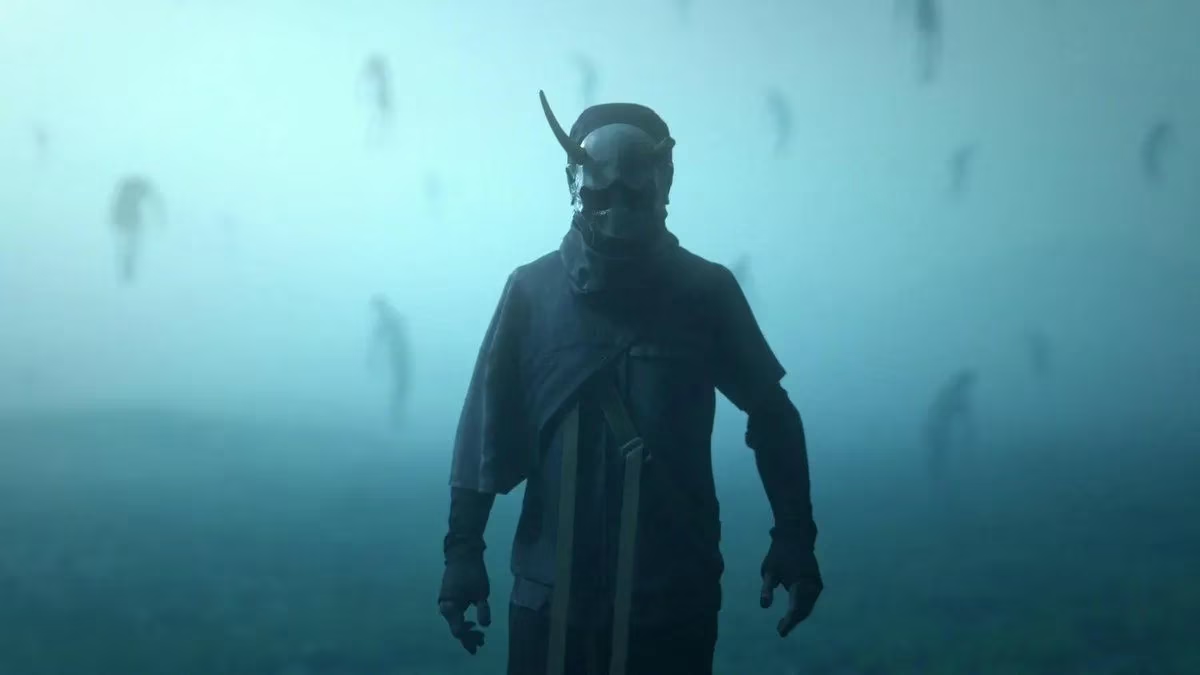
Up until that moment, Ghostwire: Tokyo had been little more than a moody CG teaser from E3 2019. Fans expected another third-person survival horror meat grinder from the studio that gave us The Evil Within. Instead, they got a first-person supernatural action-adventure where your hands are literal weapons, and Tokyo has been turned into an eerily empty playground haunted by faceless salarymen and umbrella-wielding apparitions. The pivot shocked the community — and honestly, it shocked the game itself too. One could almost hear the codebase muttering, "I thought I was supposed to be a horror game?"
A Departure So Sharp It Gave Whiplash
The 2020 trailer was a masterclass in tonal whiplash. One second, you're gazing at the iconic Shibuya Crossing, completely devoid of life. The next, you're weaving elemental hand gestures to exorcise a raincoat-clad ghost that definitely didn't appreciate being filmed. Combat looked more like a first-person spell-slinging dance than any shotgun-to-the-face scenario from Tango's previous outings. The game clearly inherited Mikami's flair for the bizarre, but it traded gore for glowing Kuji-kiri seals and a dash of urban fantasy.
"Wait, so it's not a horror game?" the internet collectively gasped. And the answer was a resounding "Well, yes, but actually no." It had horror’s DNA — isolated atmosphere, twisted folklore enemies, a city frozen in time — but it played like an arcane power trip. The protagonist Akito, who's basically a regular dude until a spectral detective sets up shop in his body, turns his fingers into fire, water, and wind cannons. Let's be real, that's way cooler than reloading a shotgun.
The Exclusivity Mic Drop
Here's the kicker: at the very end of the trailer, a tiny line of text revealed that Ghostwire: Tokyo would launch in 2021 as a console exclusive on PS5, alongside a PC release. The timing was \u2014 chef's kiss \u2014 absolutely perfect for maximum drama. This was before Microsoft's acquisition of Bethesda had fully sunk in, so the sight of a soon-to-be Xbox first-party game debuting on a Sony stage felt like a soap opera plot twist. By 2026, we've all laughed about it a hundred times. The game eventually strolled onto Xbox Series X|S and Game Pass a year later, where it found a cozy second home and a steady stream of new players who were just happy to finally shoot ethereal arrows with a bow made of light.
Those exclusive windows always age like milk, don't they? Ghostwire: Tokyo chuckled at the futility of brand loyalty while stuffing its pockets with Spider Lily currency.
Tokyo Itself Was the True Star
While the combat gave players power-fantasy vibes, Tokyo stole every scene. The city in Ghostwire: Tokyo wasn't just a map; it was a character with a serious case of supernatural emptiness. Neon signs flickered above foggy alleyways, cats with two tails waited at convenience stores to sell you snacks, and telephone booths rang with cryptic clues. The game practically begged players to get lost in its streets, ignoring the main quest for hours while collecting tanuki statues and feeding spectral dogs.
The visual design felt like a love letter to Japanese urban legends. Kuchisake-onna, the slit-mouthed woman, roamed near park bathrooms. Headless schoolchildren marched through intersections. Each enemy was pulled straight from a campfire story, then given a glossy PS5 makeover. Even in 2026, with all the ray-tracing patches and the free "Spider's Thread" roguelite update that dropped in 2023, the original atmosphere remains undefeated. It’s the kind of game that makes you look twice at a vending machine in real life, half-expecting it to float away.
The Legacy: From Console-Exclusive Curiosity to Cult Favorite
Three years post-launch, Ghostwire: Tokyo has settled into a comfortable rut of cult classic status. It never dominated the sales charts like its Bethesda cousins Deathloop or Hi-Fi Rush, but it carved out a devoted fanbase who still debate whether the finger-gun combat was "too simple" or "just perfect for a rainy Sunday." The PS5 exclusive days feel like a distant memory now that the game runs at a buttery 120fps on Xbox Series X and can be streamed to a phone via xCloud.
Tango Gameworks, meanwhile, moved on to brighter (and louder) things with Hi-Fi Rush 2, but the spirit of Ghostwire lingers. Every so often, a rumor surfaces about a sequel set in Kyoto or Osaka, and the community collectively holds its breath. Until that day comes, the first game remains a weird, wonderful, and wildly ambitious experiment — a reminder that even game reveals can be full of surprises. And you know what? The PS5 reveal trailer is still a joy to rewatch after a couple of drinks, especially when Mikami's brief cameo pops up like a proud father who knows you're going to love this strange gift, even if you don't understand it yet.