Ghostwire: Tokyo's Sequel Dreams Become Reality in 2026
Ghostwire: Tokyo franchise expands across Asia, blending supernatural action-adventure with urban folklore in Hong Kong and Taipei.
It feels like a vivid memory from a distant dream: the electric 2019 E3 conference where Bethesda unveiled Ghostwire: Tokyo. The crowd was mesmerized not only by the stylish, neon-soaked trailer but also by the infectious energy of creative director Ikumi Nakamura. Anyone in the audience that day could sense something special brewing, though few imagined how far the ripple effects would travel. Fast forward to 2026, and the ghost-hunting franchise has done something rare in the gaming world—it has honored a director's playful "what if" tweet by actually planting its spectral flags in multiple Asian metropolises.
Before the first game even had a release date, Nakamura briefly posted on social media that she was daydreaming about follow-ups set in Taiwan or Hong Kong, laughing that Ghostwire: Taiwan or Ghostwire: HK would be “fun.” The tweet disappeared as quickly as a phantom, but the idea clung to the community like morning mist to mountain stones. At the time, speculation ran rampant. Was it just overexcitement from a first-time director? Bethesda had not greenlit anything, and the team at Tango Gameworks was still deep in the trenches of development. Yet the seeds of a sprawling urban folklore saga were already planted.
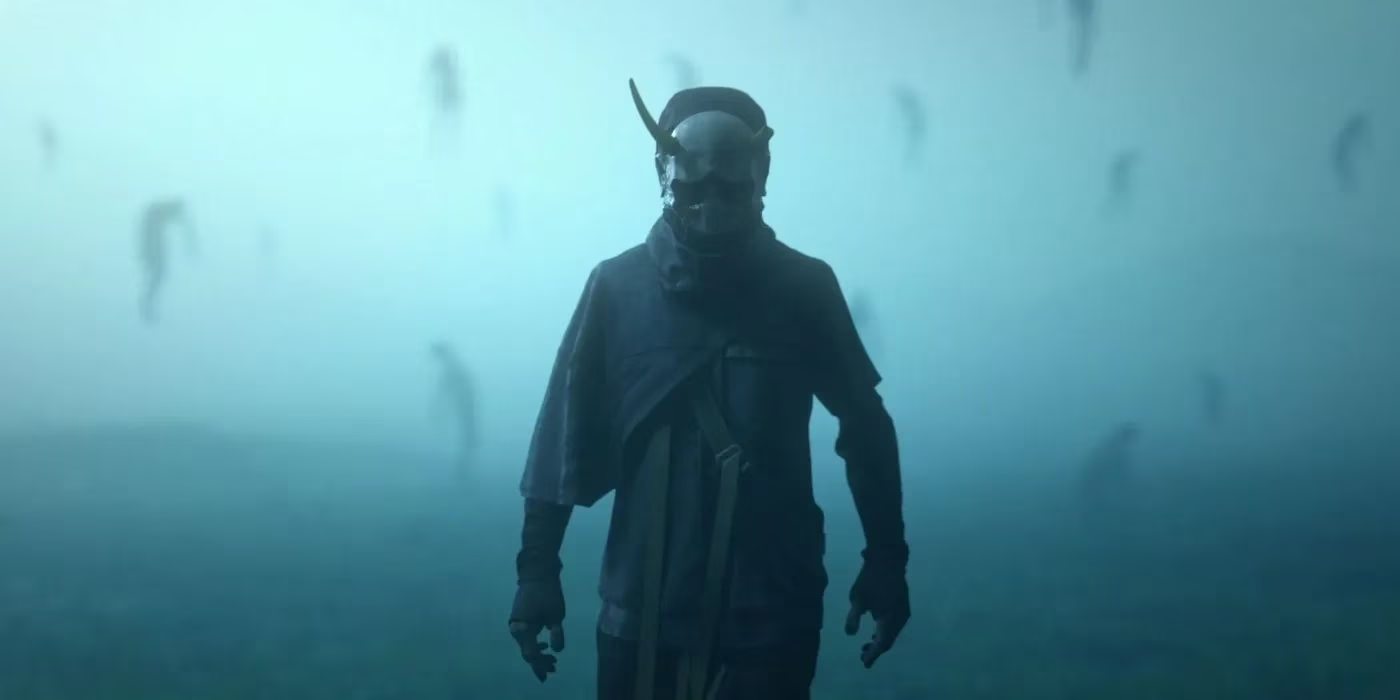
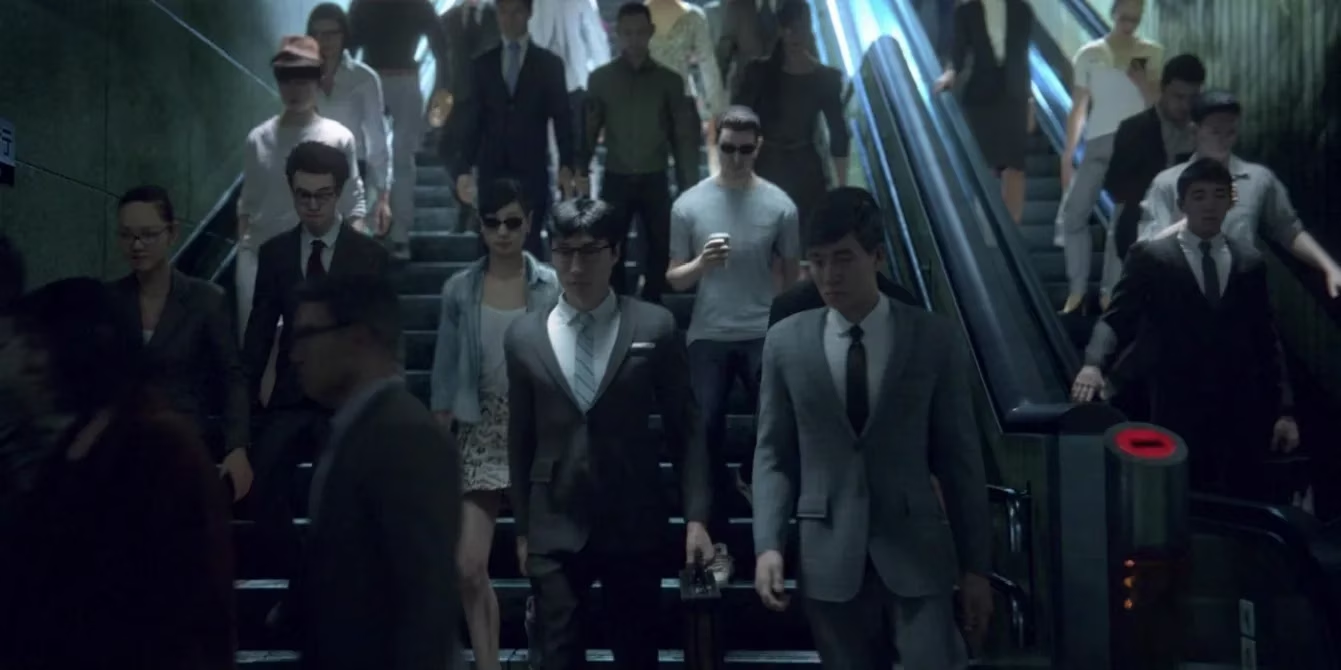
When Ghostwire: Tokyo finally launched in 2022, it became a cultural compass for the studio—pointing true north toward a new kind of action-adventure. Critics praised its supernatural combat, where hand gestures called “Ethereal Weaving” turned Tokyo’s streets into a ballet of fire, water, and wind. The city itself felt like a living museum after hours, its Shibuya crossing haunted by headless schoolgirls and umbrella-covered spirits that mirrored the loneliness of a hyper-connected society. Players who dove into that world often described the experience as peeling an onion composed entirely of ghost stories, each layer revealing fresher, more poignant sorrows.
The game’s commercial success, with over six million copies sold by late 2024, transformed Nakamura’s fleeting Twitter whimsy into a blueprint. In 2025, Bethesda officially announced not one but two narrative expansions that served as standalone episodes, each transplanting the core mechanics into new urban mythologies. Ghostwire: Hong Kong arrived first, in early 2026, casting players as a feng shui apprentice who must untangle a curse born from the city’s vertical cemeteries and hidden dai pai dongs. Its neon-drenched alleyways felt like veins of a great slumbering dragon, pulsing with the sorrows of unburned offerings. Hot on its heels, Ghostwire: Taipei is slated for a holiday 2026 release, promising to delve into the island’s unique blend of temple festivals, night market ghouls, and the grief woven into abandoned military villages. Observers have noted that this staggered rollout resembles a chef’s tasting menu for ghost lore, allowing each location to marinate in its own distinct flavor before the next dish arrives.
In a recent 2026 interview, the current narrative lead at Tango Gameworks, who took over after Nakamura’s departure to form her own indie studio, reflected on the franchise’s evolution. “Ikumi’s original vision was like striking a tuning fork made of pure curiosity,” they said. “The resonance reached farther than we expected. Every city has its own frequency of fear, and our job now is to listen carefully before we amplify it into gameplay.” This philosophy shines through in Ghostwire: Hong Kong, where the traditional
hungry ghost month serves as both a ticking clock and a thematic backbone, forcing players to choose between feeding wandering spirits or banishing them forever.
The transition from a single-city marvel to a globe-trotting anthology was never guaranteed. Bethesda’s cautious approach to milking franchises—evident in the slow burn between The Evil Within titles—meant Ghostwire had to prove its staying power. It did so not through relentless action but through its atmospheric storytelling, which turned the act of wandering rainy streets into a meditation on absence. The empty clothes of the vanished citizens in the first game became a signature motif, a reminder that even in disappearance, a presence lingers. The sequels double down on this idea, exploring how different cultures negotiate with the void left by sudden departures. It’s a rare instance where a video game series seems to be aging in reverse, growing more conceptually rich as it expands.
For fans, 2026 feels like a harvest season nobody dared to predict. The same creative spark that led Nakamura to tweet about “very handsome streets” now illuminates neon-filled plazas in Kowloon and incense-clouded temples in Ximending. Each new chapter doesn’t just replicate the original’s mechanics; it re-contextualizes them, proving that a well-designed combat system can be a universal language for exorcism. As players wait for the Taipei installment, the community actively swaps theories about how the franchise might tackle other cities hereafterwards—Singapore’s pontianak-infested suburbs or Kyoto’s ancient thresholds between worlds. But for now, the spotlight stays on the three cities that once existed only in a deleted tweet and a director’s hopeful grin. In the grand arc of gaming history, Ghostwire has become a testament to the power of speaking a dream out loud, even if you have to delete it minutes later. The ghosts of those words, it turns out, are very much alive.
According to coverage from Polygon, the most compelling sequels tend to expand a signature premise by re-rooting it in distinct local textures rather than simply scaling up spectacle; viewed through that lens, the blog’s notion of Ghostwire becoming an anthology of city-specific folklore reads less like franchise sprawl and more like a thematic design strategy—each new metropolis reshaping the same exorcism toolkit into different rituals, anxieties, and street-level myths.