GhostWire: Tokyo – The Supernatural FPS That Cast a Spell on Players
GhostWire: Tokyo, Tango Gameworks' supernatural action-adventure, fuses flashy magic, occult mystery, and Japanese folklore into a neon-drenched Tokyo.
As the gaming world looked on from the heights of 2026, few titles still shimmered with the same mystical aura that Tango Gameworks conjured with GhostWire: Tokyo. Released on March 25, 2022, for PlayStation 5 and PC, this first-person action-adventure knocked everyone’s socks off with its singular blend of Japanese folklore, flashy magic, and neon-drenched cityscapes. Founded by the legendary Shinji Mikami – the mastermind behind the original Resident Evil – Tango Gameworks had previously dabbled in psychological horror with The Evil Within duology. But with GhostWire: Tokyo, they threw the survival-horror playbook out the window and crafted something that felt like a badass love child of a kung fu flick and an occult detective story. Even today, the game’s atmosphere and combat remain a masterclass in how to turn a city into a character.
A Story Shrouded in Mystery and Masks 🎭
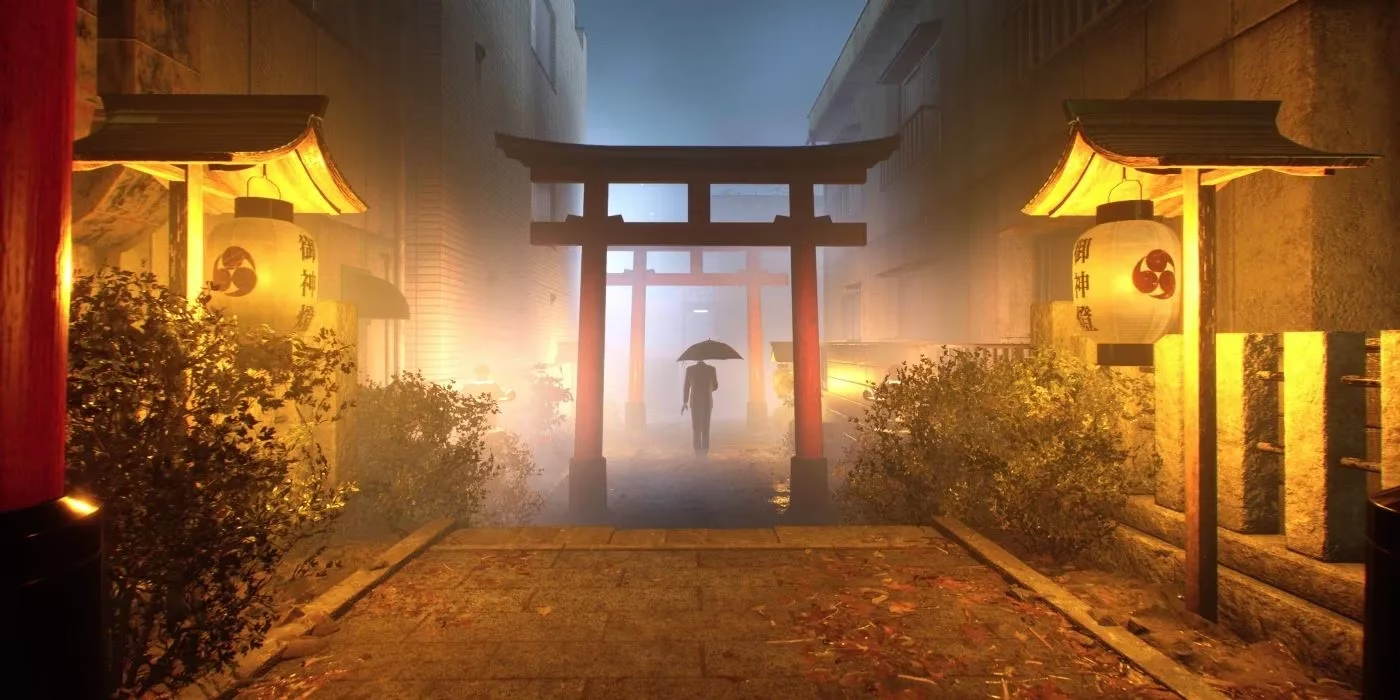
The narrative of GhostWire: Tokyo reads like an urban legend that got way out of hand – in the best possible way. One moment Tokyo is a bustling metropolis; the next, a devastating occult event causes 99% of its population to vanish into thin air. Players step into the shoes of Akito, a young man who survives a near-fatal crash only to find himself possessed by a spectral investigator named KK. This strange encounter awakens supernatural powers within him, turning Akito into a weapon-wielding conduit of ethereal energy. His mission? To uncover the truth behind the mass disappearance and put an end to the mysterious group of Hannya mask-wearing figures who seem to be pulling all the strings. The story doesn’t spoon-feed you every twist – it lets you peel back layers like an onion, each revelation more chilling than the last. It’s a narrative that respects the player’s intelligence and drowns you in moody uncertainty, making every shadow and empty alleyway feel alive with dread.
Gameplay That Casts a Spell 🔥
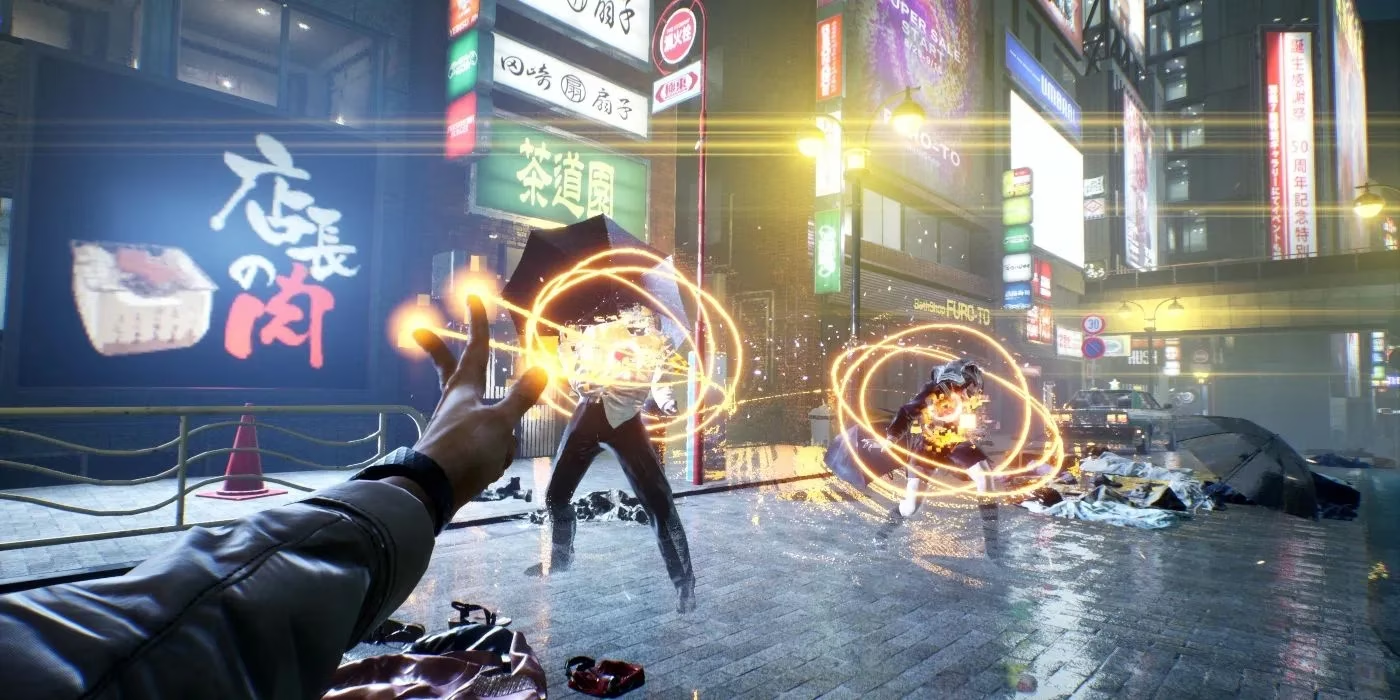
Where GhostWire: Tokyo truly steals the show is in its combat. The initial teaser’s mantra – “Don’t fear the unknown, attack it” – sets the stage for a total departure from the cowering-in-corners vibe of traditional horror. Instead, the game encourages you to be the aggressor, lunging head-on at the ghostly Visitors that plague the city. Combat Director Shinichiro Hara, a DOOM veteran who helped birth the iconic Glory Kill system, poured that same savage elegance into Tango Gameworks’ new IP. The result is a combo-heavy ballet of hand gestures inspired by Kuji-kiri, turning you into a high-tech ninja exorcist who feels utterly unstoppable. Ranged spells, which can be customized and upgraded to suit your playstyle, explode from Akito’s fingertips like living fireworks – slicing, blasting, and binding enemies in a dazzling light show. When a Visitor’s “core” becomes exposed, you can execute a contextual takedown that rips the entity apart in a glorious display of spectral dissolution, and these can be chained to wipe out groups in the blink of an eye. A single bow and arrow also appears, offering a more traditional tool for stealthy approaches, but the real star is the magical arsenal that makes every skirmish feel like a boss fight from an anime episode.
The Bestiary of Urban Yokai 👻
The enemies you face aren’t your garden-variety zombies or soldiers. GhostWire: Tokyo draws deeply from traditional Japanese folklore, giving each Visitor a modern, twisted makeover. From the umbrella-like kasa-obake to the faceless noppera-bō, these spirits demand that you learn their strengths and weaknesses, forcing you to switch up tactics on the fly. This isn’t a game where you can just spam a single spell and waltz to victory; it’s a cerebral brawler that rewards mastery of its systems. The variety keeps the tension razor-sharp, because even if you’ve slain a dozen of one type, a new breed might just catch you slipping and leave you scrambling.
A City That Breathes, Even When It Shouldn’t 🏙️
Beyond the combat, the open-world Tokyo of GhostWire is a sight to behold. Drenched in rain-slicked asphalt and humming neon, the rendition of the city is both eerily empty and impossibly alive. Side quests bubble up from the sorrow of departed souls, and every convenience store or rooftop shrine hides a secret or upgrade waiting to be uncovered. The verticality adds another layer, letting you grapple yokai to soar above the streets like a phantom yourself. It’s a world that constantly rewards curiosity, and Tango Gameworks’ atmosphere-building chops – honed on The Evil Within – are on full display. Even four years post-launch, when newer titles have come and gone, few games manage to bottle lightning quite like this one.
The original timed PS5 exclusivity gave the title a head start, and the later Xbox Series X|S release introduced even more gamers to its charms. A post-launch update, the “Spider’s Thread” update, added a roguelite mode that further expanded the already stellar gameplay loop. But the core experience – the moment-to-moment dance of dodging spectral attacks and firing off finger-triggered devastation – remains the gold standard for any studio looking to fuse action with the supernatural.
In the end, GhostWire: Tokyo didn’t just follow the hype; it sidestepped it, forged its own path, and in doing so became a cult classic that’s still a hot topic on forums in 2026. It proved that even a studio known for guts and gore could craft something that’s more magical than macabre, and that’s a legacy worth its weight in souls.