Ghostwire: Tokyo’s Spooktacular Origin: From a Tiny Seed to a Paranormal Epic
Ghostwire: Tokyo game development history reveals a cult classic born from persistent ideas and supernatural inspiration.
In the foggy back alleys of game development history, certain titles seem to materialise out of thin air, as elusive as the spectres they feature. By 2026, Ghostwire: Tokyo has already become a cult favourite—a neon-drenched supernatural romp through a deserted Shibuya where visitors rain from the sky and faceless salarymen haunt the streets. Yet few remember that the whole thing began not with a grand summit, but with a scrappy handful of dreamers and an idea that refused to die. Let’s be real: if ideas were ghosts, this one would have been rattling its chains for a very long time.
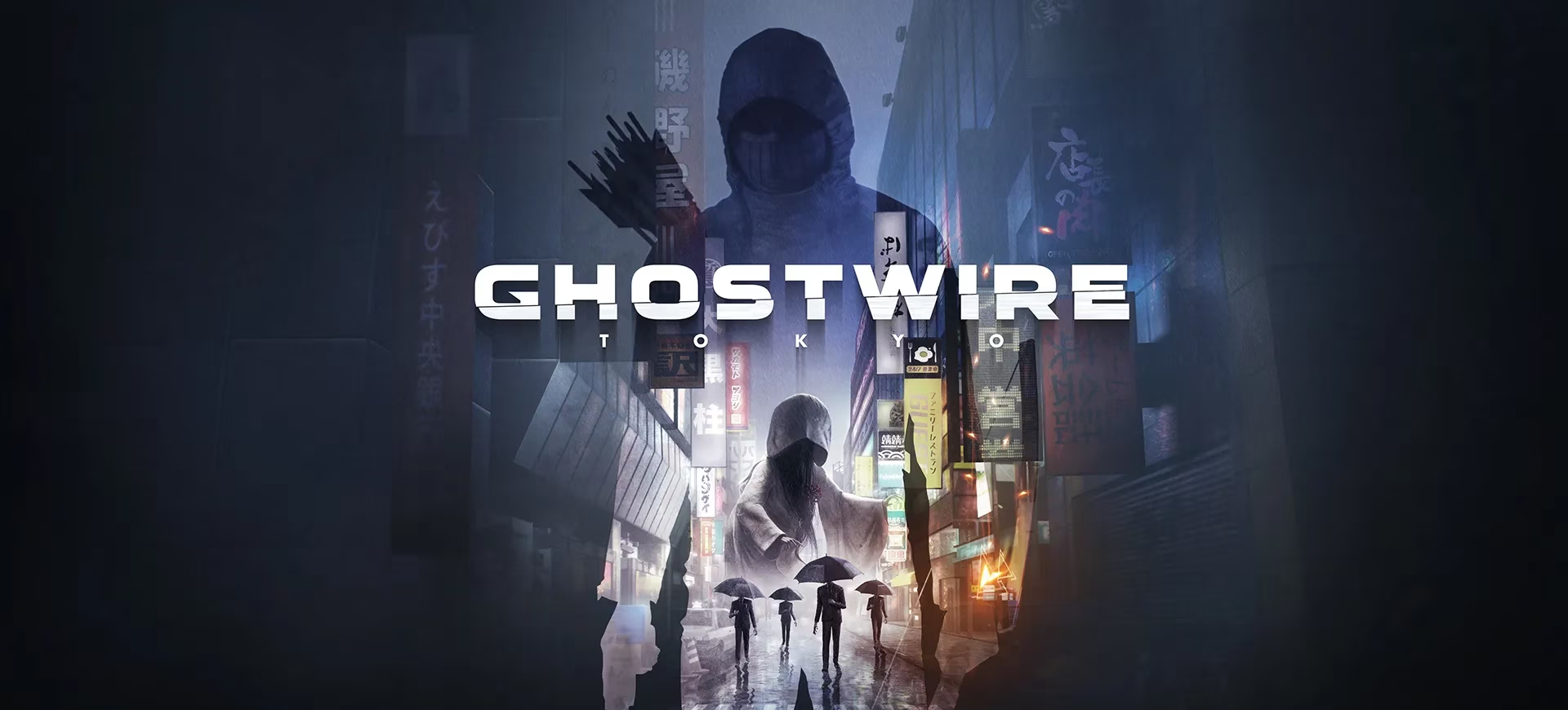
Legend has it—or at least producer Shinji Mikami has it in an old IGN interview—that Ghostwire: Tokyo first flickered into existence inside the cranium of former director Ikumi Nakamura. That spark was so stubbornly persistent that a micro-team of five people spent half a year just trying to pin it down. Mikami himself, the man who taught zombie dogs to crawl through windows, confessed that this project was the longest he’d ever taken on any game. High praise, considering he’s been making players jump out of their skin since the Resident Evil days.
The tale of the game’s gestation sounds like a slow-burn campfire story: the initial five toiled for six months, then the crew swelled to ten, and they politely marinated the concept for a few years before finally screaming “full production!” Sometimes you just have to let the phantoms stew, you know? Mikami only hopped aboard the ghost train around the start of 2019, by which point the idea had already been lurking in Tango Gameworks’ corridors, politely haunting whiteboards and prototyping sessions.
But here’s where the narrative gets a tad melancholic. Ikumi Nakamura, the creative soul whose vibe and grin could light up an entire E3 press conference, left Tango Gameworks in September 2019. Directors leaving mid-stream is nothing new, but it still felt like a poltergeist had suddenly exited the room, taking a sliver of the mystery with it. One had to wonder: would the game survive without its original medium? Spoiler alert—it did. Ghostwire: Tokyo finally crept onto PC and PlayStation 5 in March 2022 (later strutting onto Xbox in 2023), and it served up a deliciously odd cocktail of folkloric terror and first-person spell-flinging. The city itself became the real protagonist, all slick puddles and glowing torii gates, while gravity-defying combat and adorable spirit dogs named shiba inu stole hearts.
To put it mildly, the game’s development timeline makes those dudes who take forty years to build a cathedral look positively hasty. Let’s break down the ghostly timeline with a little table, because who doesn’t love a good chronological séance?
| Year | Happenings :ghost: |
|---|---|
| Pre-2014 | Nakamura’s idea slinks out of the ether. |
| 2014–2016 | Core team of 5–10 people play ghost whisperers for years. |
| 2019 | Mikami formally joins the haunting as producer. |
| Late 2019 | Nakamura departs, leaving a creatively charged ectoplasm behind. |
| 2020–2021 | Tango works silently. Pandemic shenanigans. The project becomes a true ghost story. |
| 2022 | Ghostwire: Tokyo finally consoles the living on PS5 and PC. |
| 2023 | The Xbox crowd gets to meet the Visitor, and a meaty Spider’s Thread update drops. |
What’s particularly endearing about all this is how the game’s own themes—incompleteness, the lingering echoes of vanished people—mirror its creation. It’s as if the project absorbed the very essence of absence and turned it into a gameplay mechanic. You know what they say: life imitates art, especially when that art involves absorbing souls with glowing paper dolls.
By 2026, the gaming landscape has moved on. Tango Gameworks itself went on to dance a different beat with the surprise rhythm-action gem Hi-Fi Rush before being shuttered (pour one out for the corporate reaper, Microsoft). Yet Ghostwire: Tokyo remains a fascinating artifact—proof that a tiny seed planted by a singular creator can, with enough patience and a sprinkle of Mikami magic, blossom into something genuinely original. The game never aimed to be a horror juggernaut like The Evil Within; it wanted to be eerie, yes, but also warm, strange, and delightfully unpredictable. Kind of like the development story itself. So the next time you are walking through a rainy Shibuya crossing in-game and a headless schoolgirl flings fireballs at you, remember: you’re witnessing the climax of nearly a decade of stubborn, beautiful ghost-bothering.