How Star Wars Outlaws Finally Did Justice to Canto Bight
Star Wars Outlaws and Canto Bight create a vivid, immersive setting, blending hypercapitalism with player agency for powerful storytelling.
I still remember the moment I stepped onto Canto Bight in Star Wars Outlaws. The neon lights, the clinking of champagne glasses, the distant roar of fathier races - it all felt alive in a way the movie never managed. It's now 2026, two years since the game launched, and I've replayed Kay Vess's journey multiple times, yet that glitzy, rotten city remains one of my favorite settings in any game. Growing up, I loved The Last Jedi's ambition to show that the real villains of the galaxy are arms dealers profiting from endless war, but the film's detour to Canto Bight felt rushed and sidelined. Massive Entertainment took that seed of an idea and let it bloom into something truly special.
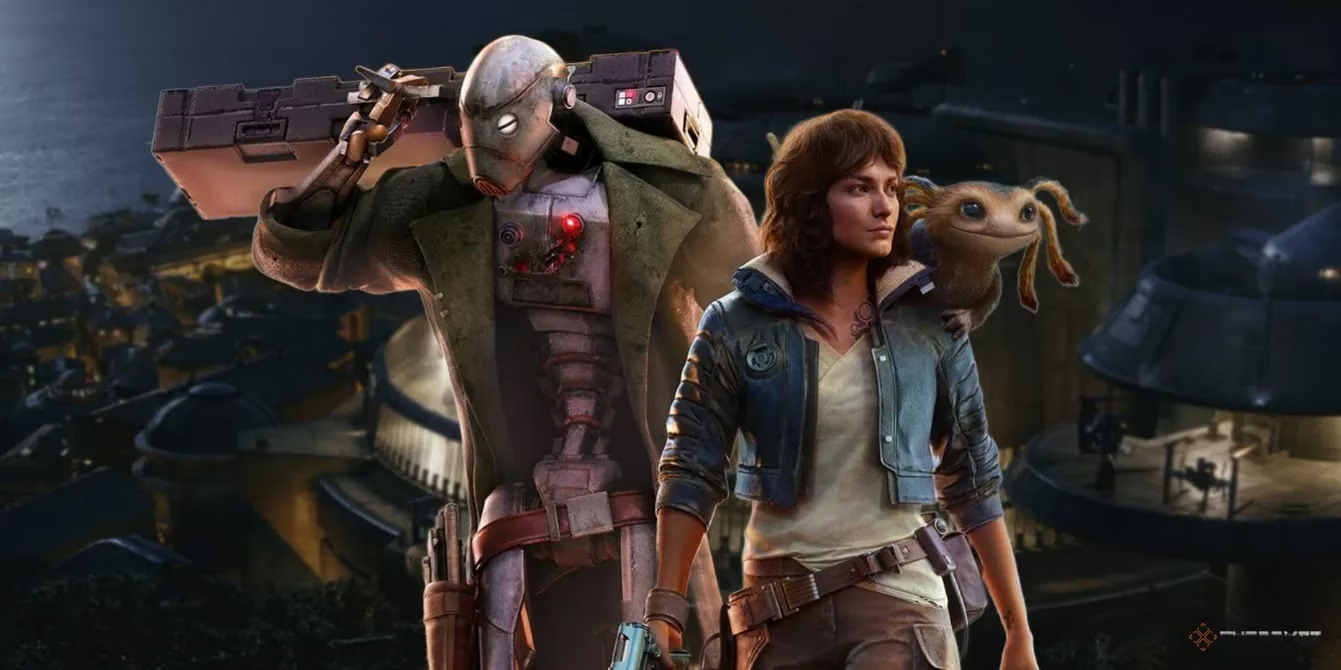
I never expected a video game to get me to care about hypercapitalism in the Star Wars universe. But Outlaws puts you right in the middle of it. Kay Vess grew up in the bowels of Canto Bight, and the early missions let you see the city through her eyes. The contrast between the opulent gambling halls and the cramped back alleys where she learned to survive hit me harder than any movie monologue. You can practically taste the corruption in the air. Here, you're not just watching a protagonist struggle against an unfair society - you're the one deciding how to navigate it.
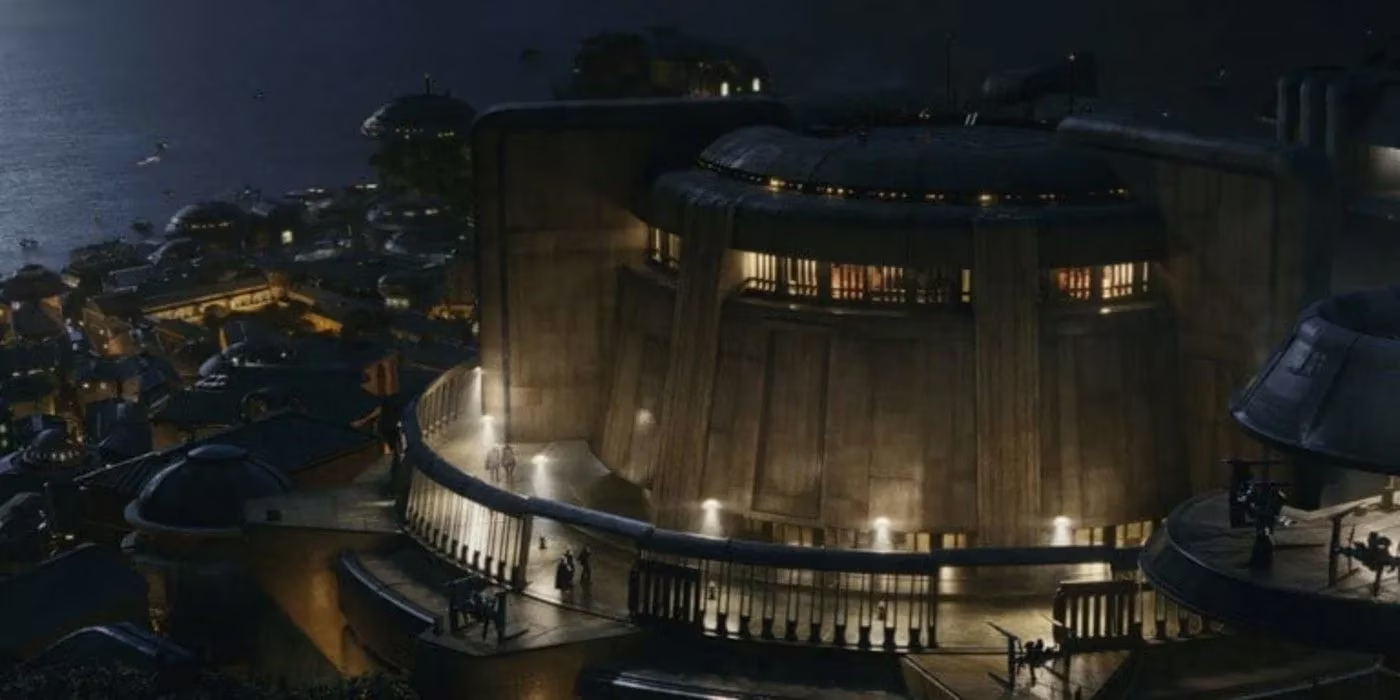
The way Outlaws uses player agency is exactly what Canto Bight needed. In my first playthrough, I played the Robin Hood route. I snuck into the fathier racing stables, used the game's excellent stealth mechanics to slip past guards, and tampered with the race outcomes. I'd bet heavily against the favored fathier after swapping its diet with something that made it sluggish. The race day arrived, and as the pompous elites lost millions, I swiped credits right out from under their noses. Later, I dumped a bag of those winnings in the poorest district, watching Kay's reputation shift. The game never explicitly judges you, but the world reacts. Vendors in the undercity greeted me with new respect, while bounty hunters from the high-roller clubs started to sniff around. That emergent feedback loop made me feel like a genuine scoundrel with a heart of gold.
But then I played again. On my second run, I fully embraced the dark side of Canto Bight. Why rob the arms dealers when you can work for them? I fixed races for the capitalist overlords, sabotaging underdog fathiers to guarantee the rich stayed richer. My Kay became a smuggler of the very weapons of mass destruction those elites traded so freely. The game doesn't shy away from showing the consequences - suddenly I was walking through neighborhoods that had been devastated by the very arms I'd helped transport. I felt a knot in my stomach. That's the power of interactive storytelling. No film can replicate the weight of knowingly pressing the button that dooms a block of civilians, then walking through that block and seeing the aftermath. Star Wars had always danced around the moral ambiguity of war, but here I was, complicit in it.
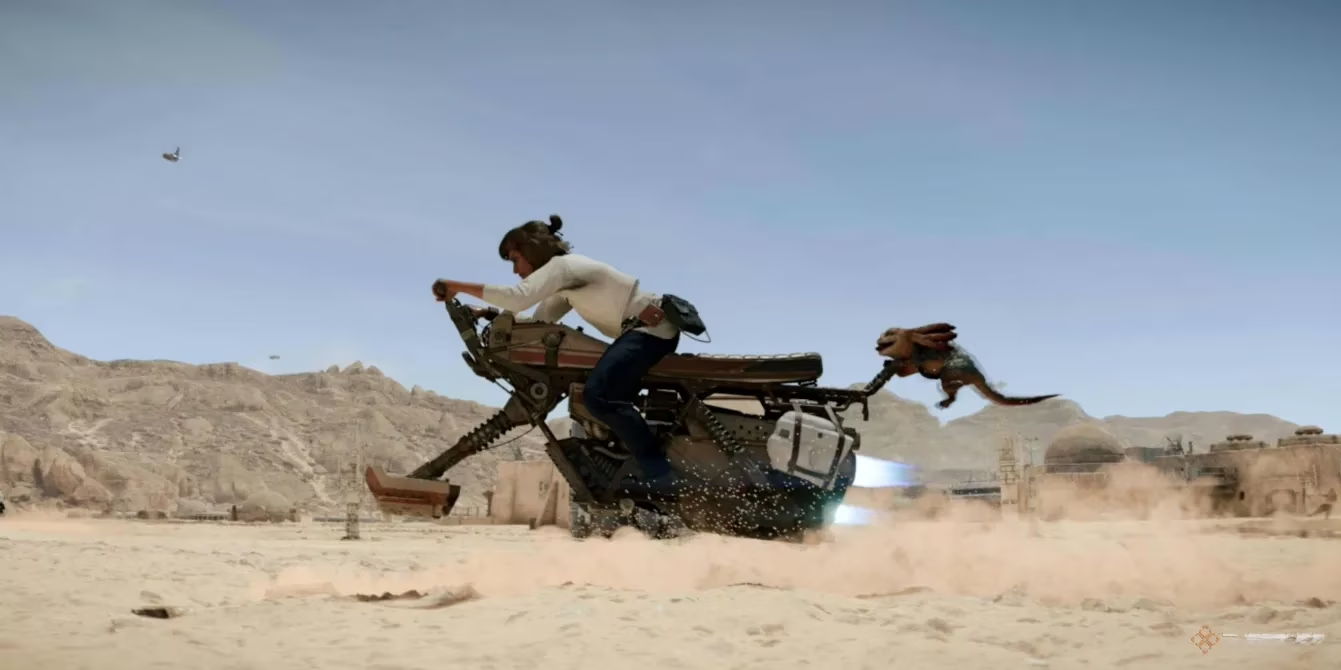
The side quests in Canto Bight are equally compelling. I remember one where a former child slave of a casino owner asks you to steal a personal holo-journal. It held evidence of wartime profiteering that could bring down the entire family. The mission required me to infiltrate a luxury yacht party. I had to balance charm, bribery, and stealth to talk my way aboard, and the tension almost made me break out in a sweat. If you succeed, the journal goes public, and you see the cascading effects: the owner loses his fortune, the fathier race track gets shut down for a while, and new dialogue options open up about justice. If you fail, the child is sent to work off a debt forever, and the city barely flinches. The permanence of that outcome still haunts me.
I've always believed that video games are the best medium for prompting genuine introspection. Film can show you a message, but a game lets you live it. Star Wars Outlaws understands that Canto Bight isn't just a set piece - it's a mirror to our own world's cozy relationship with the military-industrial complex. By giving us choices, meaningful ones with tangible consequences, Massive Entertainment elevated that commentary from subtext to player experience. Some critics say the game's stealth can be clunky, and I won't argue that its open-world formula feels familiar, but within the context of this city, it all clicks. The jankiness almost adds to the underdog charm. You're not a Jedi; you're a survivor, and every close call feels earned.
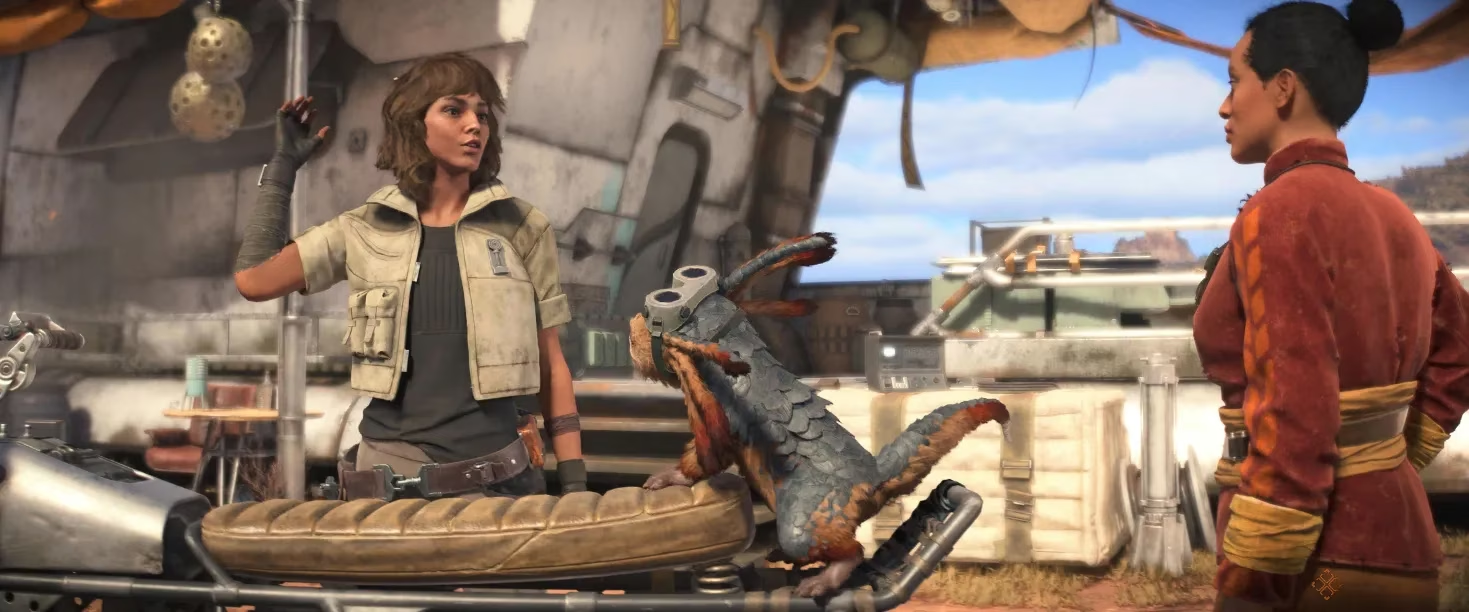
Now, two years later, I find myself still thinking about Canto Bight. The city has become a benchmark for how licensed games can deepen lore rather than just exploit it. When I watched The Last Jedi in 2017, the casino planet was a missed opportunity. But Outlaws redeemed it by letting me decide what kind of person Kay becomes in the face of rampant greed. Whether I was stealing from the rich, working for them, or trying to walk a fine line in between, the game made me confront my own values. That's the beauty of it. Not every mission is perfect, and sometimes the repeated lines from NPCs can grate, but the big moments stick. Canto Bight is no longer just a pretty backdrop or a heavy-handed metaphor; it's a place where my choices mattered, and that's something Star Wars has rarely given us before.