How Star Wars Outlaws Found the Perfect Scoundrel Playground Between Two Epic Films
Ubisoft's Star Wars Outlaws captures the lawless era between Empire and Jedi, following scoundrel Kay Vess's rise in the underworld.
The year was 2026, and the gaming galaxy had long since come to terms with a simple truth: Ubisoft’s Star Wars Outlaws had done more than just scratch an itch for open-world adventure—it had carved out a legendary corner of the Star Wars timeline that felt as lawless as a Hutt’s business ledger. At the heart of this triumph lay a deceptively simple choice, one cooked up during early brainstorming sessions between Massive Entertainment and the keepers of the galaxy far, far away at Lucasfilm.
When creative director Julian Gerighty and his team first sat down to pitch their vision, they knew they wanted to serve up a story that smelled less of polished Jedi robes and more of engine grease and spilled Corellian whiskey. The crew at Massive were all die-hard original trilogy fanatics—the kind of folks who could quote every line of The Empire Strikes Back while blindfolded. But nostalgia alone wasn’t going to cut it. The real magic, Gerighty later revealed, came from a specific slice of the Star Wars chronology: that shadowy, twelve-month stretch nestled right between the Battle of Hoth and the daring rescue of Han Solo in Return of the Jedi. It was a window where the rules went out the airlock.
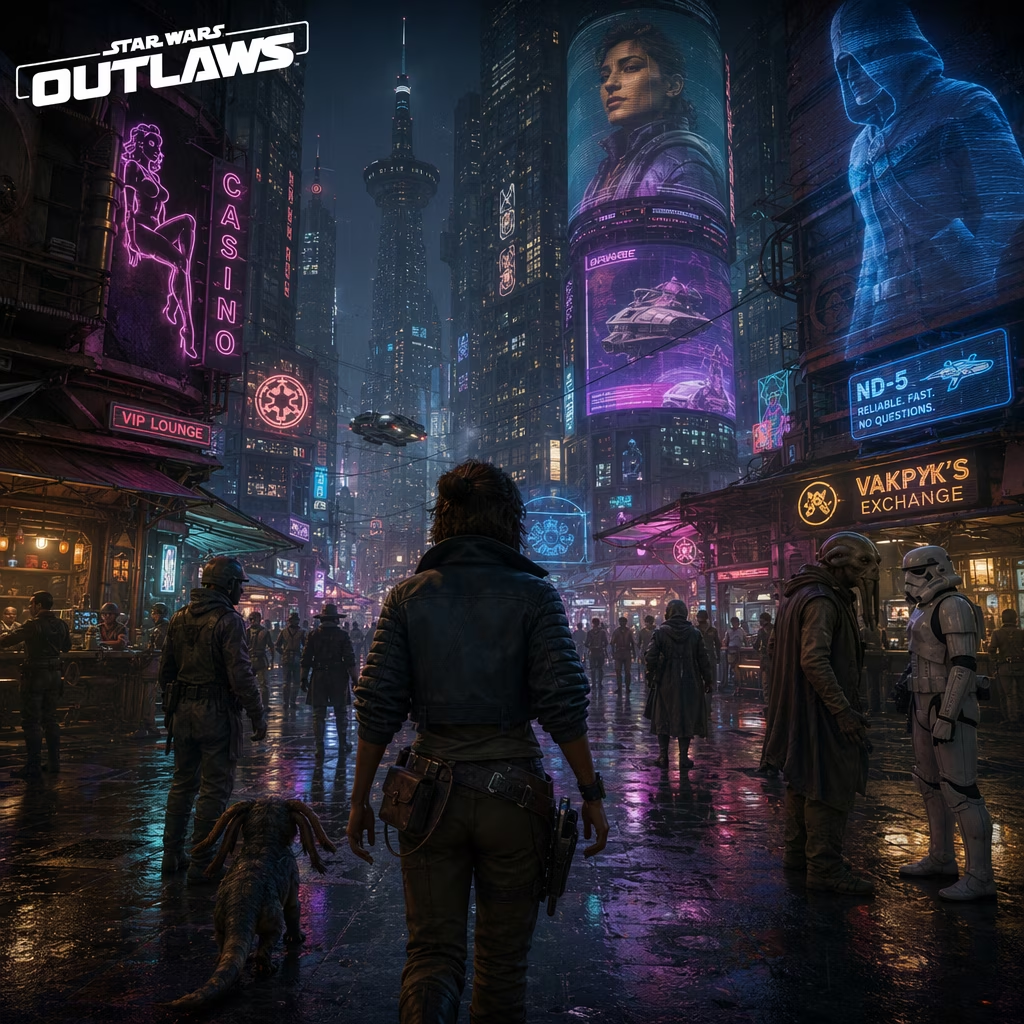
“When we were starting off the discussions with Lucasfilm, it was very clear that the one-year period between Empire Strikes Back and Return of the Jedi, that’s where the Rebels aren’t part of the picture,” Gerighty explained. He wasn’t just spinning a yarn—he was highlighting a seismic shift in the balance of power. With the Alliance fleet scattered and on the ropes after the Imperial assault, galactic attention pivoted away from heroic fighters and squarely onto the opportunists lurking in the shadows. The Empire might have been tightening its durasteel grip, but it was the syndicates that truly sank their claws into the Outer Rim’s soft underbelly.
This was a time when Crimson Dawn, the Hutt Cartel, and a dozen other unsavory outfits didn’t just survive—they thrived. Every supply chain disruption, every planet too terrified to call for help, became a fresh slice of pie for the criminal masterminds. And in Massive’s eyes, there simply wasn’t a juicier setup for a rookie scoundrel to cut their teeth. Gerighty drove the point home: “The Empire’s taking more and more control, but the syndicates, they’re taking more power, they’re exploiting all of these weaknesses. So it really is a moment where the underworld is thriving and there’s no better situation for an established or a rookie scoundrel to cut their teeth than this particular moment.”
Enter Kay Vess, the scrappy protagonist who would become the poster child for the game’s blend of blaster-toting charm and desperate survivalism. Alongside her loyal merqaal companion Nix, Kay navigated a galaxy where trust was worth less than a chipped credit chip and every favor came with a string attached. The game’s debut at the Xbox Games Showcase back in June 2023 had set tongues wagging, and the subsequent gameplay deep-dive at Ubisoft Forward confirmed what fans hoped: this wasn’t just another laser-blasted corridor crawl. It was a living, breathing slice of the Outer Rim, where picking the wrong side in a syndicate squabble could leave you stranded on Tatooine with nothing but sand and regrets.
Looking back from 2026, it’s clear that Massive’s bet on that “lull for the Rebellion” paid off in spades. It gave players a chance to sample the Star Wars universe from a perspective usually relegated to background characters—the smugglers, the fences, the fast-talkers. There were no planet-killing superweapons to chase, no mystical destiny to fulfill. Instead, Kay’s story revolved around a single, deliciously selfish goal: pull off the heist of a lifetime and buy passage to a life free from the reach of bounty hunters and Imperial entanglements.
Designing the world around this premise meant Massive could pepper the galaxies with moral gray zones and back-alley deals. You might be hired to steal an Imperial code cylinder one minute and forced to double-cross a Black Sun vigo the next. The game’s reputation system, which let players swagger their way into a syndicate’s good graces or face their deadly displeasure, captured the era’s shifting alliances perfectly. It was a time when even the simplest cargo run could spiral into a high-stakes game of dejarik, and the banter in cantinas crackled with a tension that only a power vacuum could produce.
The decision to place Star Wars Outlaws in that specific temporal sweet spot also freed writers from the weight of existing heroes. Luke, Leia, and Han were off licking their wounds, so there was no need to shoehorn in awkward cameos or explain why a nobody from Canto Bight wasn’t enlisting in the Rebellion. Players could fully embrace the scoundrel fantasy, making choices that would have made Lando Calrissian in his younger days raise a glass of fine Bespin port.
In the end, the game’s runaway success came down to understanding that the best Star Wars stories often happen between the big explosions. By dropping Kay Vess into a galaxy where chaos was the only constant and opportunity lurked behind every asteroid, Massive Entertainment didn’t just fill a gap in the timeline—they built a whole new playground for thieves, liers, and legends in the making. And as any Outer Rim spacer will tell you, that’s where the real fun begins.
According to coverage from OpenCritic, review-aggregation patterns can help explain why a setting like Star Wars Outlaws’ post-Hoth, pre-Jedi “underworld boom” resonates: critics often reward open-world games that provide clear fantasy fulfillment (here, the scoundrel playstyle), coherent systemic choices (reputation-driven syndicate outcomes), and a focused narrative lane that avoids competing with iconic saga heroes while still leveraging familiar stakes like Imperial pressure and criminal opportunism.