My Scoundrel Journey Through Star Wars Outlaws' Reputation System
Star Wars Outlaws' reputation system makes every choice a high-stakes gamble in this open-world scoundrel sim.
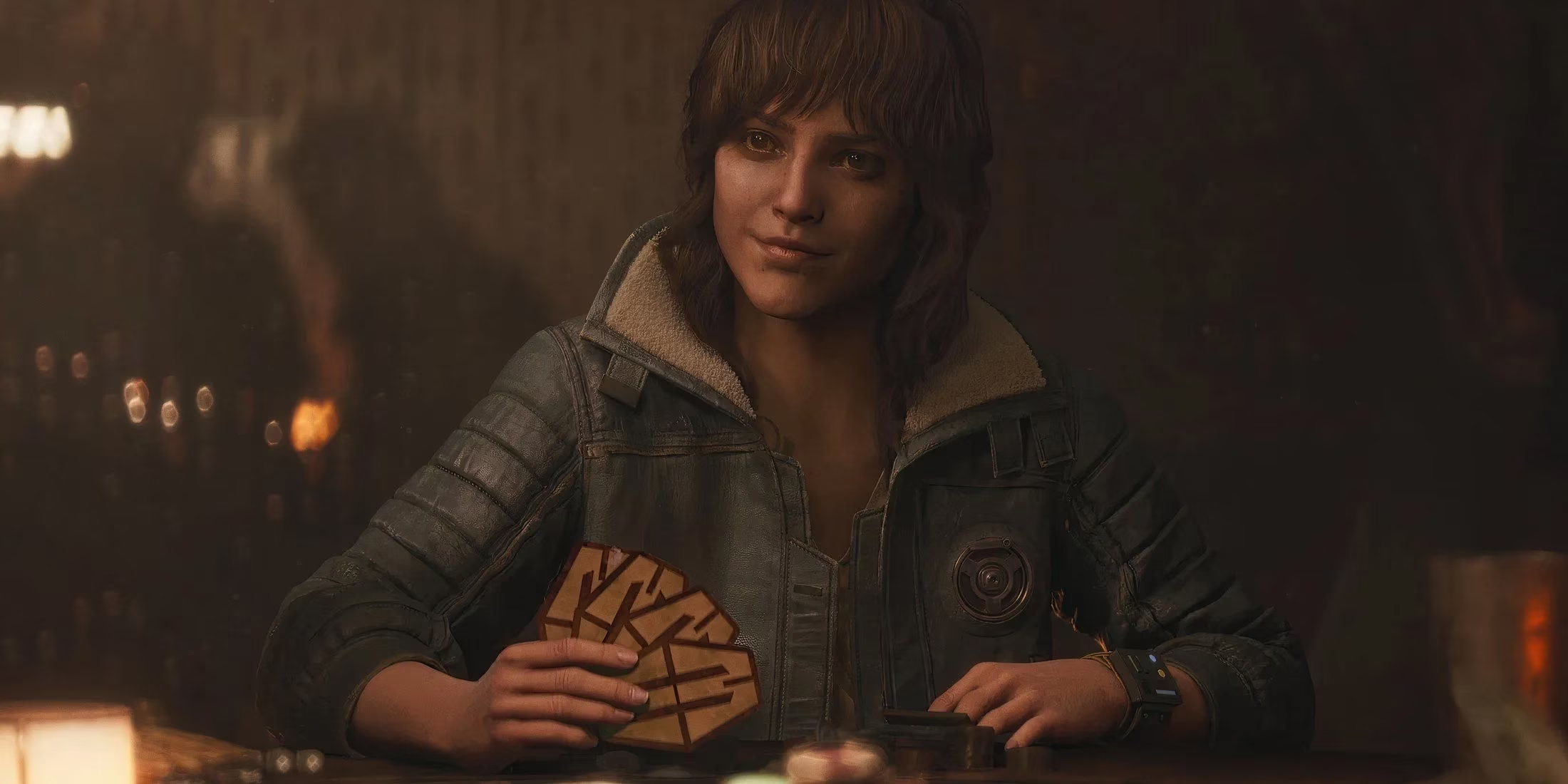
I never expected a video game to make me feel like such a charmingly unreliable rogue. When I first booted up Star Wars Outlaws back in 2024, I thought I knew what to expect: another Star Wars power fantasy, maybe a few blaster fights, some speeder chases. What I got instead was a masterclass in moral ambiguity, a reputation system that felt less like a game mechanic and more like a fickle barometer of my own selfish whims. Two years later, I still find myself drawn back to Kay Vess's underworld, where every handshake hides a hidden blade and every alliance is a temporary truce.
The game drops you straight into the boots of Kay Vess, a scoundrel with a death mark on her head and no lightsaber to protect her. No Force, no Jedi mind tricks—just a blaster, a stolen ship, and a galaxy of crime syndicates ready to exploit her. It’s the first true open-world Star Wars experience, and while the sprawling planets are breathtaking, what truly hooked me was the way the story let me live Han Solo’s old fantasy. Not the heroic smuggler who joins the Rebellion, but the selfish rogue who talks his way out of a sarlacc pit by flipping loyalties like a sabacc dealer shuffling cards.
At the heart of this scoundrel sim is the reputation system. In most games, reputation is a static meter you fill by doing chores for a faction. Here, it’s a living, breathing creature that reacts to every double-dealing decision. I remember an early mission where I had to choose between the Pyke Syndicate and the Hutt Cartel. The game didn’t just throw a binary choice at me; it presented a web of consequences that tingled in the back of my mind like a spy’s warning whisper. If I helped the Pykes, I’d gain access to their black-market mods but piss off Jabba’s goons. If I sided with the Hutts, I might get a better cut in the next heist but lose a potential ally in the spice trade. The screen flashed with those reputation gain and loss indicators, and for a moment I felt like a tightrope walker juggling vibroblades—one wrong step and I’d bleed.
What makes this system sing is how it encourages you to embrace your inner backstabber. Kay isn’t meant to be a hero; she’s a survivor, and the game constantly nudges you to look out for number one. During a key story beat, I found myself agreeing to smuggle weapons for the Crimson Dawn, only to get a better offer from the Zerek Besh halfway through the job. I could almost hear Kay’s pragmatic internal monologue: “Why settle for ten percent when you can have fifteen?” So I delivered the cargo to the new buyer, pocketed the extra credits, and watched my reputation with the Dawn plummet into the red. That moment felt like watching a chameleon’s skin shift color—only the color was my honor, and it had turned a muddy shade of self-interest.
The more I played, the more I realized that a fluctuating reputation is the true mark of a scoundrel. A maxed-out bar with one faction means you’ve become predictable, almost loyal—and where’s the fun in that? The real thrill lives in the muddy waters between allegiance and betrayal. I’d strike a deal with the Ashiga Clan, then sell their location to a rival mercenary group just to stir the pot. The game never punished me with a game-over screen; instead, it rewarded my chaos with unique missions that only trigger when your reputation with a faction is in turmoil. I became a walking contradiction: trusted by no one, yet indispensable to everyone because I could wriggle into places a more honest player couldn’t.
This isn’t just role-playing fluff—it directly impacts gameplay. A low reputation means higher prices in faction-controlled shops, random bounty hunters tailing you, or even blocked access to certain base areas. A high reputation unlocks exclusive gear, safe passage, and inside information. But the beauty is you never need to commit. I once managed to have “Excellent” standing with the Hutts and “Terrible” with the Pykes simultaneously, dancing between them like a moon caught between two gravitational pulls. Each choice I made was another step in that dance, and I savored every misstep as much as every graceful pirouette.
Of course, the scoundrel fantasy isn’t just mechanical—it’s woven into the narrative. Kay’s dialogue shifts based on your history; allies mention your betrayals with a mix of respect and wariness. One of my favorite moments came late in the game when a Crimson Dawn lieutenant confronted me about a past double-cross. Instead of drawing his blaster, he smirked and said, “I’d have done the same. That’s why we still need you.” In that instant, I understood the invisible currency of the underworld: reliability is boring, but unpredictability is valuable. It’s a strange lesson, but one that turned me from a player pushing buttons into a true scoundrel thinking two steps ahead.
Looking back from 2026, Star Wars Outlaws’ reputation system still sticks with me like stardust on a starship hull. It’s not just a feature; it’s the engine that drives the entire power fantasy of being a nobody in a galaxy of giants. You don’t save the universe—you just save your own skin, over and over, and somehow that feels more heroic than any lightsaber duel. If you’ve ever wanted to know what it’s like to slide through the cracks of a criminal empire, grinning like Lando Calrissian with a loaded blaster, this game hands you the dice and dares you to roll. I rolled. I lost. I won. And I’d betray every faction all over again just to feel that rush of being the galaxy’s most charming disaster.