Navigating the Underworld: My Journey Through Star Wars Outlaws' Criminal Syndicates
Star Wars Outlaws and criminal factions deliver an exhilarating open-world adventure, with Kay Vess navigating syndicates and galactic intrigue.
As I eagerly awaited the release of Star Wars Outlaws back in 2024, the promise of exploring the galaxy's seedy underbelly was a dream come true. Now, in 2026, having spent countless hours immersed in its sprawling open world, I can say the experience has been nothing short of phenomenal. The game truly delivered on its premise, casting me as the scoundrel Kay Vess during that tense period between The Empire Strikes Back and Return of the Jedi. My mission? To navigate a treacherous web of galactic syndicates, avoid the ever-looming Empire, and pull off the ultimate heist. The heart of this adventure wasn't just the blaster fights or starship chases—it was the deeply realized, often dangerous criminal factions that controlled the Outer Rim. Each organization felt like a living, breathing entity with its own rules, territories, and agendas, turning every interaction into a high-stakes game of survival.
The Zerek Besh: A Personal Vendetta
My journey began, ironically, on my homeworld. The Zerek Besh, run by the cunning Sliro, made Canto Bight's glittering casinos feel like a gilded cage. Sliro's vendetta against me wasn't just a plot point; it was a persistent shadow, a ghost in the machine of the galactic underworld that dictated my every move. Interacting with them was like dealing with a sentient credit chip—cold, calculating, and obsessed with transactional value. Their base, buried beneath the opulent spires of the casino city, was a fortress of avarice. While their full history was a mystery at launch, my adventures revealed them to be masters of financial warfare and information brokering, their influence seeping into the galaxy's economy like a slow-acting toxin.
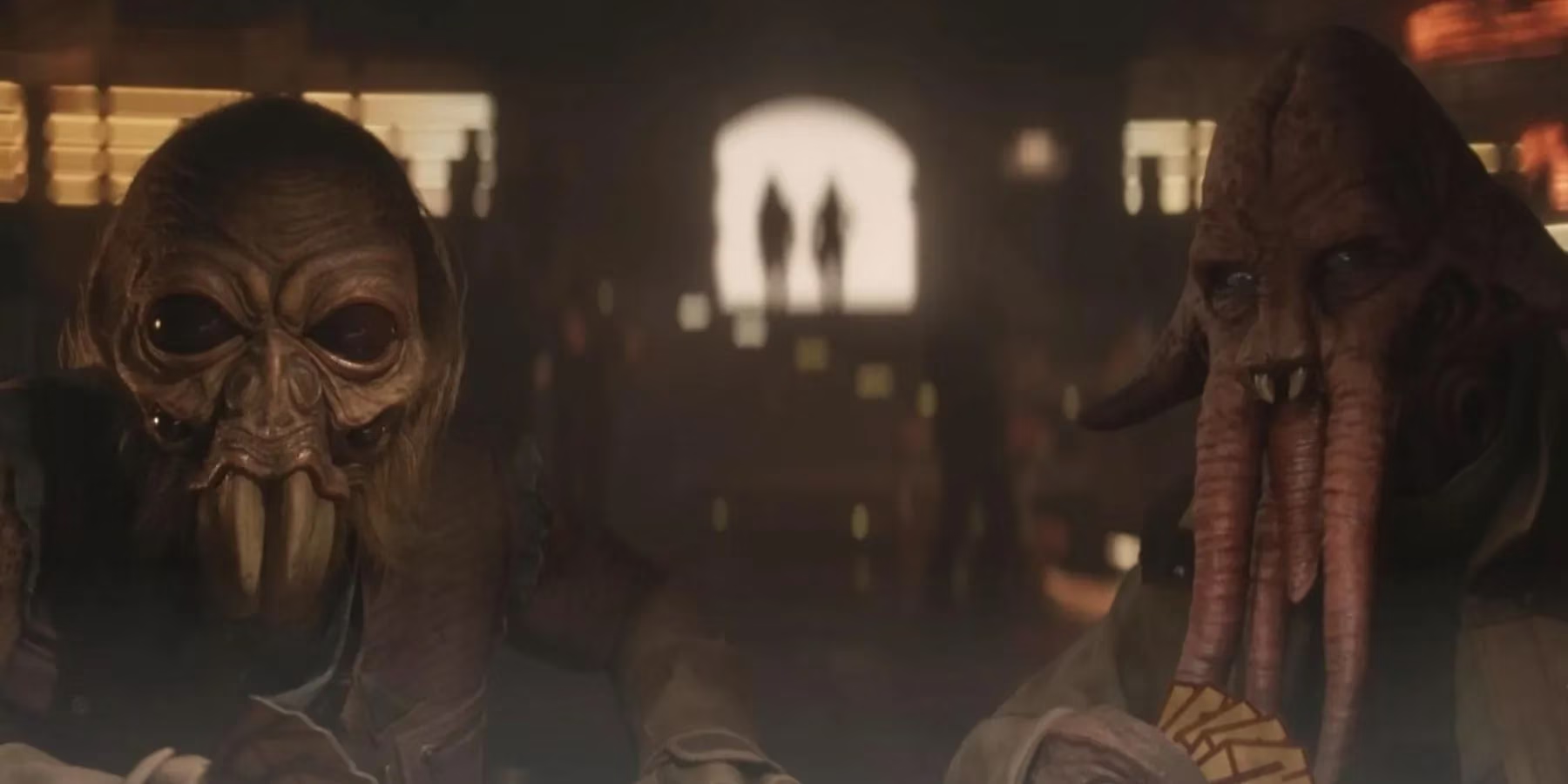
The Enigmatic Ashiga Clan
If the Zerek Besh were bankers, the Ashiga Clan were the silent architects of chaos. This hivemind of insectoid Melitto, operating from the frozen peaks of Kijimi, was one of the game's most fascinating creations. Dealing with them was an exercise in alien psychology. They didn't communicate like other factions; their negotiations felt like listening to a colony of hyper-intelligent ants performing a complex, synchronized dance. Their business in smuggling and sabotage was executed with a terrifying, unified precision. Uncovering their motives was less about finding ledgers and more about deciphering patterns in their hive's behavior, making every encounter with them uniquely unsettling and memorable.
The Galactic Power Players
Of course, no criminal underworld would be complete without its established giants. Navigating their power structures was the core of my political gameplay.
| Syndicate | Homeworld/Territory | Primary Business | Key Trait |
|---|---|---|---|
| The Hutt Cartels | Tatooine / Nal Hutta | Varied (Slaving, Smuggling, Racketeering) | Familial, Brute Force |
| The Pyke Syndicate | Oba Diah | Spice Production & Distribution | Ruthless, Monopolistic |
| Crimson Dawn | Mobile / Hidden Cells | Shadow Warfare, Intelligence | Ideological, Secretive |
-
The Hutts were the immovable objects of the Rim. Jabba's presence, even from beyond the grave, was felt everywhere. Their power, derived from controlling key hyperspace lanes, meant that crossing them was like trying to sail a ship without water—utterly impossible if you wanted to get anywhere. Their governance was a messy, familial affair, where favor and cruelty were the only currencies that mattered.
-
The Pyke Syndicate was the galaxy's most ruthless corporation. Their monopoly on the spice trade made them indispensable and terrifying. Their operations on Oba Diah were fortified and efficient, and their soldiers were disciplined to a fault. Working with them was a necessary evil, a pact with a devil who kept impeccable books.
-
Then there was Crimson Dawn. Under Qi'ra's leadership, they were a specter haunting the Empire itself. Unlike the profit-driven Hutts or Pykes, Crimson Dawn was driven by a cause: sowing chaos to break the Imperial machine. Their agents were everywhere and nowhere, and their plans were layers deep. Engaging with them felt less like a business deal and more like being drafted into a shadow war. While the legendary Darth Maul was long gone by this era, his legacy poisoned every corridor of their organization, a silent symphony of rage that Qi'ra conducted with chilling precision.
The Underworld Ecosystem: My Role as Kay Vess
Surviving in this ecosystem required more than a quick trigger finger. I had to become a diplomat of the disreputable. My reputation with each faction was a constantly shifting landscape:
-
Building Trust (or Fear): Completing jobs for one syndicate could irreparably damage my standing with their rivals. Helping the Ashiga Clan sabotage a Pyke spice convoy made me a hero on Kijimi but painted a target on my back on Oba Diah.
-
Playing the Middle: Sometimes, the best strategy was to play factions against each other, like a gardener carefully pruning two poisonous, competing vines, hoping they'd strangle each other before consuming me.
-
The Imperial Overlord: Looming over all these syndicate squabbles was the Galactic Empire. Their patrols and blockades added a constant layer of danger. A successful heist meant not just evading gangsters, but slipping through the cold, bureaucratic grip of Imperial law.
In the end, Star Wars Outlaws succeeded in making me feel like a genuine part of this living, breathing underworld. These organizations weren't just quest hubs; they were forces of nature with their own gravity, pulling my story in unexpected directions. Navigating their alliances and betrayals to pull off my "one big score" was a heist in itself, and the galaxy's rogues, killers, and crime lords provided the most dangerous and compelling vault to crack. The experience was a masterclass in world-building, proving that the most compelling Star Wars stories often happen far from the glow of a lightsaber, in the morally grey shadows where the scum and villainy truly thrive. 🪐✨