Star Wars Outlaws: A Deep Dive into the Planet Design Philosophy for 2026's Epic Adventure
The masterful world-building of *Star Wars Outlaws* sets a new standard for open-world adventures, captivating fans with its authentic exploration of iconic planets and new frontiers. This article delves into the meticulous process of adapting cinematic worlds like Kijimi, translating literary planets like Akiva, and creating the entirely new moon Toshara from scratch.
As we look ahead to the 2026 gaming landscape, the legacy of Star Wars Outlaws continues to captivate fans, particularly its masterful approach to world-building. The game's developers understood from the outset that planets are not just backdrops in the Star Wars universe; they are living, breathing characters. From the sun-scorched dunes of Tatooine to the windswept savannas of a brand-new moon, each location was crafted with an obsessive attention to detail that makes exploration feel truly authentic. This commitment to environmental storytelling set a new standard for open-world adventures, proving that a galaxy far, far away can feel as real and tangible as our own.
Adapting Cinematic Worlds: Kijimi & Cantonica 🎬
For planets like Kijimi and Cantonica, which debuted in the sequel trilogy, the development team had a unique advantage. They were granted access to Lucasfilm's extensive archival resources—the very same blueprints, concept art, and layout designs used to create these worlds for the big screen. This allowed for an unprecedented level of fidelity.
Art and World Director Benedikt Podlesnigg emphasized that this access was crucial for maintaining authenticity. The goal wasn't just to recreate a familiar skyline; it was to build a fully explorable space that felt logically expanded from its cinematic origins. Players aren't just visiting a movie set; they're stepping into a functioning, lived-in version of these planets.
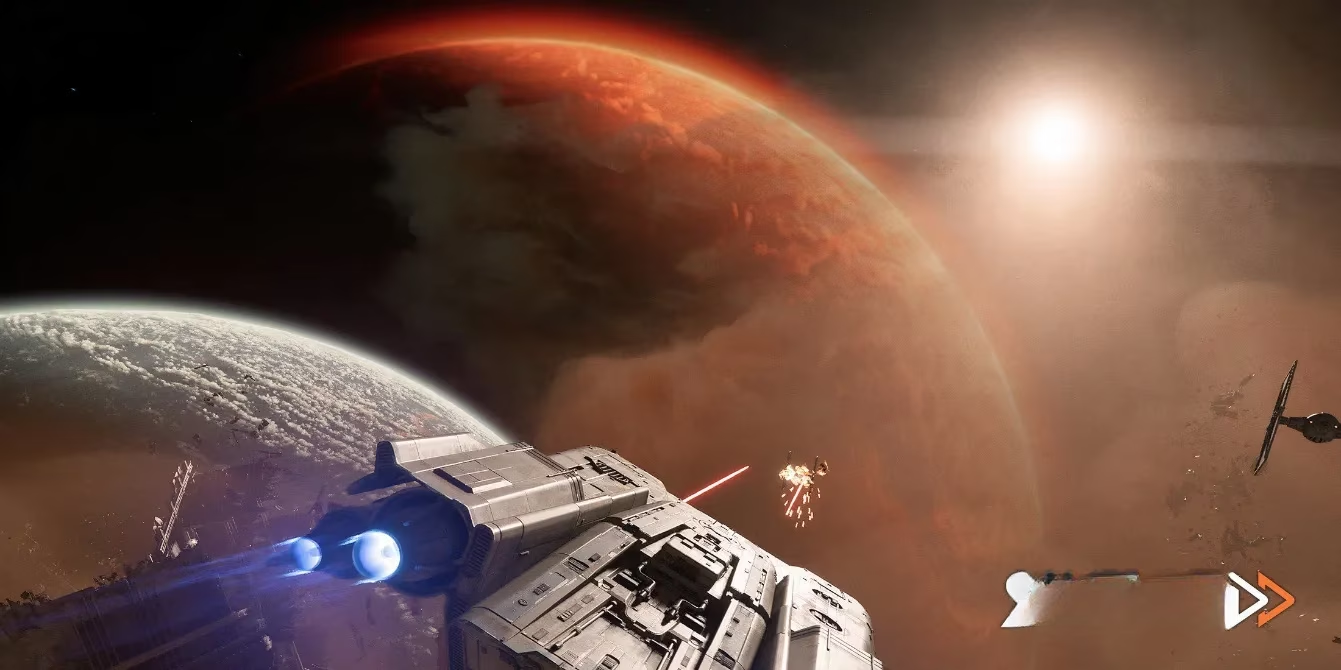
From Page to Polygon: Bringing Akiva to Life 📚
The challenge shifted dramatically with Akiva. This planet existed primarily within the pages of canon novels like the Aftermath series. Here, the team had to become literary archaeologists, translating textual descriptions into a cohesive visual language.
Podlesnigg's team dove deep into the source material, extracting every descriptive nugget. The books mentioned buildings with a thick stucco material, so in the game, that's exactly what players see: structures coated in rough, painted layers that tell a story of climate and culture. This process was about interpretation and expansion—taking a writer's vision and building a tangible, interactive world around it. It’s a testament to how different media can enrich the Star Wars canon.
The Ultimate Challenge: Creating Toshara from Scratch 🌍
Perhaps the most ambitious undertaking was the creation of Toshara, an entirely new arid moon added to Star Wars canon. The philosophy here was "one biome, one exotic ingredient." The team chose the African savanna as their foundational biome—think vast, open plains, golden grasses, and scattered, resilient shrubs.
But a savanna alone isn't uniquely Star Wars. The "exotic ingredient" is Amberine, a valuable crystalline resource that fills the moon's canyons. The developers then asked a crucial question: How would constant, powerful winds interact with this environment and its precious resource?
-
Flora: Plants evolved to be low-growing and wind-resistant.
-
Fauna: Creatures might have adaptations for burrowing or navigating gusty conditions.
-
Culture: Settlements and architecture would be designed to harness or shelter from the wind, with Amberine mining shaping the local economy and conflict.
This holistic approach ensured Toshara felt both fresh and inherently part of the galaxy. In trailers, you can see this vision realized: dirt trails snaking through grasslands, jagged rock formations, and the glitter of Amberine in deep canyons.
Why This Planet Design Philosophy Matters in 2026 🚀
Looking back from 2026, the success of Star Wars Outlaws' world design lies in its varied methodology. It wasn't a one-size-fits-all approach.
| Planet/Moon | Source Material | Design Approach | Key Visual Theme |
|---|---|---|---|
| Tatooine | Films, TV, Games | Iconic Preservation | Endless Desert Dunes |
| Kijimi & Cantonica | Sequel Films | Archival Authenticity | Cinematic Fidelity |
| Akiva | Novel Descriptions | Literary Interpretation | Textured Stucco Architecture |
| Toshara | Original Creation | Biome + Ingredient Formula | Wind-Swept Amberine Savanna |
This layered strategy meant every destination offered a distinct experience, both visually and narratively. Tatooine feels like coming home, Kijimi and Cantonica like walking into a favorite film, Akiva like discovering a lost chapter, and Toshara like pioneering a new frontier.
The result is an open world that avoids the pitfall of repetitive landscapes. Each planet tells its own story through its environment, weather, architecture, and resources. For players in 2026, it remains a masterclass in how to build a universe that feels vast, diverse, and infinitely worthy of exploration. The planets of Star Wars Outlaws are more than levels—they are the heart and soul of the adventure. 🌟