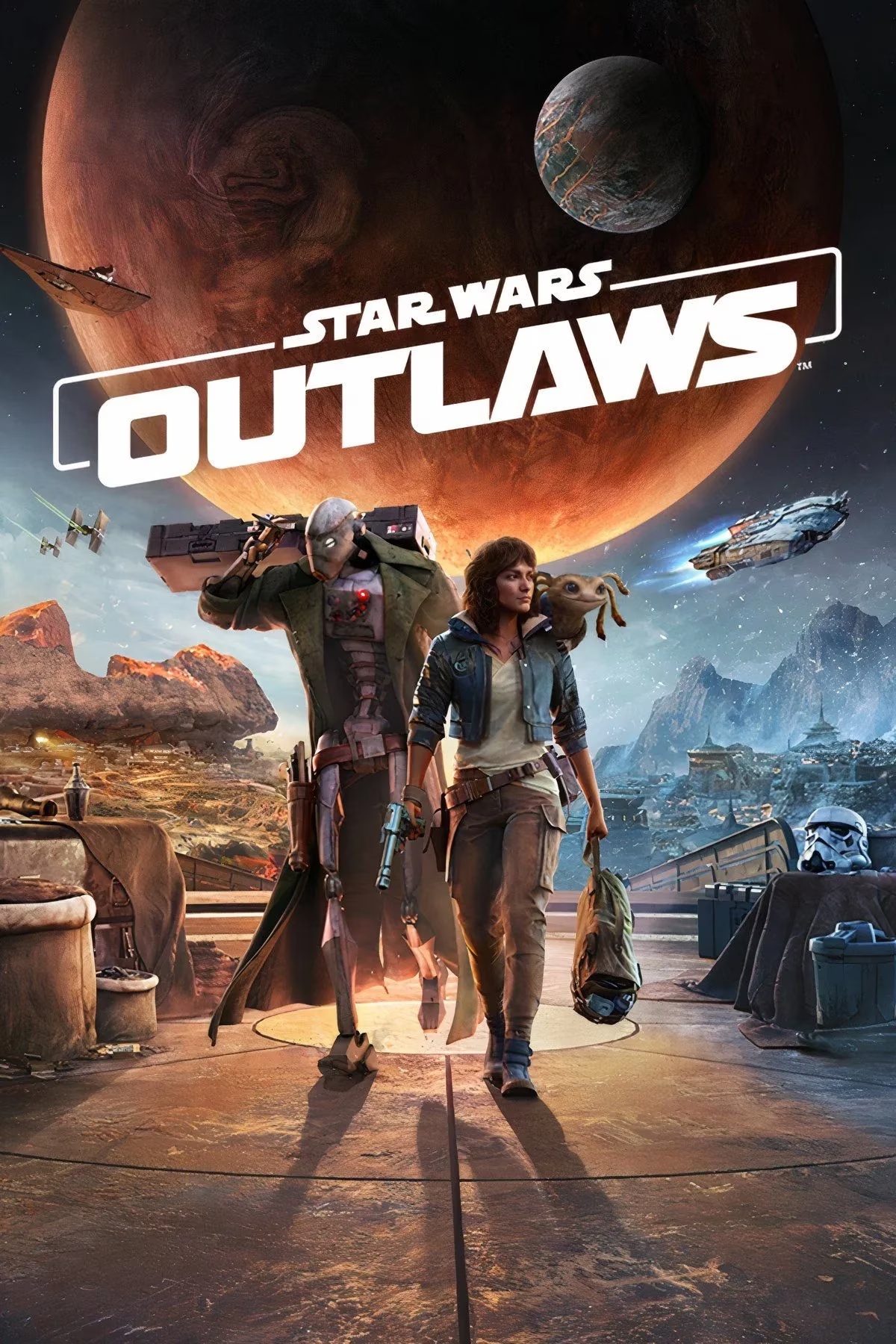
Star Wars Outlaws: A Paradigm Shift in the Galaxy Far, Far Away
Star Wars Outlaws revolutionizes the gaming experience by shifting focus from Jedi-centric narratives to the gritty criminal underworld, featuring an organic character progression system and dynamic reputation mechanics that create uniquely personal adventures.
I've been covering the Star Wars gaming scene for years, and I can say with confidence that the arrival of Star Wars Outlaws in 2024, and its continued evolution into 2026, feels like a seismic event. For too long, our journeys through this beloved galaxy have been filtered almost exclusively through the lens of the Jedi and the Force. While those stories are iconic, the universe has always promised a tapestry of life far richer than just lightsabers and telekinesis. Star Wars Outlaws, with its scoundrel protagonist Kay Vess, is finally pulling back that curtain, offering a gameplay experience as unpredictable and gritty as a smuggler's deal on the Outer Rim. It's not just another game; it's a bold declaration that the heart of Star Wars beats in its cantinas, starports, and shadowy syndicate dealings as much as in its ancient temples.
Growing Kay Vess: More Than Just a Blaster
One of the most revolutionary aspects of Star Wars Outlaws is how Kay Vess evolves. Unlike the traditional RPG level-up system, Kay doesn't simply gain power by defeating enemies. Instead, her growth is organic and tied directly to the living world around her. She must seek out mentors—a legendary gunslinger to hone her aim, a slicer to bypass security grids, or a con artist to master the art of the deal. This system turns every corner of the galaxy into a potential classroom. Finding these experts isn't just a checkbox on a map; it's the genesis of a story, a branching narrative thread woven from Kay's own curiosity and ambition. This approach transforms Kay from a pre-defined hero into a canvas that players paint with their choices, making her journey feel uniquely personal. In a genre often obsessed with cosmic power, Outlaws reminds us that the most valuable skills are sometimes learned in a dusty cantina, not a Jedi enclave.

A Living, Breathing Reputation System
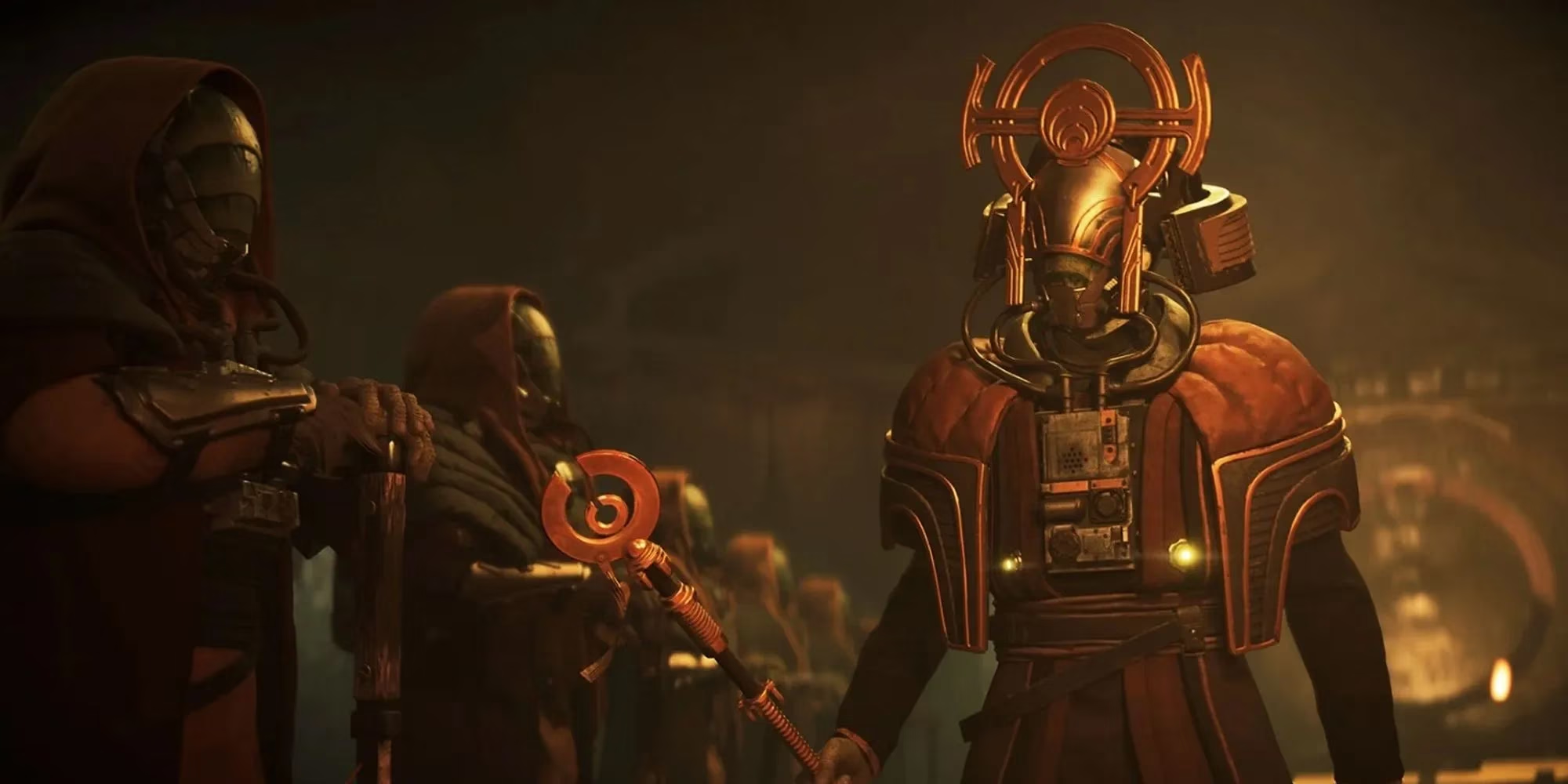
Where Star Wars Outlaws truly carves its own path is with its intricate reputation system, a feature that has only deepened since its 2024 launch. Kay's standing with the galaxy's major powers—the Pyke Syndicate, the Hutt Cartel, the Empire, and others—is a fragile, ever-shifting currency. Every action has a consequence. Helping a Pyke freighter under Imperial attack might earn you a friendly dock on Kijimi, but it could also paint a target on your back for a rival gang. This isn't a simple morality meter; it's a complex web of alliances and betrayals where today's ally can be tomorrow's bounty on your head. The game masterfully illustrates that in the criminal underworld, loyalty is as fluid as spilled spotchka. Navigating these relationships requires a smuggler's cunning, forcing players to think several moves ahead, much like a Dejarik master plotting their strategy. The reputation system ensures that no two playthroughs are the same, making the galaxy feel genuinely reactive and alive.
Exploration and Customization: Your Ship, Your Rules
The freedom promised by Outlaws extends far beyond dialogue choices. A key pillar of gameplay is the tangible progression of Kay's capabilities and her ship, the Trailblazer. Improving your ship isn't just cosmetic; it literally opens up the galaxy. A new engine might allow you to outrun Imperial patrols, while upgraded scanners could reveal hidden smuggling caches on remote moons. This creates a powerful gameplay loop where the rewards of exploration—credits, parts, contacts—directly fuel your ability to explore further and take on riskier, more lucrative contracts. It's a stark contrast to more linear titles where upgrades often feel incremental. Here, upgrading your ship is like trading a rusty speeder bike for a pristine YT-1300 freighter; it fundamentally changes what is possible. This system, combined with the skill-seeking gameplay, allows players to shape Kay into whatever they envision: a master pilot, a stealthy infiltrator, a charismatic negotiator, or a lethal gunslinger.
The Legacy and Future of Star Wars Games
The success of Star Wars Outlaws has proven there is a massive, hungry audience for stories outside the Jedi-Sith dichotomy. By focusing on the grimy, lived-in underworld that has always been a backdrop in the films, Ubisoft has tapped into a vein of storytelling gold. The game's design philosophy—emphasizing player agency, organic character growth, and systemic world interaction—feels like a blueprint for the future. It demonstrates that Star Wars games can be as much about the choices you make in a tense standoff with a Hutt as they are about deflecting blaster bolts with a lightsaber. As we look ahead in 2026, the impact is clear. The canceled Mandalorian game once discussed now seems like a missed opportunity that could be revisited, and the potential for stories set in the Sequel era or the High Republic with similar mechanics is incredibly exciting. Star Wars Outlaws has done more than tell a great story; it has thrown open the airlock, inviting us all to explore a wider, wilder, and infinitely more interesting galaxy.