Star Wars Outlaws Breaks Ubisoft's Tower Climbing Tradition with Organic Exploration
Star Wars Outlaws revolutionizes open-world games by abandoning Ubisoft's classic tower mechanic, offering immersive, player-driven exploration.
In the ever-expanding galaxy of open-world games, a familiar sight has dominated landscapes for nearly two decades: the towering structure begging to be climbed, its summit promising to reveal the secrets of the map below. Since 2007's Assassin's Creed, this mechanic became a Ubisoft signature, replicated across franchises until it evolved from innovation to industry cliché, often mocked by players for its repetitive nature. Now, in 2026, as players continue to explore the vast reaches of Star Wars Outlaws, they've discovered a refreshing truth: the game boldly abandoned this tired trope before it even launched. The development team, led by creative director Julian Gerighty, made a conscious decision to forge a new path for discovery in a galaxy far, far away.
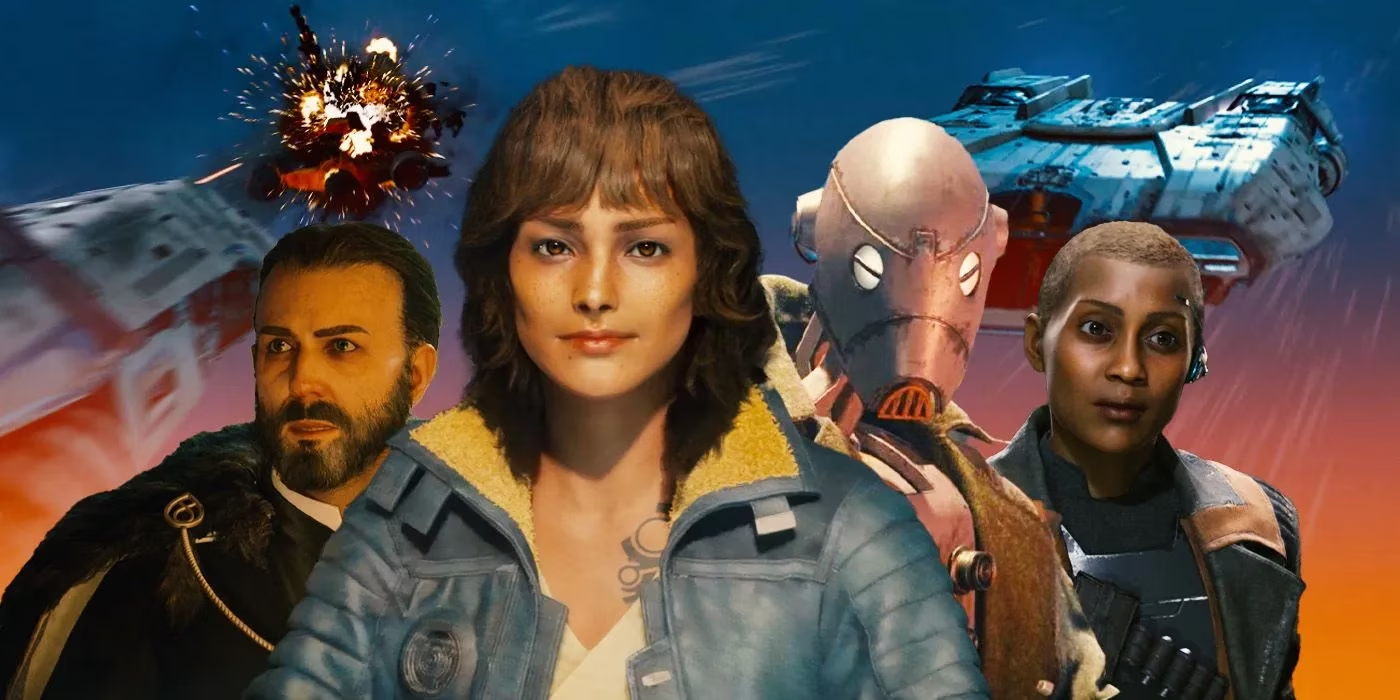
This fundamental shift was confirmed before release by journalist Brian Shea, who revealed that the team had explicitly excluded area-revealing towers from their design documents. The question then became: how would players uncover the game's world? The answer was elegantly simple. Instead of artificial markers unlocked by scaling predetermined points, the shroud of fog that initially blankets unexplored territory naturally dissipates as Kay Vess travels through it. Exploration itself becomes the key to revelation, making every journey feel purposeful and earned. This design philosophy represented a significant departure not just for Ubisoft, but for the open-world genre at large, signaling a move towards more immersive and player-driven discovery.
🎯 A New Kind of Scoundrel's Life
Stepping into the boots of the aspiring scoundrel Kay Vess, players found themselves in the first truly seamless open-world experience set in the Star Wars universe. While games like Jedi: Survivor offered expansive areas, Outlaws presented a boundary-less galaxy where the horizon was always a promise, not a limit. Kay's trusty swoop bike wasn't just for show—it was an essential tool for traversing sprawling deserts, dense forests, and the neon-lit alleyways of iconic planets like Tatooine and Cantonica. The scale was palpable, encouraging players to get lost in the ambiance of a living, breathing galaxy.
-
Stealth & Strategy: Kay's path to infamy isn't paved with tower climbs, but with cunning and force. Players must carefully navigate enemy outposts, using a blend of silent takedowns, blaster precision, and environmental manipulation to avoid detection or eliminate threats.
-
The Nix Factor: Accompanied by her loyal Merqaal companion Nix, Kay gains a versatile partner. With a simple command, Nix can create crucial distractions, retrieve out-of-reach items, or even disable security systems, adding a deep tactical layer to every encounter.
-
Dynamic Worlds: Each planetary hub operates with its own ecology of factions, from the oppressive Empire to cunning crime syndicates. Player actions genuinely shift reputations, opening up new opportunities or making old allies into dangerous enemies.
This organic approach to world-building meant that players in 2026 weren't following a checklist of map icons unlocked from a high vantage point. Instead, they were following rumors in cantinas, tracking distant smoke plumes on the horizon, or investigating strange signals picked up on their ship's scanner. The promise of what lay over the next dune or asteroid field was a powerful motivator, driven by curiosity rather than obligation.
⚙️ The Legacy of a Design Choice
Looking back from 2026, the decision to omit the classic "Ubisoft Tower" has been widely celebrated as a cornerstone of the game's identity. It wasn't merely the absence of a mechanic; it was a statement of intent. It signaled that Massive Entertainment and Ubisoft were listening to player fatigue and were committed to evolving their formula. The game replaced repetitive climbing with systemic, emergent gameplay where discovery felt like a personal achievement.
| Traditional Ubisoft Design | Star Wars Outlaws Approach |
|---|---|
| Climb tower to reveal map icons 🗼 | Fog lifts naturally through exploration 🌫️➡️🗺️ |
| Objectives are handed to the player | Objectives are discovered through environmental clues & NPC interactions |
| Often repetitive checklist gameplay | Encourages organic, player-driven storytelling |
| World can feel like a static checklist | World feels dynamic and reactive to player actions |
The proof, as they say, is in the parsecs traveled. Since its release, players have shared countless stories of stumbling upon hidden Syndicate hideouts, secret Jedi artifacts, or breathtaking vistas completely by accident, moments that felt uniquely their own. The game trusts players to be explorers, not just tourists following a highlighted path.
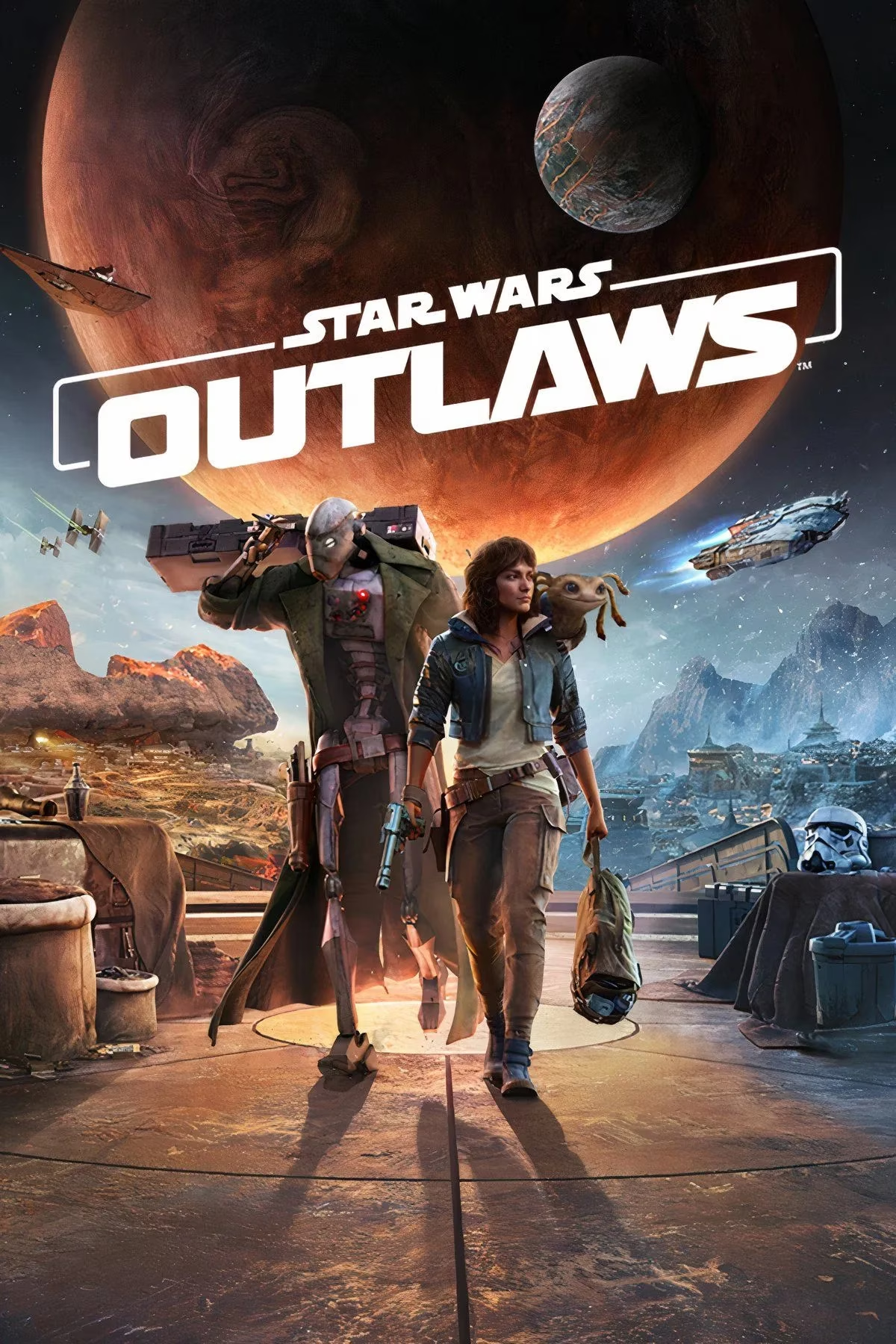
Of course, ditching one trope didn't mean abandoning engaging content. The world of Outlaws is filled with activities that fit the scoundrel lifestyle: high-stakes Sabacc games in shady parlors, thrilling speeder bike chases with Imperial patrols, multi-stage heists that require careful planning, and tense negotiations that can turn sour in an instant. These elements, combined with the organic exploration, created a cohesive loop where every action fed back into the feeling of being a fledgling outlaw making their mark on the galaxy.
As players continue their adventures in 2026, the legacy of Star Wars Outlaws is clear. It demonstrated that open-world games could prioritize organic wonder over formulaic convenience. By removing the towers that had long defined a genre, the game didn't lose its way—it found a new, more exciting direction, proving that in the vastness of space, the greatest discoveries are often the ones you make for yourself.