Star Wars Outlaws: Building a Galaxy-Sized Scoundrel Fantasy in 2026
Star Wars Outlaws delivers Massive Entertainment's open-world scoundrel fantasy, blending cinematic Star Wars scale with seamless freedom.
In 2026, Star Wars Outlaws is no longer a distant hyperspace rumor. It has already arrived, and the conversation around Massive Entertainment's scoundrel fantasy has shifted from breathless anticipation to a deeper appreciation of just how improbable the whole thing was. Back before launch, creative director Julian Gerighty summed up the challenge with a grin and a blunt truth: “I think, in general, making games is really tough. Making open-world games is really, really tough. And making Star Wars open-world games is the next level of difficulty.” No pressure, right?
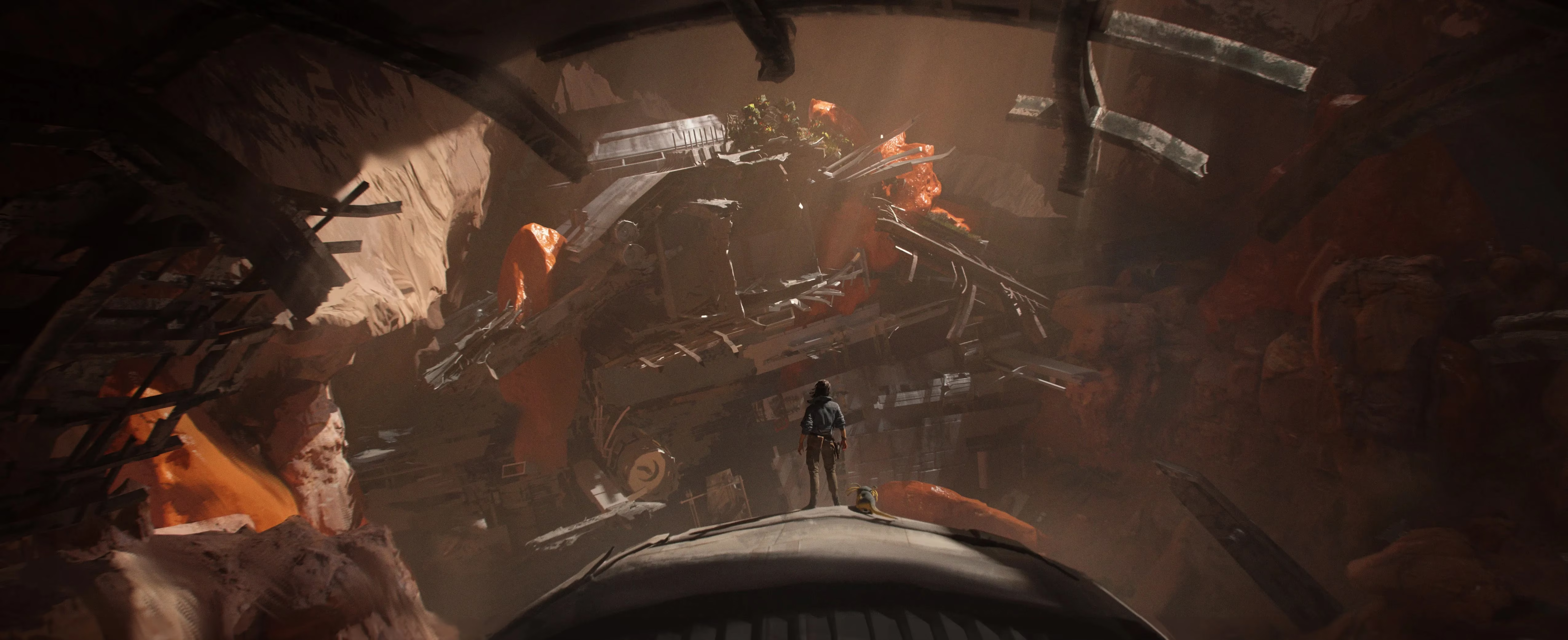
That quote is not just marketing bravado. It is the sound of a studio choosing the hard path. After The Division and The Division 2, Massive was ready to take a risk. Gerighty pitched a Star Wars game at LucasFilm Games in San Francisco, in George Lucas' old office, and leaned into the fear. If it did not work, it did not work — but the experience alone was worth it. Steve Blank, director of franchise content and strategy at Lucasfilm, later explained why the door opened: only a handful of studios on Earth can build games at this scale, and Massive had the open-world DNA to prove it.
The pitch rested on two pillars: the outlaw player fantasy and an open world. “Why open world?” Gerighty asked. “Because the outlaw fantasy really needs that to live and breathe.” Game director Mathias Karlson added that the combination came from Massive's own history. The studio knew how to build bullet-filled playgrounds in The Division and a visual paradise in Avatar: Frontiers of Pandora. Star Wars was the new challenge, and the scoundrel archetype begged for freedom. The team wanted full scale: sitting in a cantina, playing Sabacc, walking the streets, jumping on a speeder, parking the bike inside a ship, taking off into space seamlessly, and exploring a whole region without a loading screen in sight.
Set between The Empire Strikes Back and Return of the Jedi, Star Wars Outlaws had to honor the cinematic legacy of the original trilogy while still feeling interactive. Gerighty looked to Rogue One for inspiration, replicating the filmic effects of 1970s lenses: barrel distortion on the sides, vignetting, film grain, chromatic aberration, and an ultra-widescreen presentation. Yet he was clear that cinematic does not mean cinematics. The interactive part mattered most. The game had to feel like a Star Wars film, but play like a living adventure.
Scale was another lesson pulled straight from the galaxy far, far away. Greig Fraser, Rogue One's director of photography, once described Star Wars as “scale upon scale upon scale.” Massive took that to heart, but Karlson framed it with a designer's discipline: “Scaling does not always need to be grand, but it needs to be conscious.” Tatooine breathes with open sand dunes and long sightlines, while Kijimi is a dense city in perpetual winter where people huddle for warmth. The worlds are not just different backdrops; they are different moods.
The opening of Outlaws reflects that philosophy. Players start in one claustrophobic room, then step into contained city streets, then steal a ship, explode into the galaxy, and crash-land on a wide-open planet. The scale of possibility grows with the scale of the map. That is the story of Kay Vess, a young scoundrel who assembles a crew for one big heist to erase the death mark placed on her by the Zerek Besh crime syndicate. Narrative director Navid Khavari named Mass Effect 2, Ocean's 11, Ocean's 8, and Akira Kurosawa as influences. The result is a heist story woven into an open world, where curiosity is not punished. If players get distracted, the world has to react.
That reaction is built on what Massive calls the three-second rule. Within a few blinks, a location or character should visually tell its own story. Before any life is added, the art must communicate what kind of place it is, what happened there, and what kind of life has passed through. That lived-in feeling is a hallmark of good open-world design, and it is also deeply Star Wars. The “used future” aesthetic — grime on spaceships, scuffs on droids — makes every corner feel authentic.
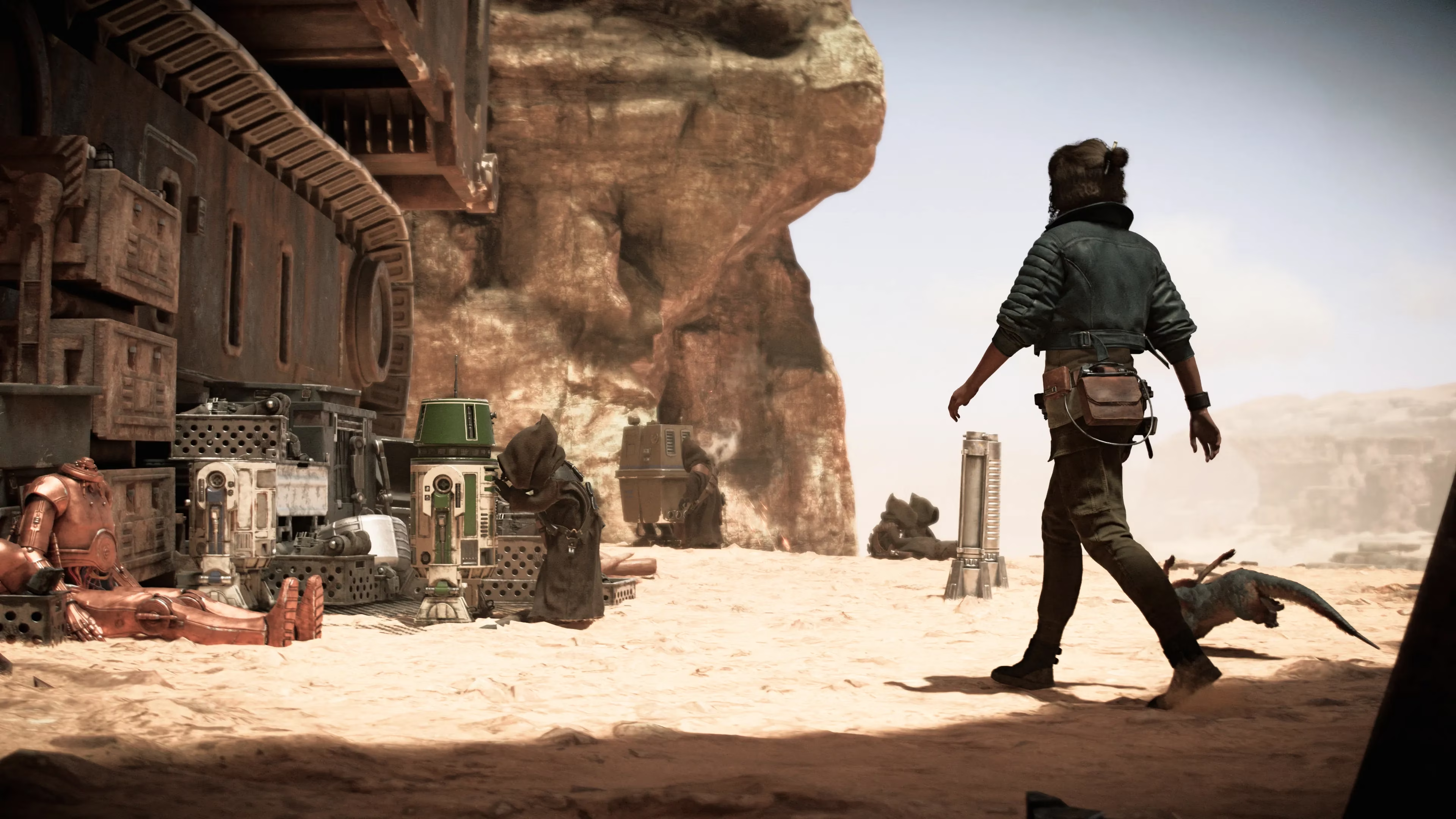
The galaxy of Outlaws includes five planets and moons: Toshara, Tatooine, Akiva, Kijimi, and Cantonica. Toshara is a new moon created with LucasFilm Games. It is roughly the size of Akiva, a little smaller than Tatooine, and about two or three Assassin's Creed Odyssey zones stitched together. A nonstop speeder ride across Toshara takes four or five minutes, which sounds short until players realize how often they will be distracted. Space itself is another layer, with orbital exploration and opportunities around each world. The connective tissue between planet and space was crucial, because that is the fantasy players have dreamed about since childhood.
| System | How it works |
|---|---|
| Open world | Five planets and moons, seamless space, speeder traversal, and discovery-led maps. |
| Progression | No traditional leveling. Experts across the galaxy grant skills and upgrades through missions. |
| Reputation | Choices strengthen or weaken bonds with Hutts, Pykes, Crimson Dawn, and Ashiga Clan. |
| Imperial heat | Stormtroopers act like GTA police, with escalation, bribery, hiding, and Death Troopers. |
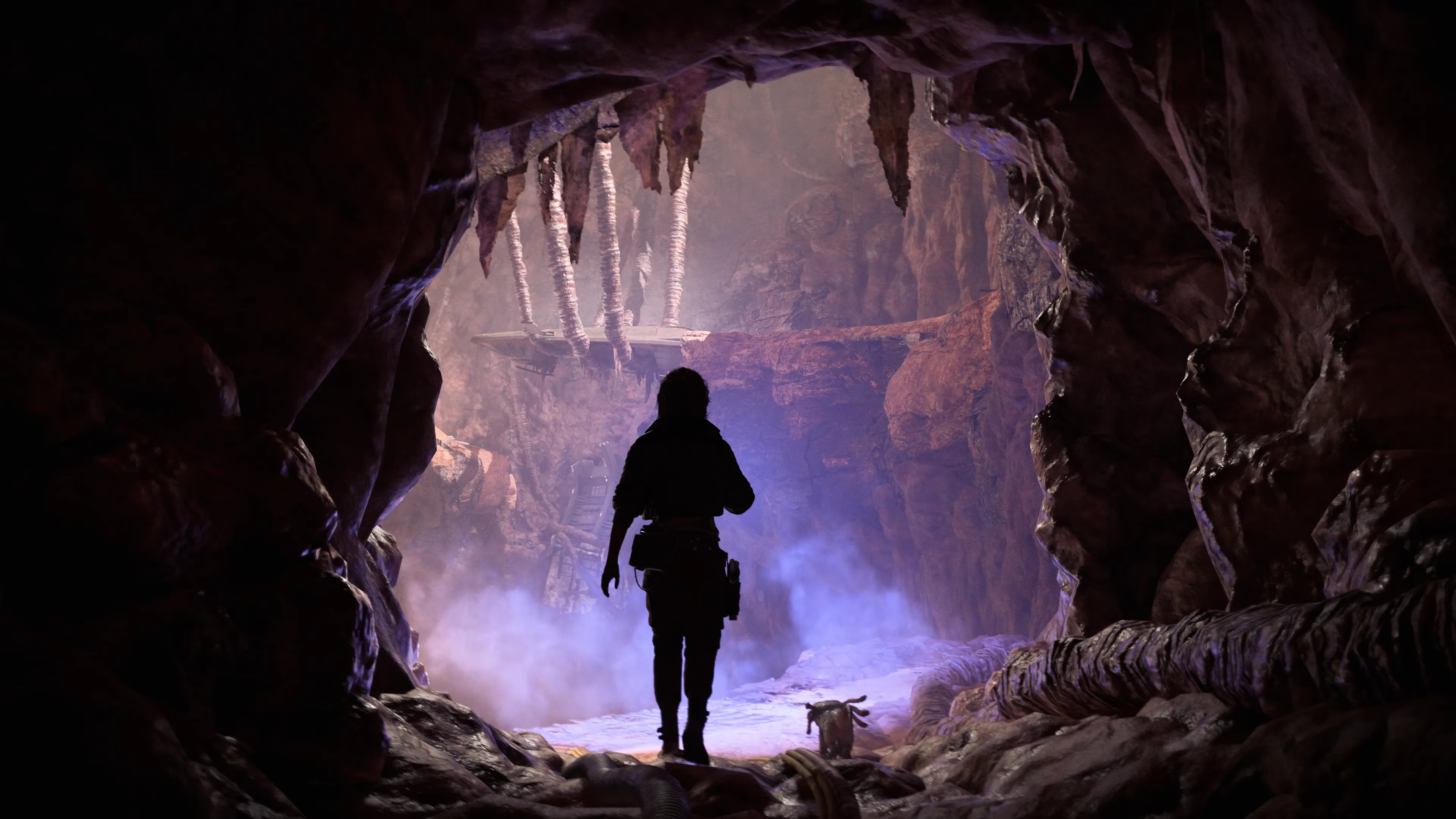
Here's the kicker: Kay does not simply level up. Her abilities and equipment are tied to experts, full characters scattered across the galaxy. Players have to find them, earn their trust, and complete adventures. One example involves tracking down a Jawa, entering a dead Sarlacc, and retrieving a pristine tooth from its second mouth to trade for a laser turret on the Trailblazer, Kay's ship. That upgrade helps the heist, but it is also its own story — exactly the kind of side journey that feels at home in Star Wars.
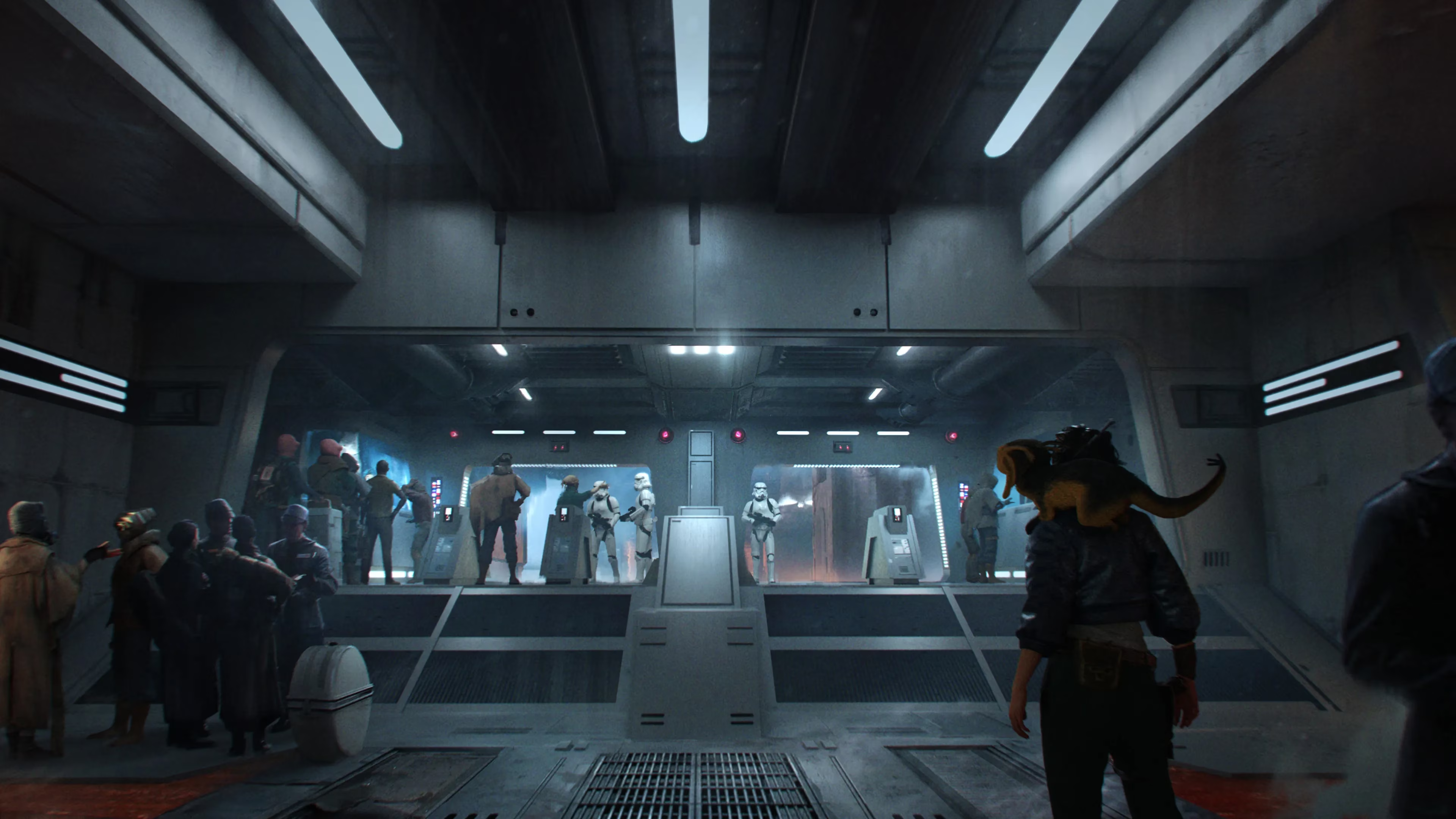
Reputation adds another layer. Kay's standing with the Hutts, Pykes, Crimson Dawn, and Ashiga Clan shifts based on dialogue and mission choices. Good standing opens territory, landing pads, discounts, and exotic rewards. Bad standing sends hit squads. Reputation even spills into the open world: if the Empire is chasing Kay and she crosses paths with a syndicate that likes her, they might join the fight. The Imperial wanted system works in a similar way. Restricted areas and stray blaster shots bring heat, and players can hide, bribe a corrupt officer, or jump to another space region. Karlson teased that Death Troopers exist for a reason.
Beyond the main story, Outlaws is packed with snackable activities: smuggling, stealing, Sabacc, asteroid field arcade shooters, and Fathier racing on Canto Bight. Credits buy customization for Kay, Nix, and the Trailblazer. Emergent events pop up every two or three minutes — ambushes, Imperial arrests, syndicate skirmishes — and players choose whether to engage. Massive avoided bloat by calibrating size to substance. Variety beats raw scale. Quests use the open world so bespoke content and systemic content feel like one experience, not two.
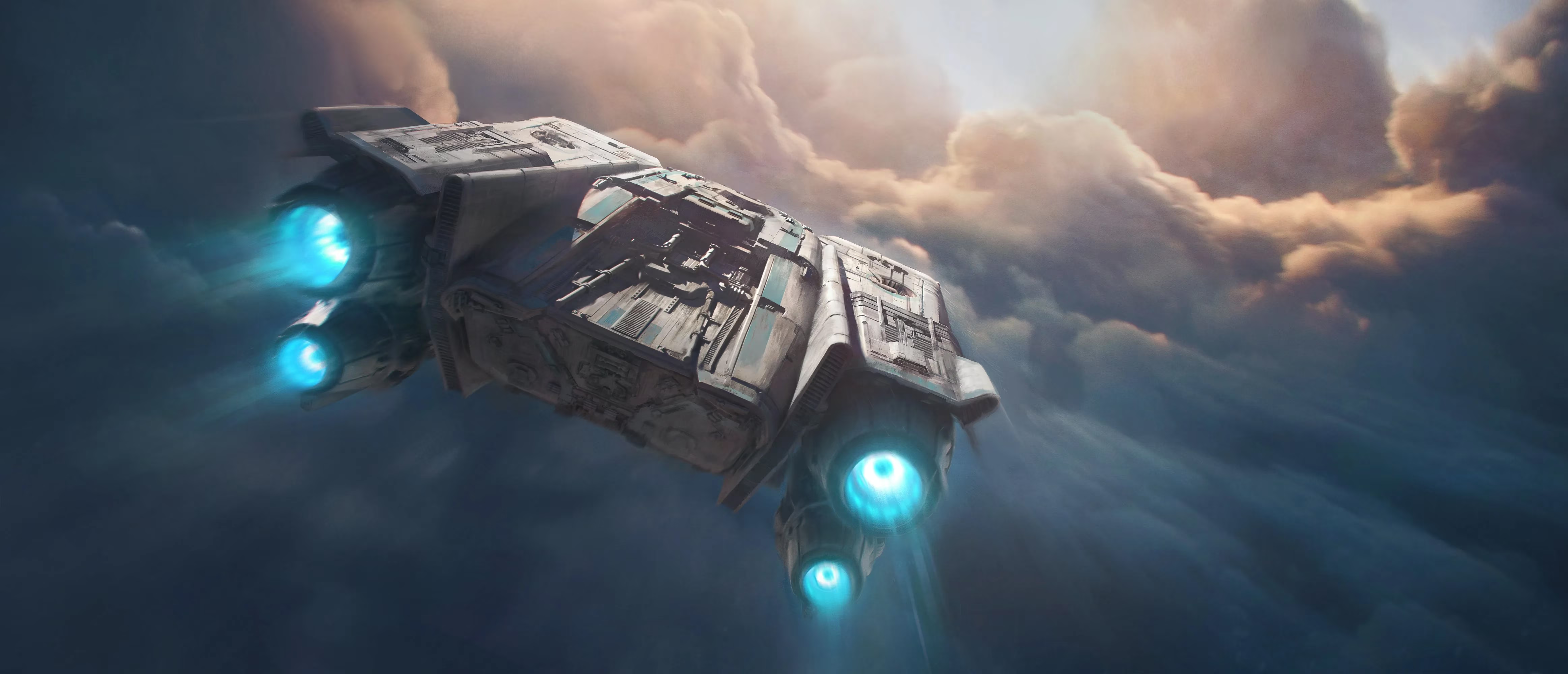
There are also Easter eggs for the faithful. Lando appears, Han Solo in carbonite has been glimpsed, and Khavari hinted that these are only the tip of the iceberg. When Star Wars Outlaws launched on August 30, 2024, it fulfilled a long-held dream: a fully open-world, single-player Star Wars game. In 2026, that dream is no longer a pitch in George Lucas' old office. It is a galaxy players can still get lost in — and for Gerighty, a bucket-list challenge worth every bit of difficulty.