Star Wars Outlaws: Charting the Galaxy's First Mature-Rated Frontier
Star Wars Outlaws could become the franchise's first mature-rated game, exploring a gritty criminal underworld with intense themes like gambling and substance use.
As I look ahead to the release of Star Wars Outlaws in 2026, the conversation has already been irrevocably shaped by its early rating in South Korea. The Game Rating and Administration Committee's decision to slap a 19+ rating on the PlayStation 5 version wasn't just a formality; it was a flare shot into the night sky of the fandom, signaling a potential seismic shift. The reasons cited—"Realistic simulation of speculative behavior" and a mini-game involving in-game betting and dividends—paint a picture far grittier than the typical galactic hero's journey. This, coupled with content icons hinting at language and drug use (likely a fictional sci-fi substance), positions Outlaws not as a tale of Rebel vs. Empire, but as a deep dive into the galaxy's visceral, profit-driven underbelly. For the first time in over four decades, a Star Wars game stands on the precipice of an M-for-Mature rating in the West, a prospect as tantalizing as finding a fully stocked spice freighter drifting unguarded in the Outer Rim.
Could This Be the Franchise's First M-Rated Title?
The Korean rating is a puzzle piece that doesn't quite fit the established picture. Recent titles like Star Wars Jedi: Survivor and the Battlefront series landed in the 12+ to 15+ range there, translating to a T-for-Teen (13+) rating from the ESRB in the US. A 19+ rating in Korea could very well equate to an M-for-Mature (17+) rating from the ESRB. This would be a monumental first. The speculation within the community is intense, with many pointing to the Sabbac card game from the first trailer as the likely "mini-game with in-game betting." While US ratings are notoriously more lenient on gambling depictions, the cumulative weight of this activity, plus the hinted mature themes, might just push it over the edge. It feels like the game is trying to navigate an asteroid field of ratings, where one wrong move could change its entire trajectory.
The Perfect Canvas for a Darker Galaxy
An M-rating wouldn't just be a label; it would be a creative mandate. Star Wars Outlaws, by focusing on scoundrel Kay Vess and her dealings with criminal syndicates during the Galactic Civil War, has chosen the perfect setting to explore mature themes. This isn't the polished heroism of the Rebellion; this is the grimy, desperate world where the Empire's distraction is everyone else's opportunity. I envision a world as morally ambiguous and cutthroat as a Hutt's negotiating table. The game promises to visit locations like the infamous Mos Eisley Cantina—a place once described as a "wretched hive of scum and villainy" and which lived up to it with sudden blaster fire and dismemberment. If that was the PG version, an M-rated take on the criminal underworld should be as ruthless and unforgiving as the vacuum of space itself.
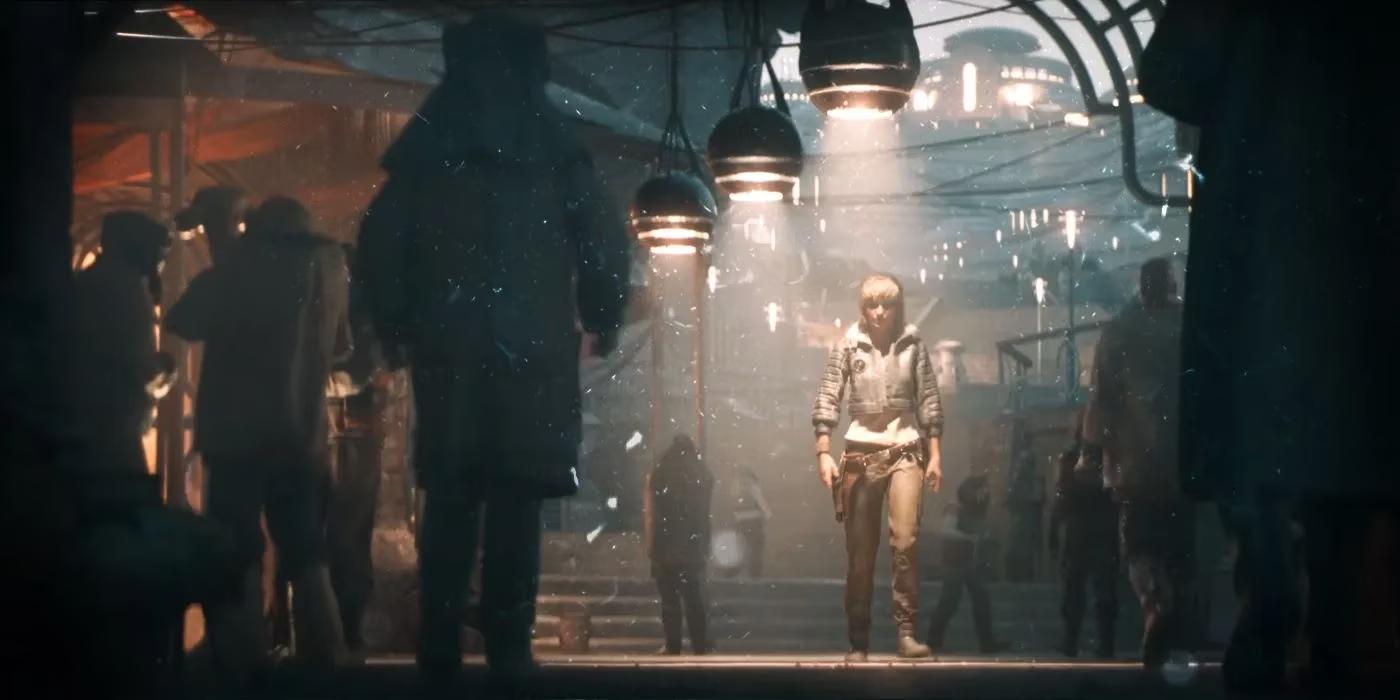
The potential here is staggering. We could see:
-
Syndicate Politics: Not just missions, but complex, betrayer-laden narratives where alliances shift like desert sands.
-
Consequence-Driven Violence: Combat that isn't clean or heroic, but messy, desperate, and with lasting repercussions in the underworld's reputation system.
-
Moral Ambiguity: Choices that aren't about Light Side or Dark Side, but about survival, profit, and navigating a galaxy where everyone has a price.
The "Wanted" level mechanic, seemingly borrowed from titles like Grand Theft Auto, is a perfect fit for this world. It turns the Empire from a monolithic enemy into a persistent, systemic hazard of doing business, like a corrosive atmosphere slowly eating away at your ship's hull.
The Disney Factor: The Great Unknown
Of course, the shadow of the owner looms large. Disney's stewardship of Star Wars has largely, and understandably, aimed for broad, family-friendly appeal. The films and TV shows orbit the PG-13/TV-14 mark. While video games are a medium known for more mature content, Disney has shown recent reluctance to cross certain lines. The most telling example is from Andor, a series praised for its grounded, mature tone. The creative team's intent to include the franchise's first F-bomb was reportedly shut down, with the line altered to "fight the Empire" to maintain a TV-14 rating. This precedent hangs over Outlaws like a silent protocol droid, constantly monitoring for transgressions.
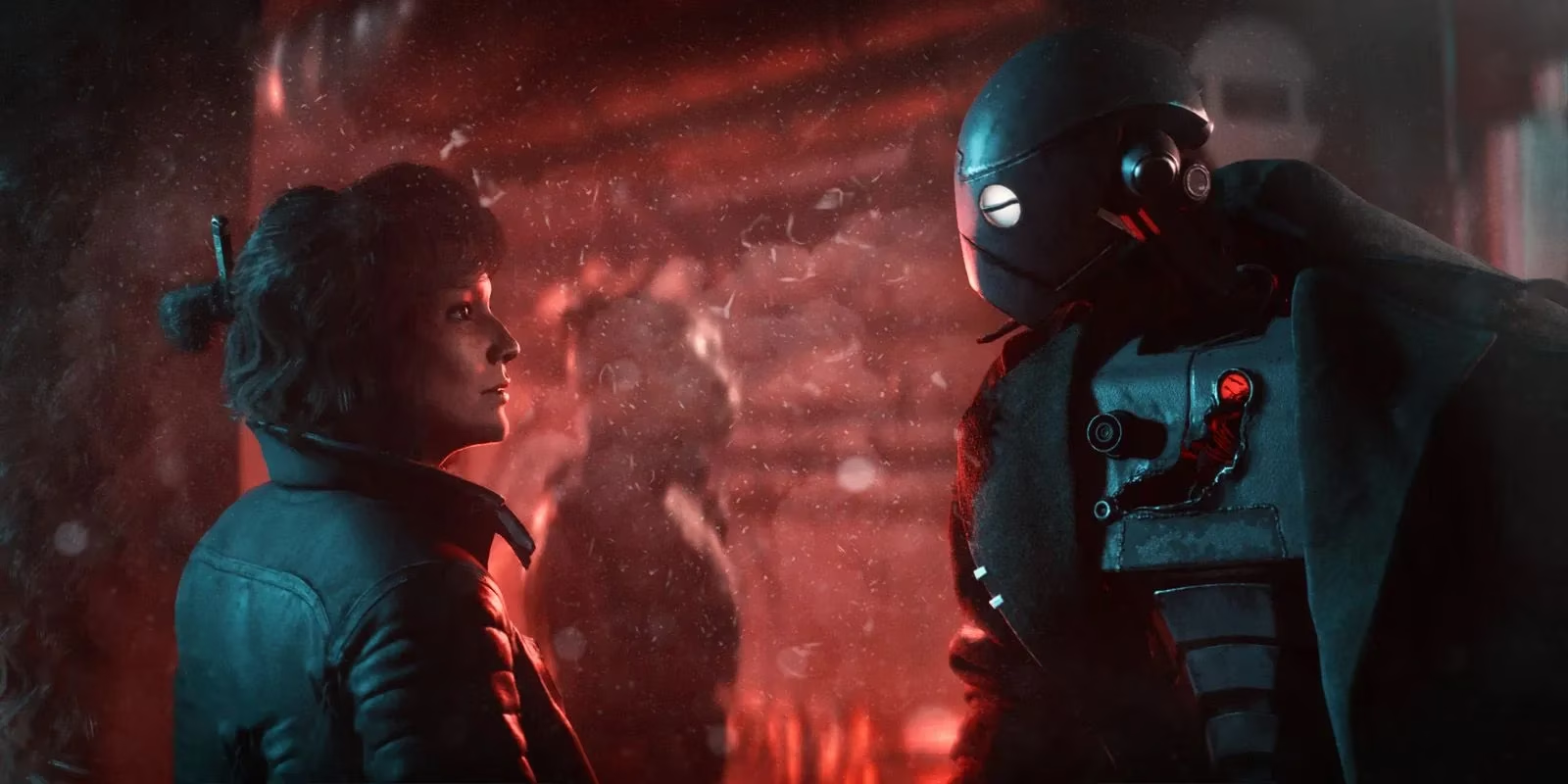
This leads to the central tension: Is the Korean rating a true reflection of Ubisoft and Massive Entertainment's vision, or is their rating board simply interpreting content more strictly? The latter is a real possibility. The ESRB might view the fictional drug use and betting mini-game as no more severe than content in existing T-rated games. The final verdict will be one of the most revealing aspects of the game's marketing lead-up. It will tell us not just about Outlaws, but about how Disney views the boundaries of its galaxy in the interactive space.
Conclusion: A New Hope for Mature Storytelling
As 2026 approaches, my anticipation for Star Wars Outlaws is intertwined with curiosity about its final rating. Whether it achieves the landmark M-rating or settles into a hard-Teen category, the mere possibility has already expanded the conversation about what a Star Wars story can be. The criminal underworld, a setting as rich and untapped as the Unknown Regions, demands a certain tonal authenticity. To sand down its edges for a younger audience would be to sell its potential short. This game represents a prime opportunity to tell a story where the stakes are personal, the profits are dirty, and survival is a skill honed in the shadows cast by larger wars. The journey of Kay Vess may well be the key that unlocks a new, mature vault of stories in a galaxy far, far away, proving that the Force isn't just for Jedi—it's also for those smart, ruthless, and lucky enough to navigate the galaxy's darkest corners.