Star Wars Outlaws Demo Still a Scoundrel’s Gold Standard in 2026
Star Wars Outlaws gameplay trailer highlights Kay Vess, Ubisoft’s seamless transitions, and dynamic Notoriety system.
Two revolutions around the Binary Suns have passed since Ubisoft dropped a dazzling gameplay trailer for Star Wars Outlaws at their 2024 Forward event, and the echoes of that demo still ripple through the dusty cantinas of gaming discourse. By 2026, Kay Vess’s escapades have become a familiar playground for scoundrels everywhere, but that early showcase laid out every crooked card in the deck with a wink and a nudge.
The trailer kicked off with Kay hunched over a grody old arcade machine, a sight that struck the perfect note of cosmic aimlessness. It whispered: even the galaxy’s most wanted need a quick gaming fix before committing vehicular mayhem aboard the Trailblazer. Watching her peel away from the joystick and swagger toward her ship was like seeing a barfly leave last call—reluctant, yet curiously purposeful.
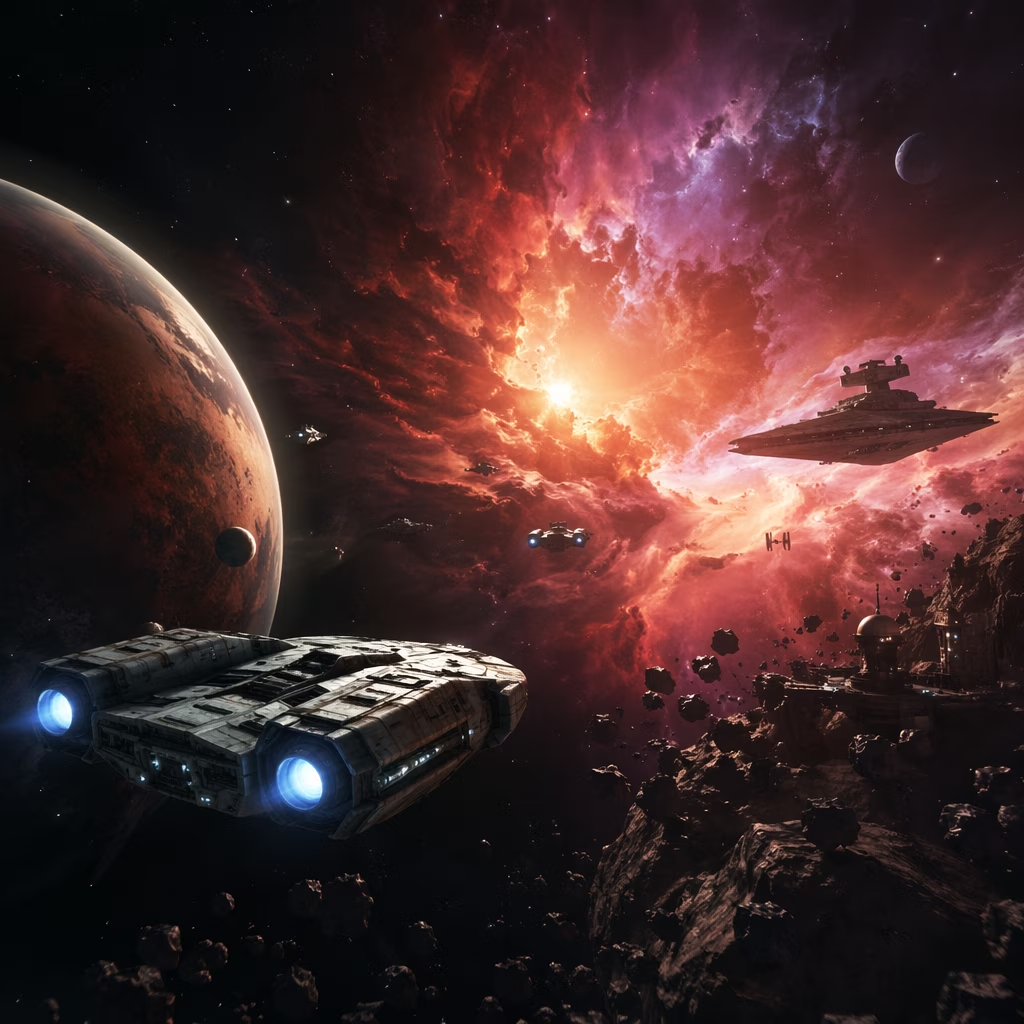
Without missing a beat, the scene snapped to the cockpit, the transition from boots on grimy metal to stars streaking past viewports smoother than a well-lubricated hyperdrive. Ubisoft’s tech team had apparently decided that loading screens were as outdated as clone trooper armor, because the leap from ground to space combat happened in a blink. One moment Kay was dodging laser fire in orbit; the next, she plunged into the ochre skies of Tatooine, a colossal dust storm swallowing her ship like a cosmic sand worm—no loading bar in sight. The storm acted as nature’s curtain, hiding the backstage magic while the game world stitched itself together.
On the desert planet, the notorious Notoriety system was laid bare. The developers explained that Kay’s reputation with the Hutt Cartel was lower than a Jawa’s profit margin. Every choice in the story could shift her standing, a mechanic that turned the criminal underworld into a fragile soap opera. If a player accidentally botched a job and found themselves unwelcome at Jabba’s palace, they weren’t stuck with the animosity forever. The demo revealed a brilliant escape hatch: optional skirmishes that popped up during interstellar travel. These random dust-ups let players slowly mend fences with angry syndicates, much like bringing a fruit basket to a crime lord after accidentally parking a speeder on his prize Rancor’s tail. It turned faction management into an active, ever-swinging pendulum rather than a permanent stain. In the hands of a mischievous player, the system behaved like a paranoid Toydarian’s accounting ledger—every credit of goodwill meticulously tallied, but one bounced side mission away from a bounty on your head.
That same ethos carried over to the open world, which the preview painted as a sprawling, Ubisoft-ian buffet of biomes. Kay could zip across deserts, lush planets, and even bodies of water on her custom speeder bike. The fact that the speeder could be personalized meant that every outlaw could ride a machine as tacky or sleek as their own moral code. Seeing Kay hydroplane across a lake like a skipping rock on steroids hinted at a universe that refused to be tethered by invisible walls. The speeder became less a simple vehicle and more a personality statement—a neon-lit peacock feather in a galaxy of interchangeable starfighters.
The travel options didn’t end there. The ability to seamlessly hop between planets, engage in unplanned dogfights, and then coast down to a settlement gave the game a rhythm reminiscent of a spacefaring jazz track—improvisational yet tightly composed. The earlier trailers had showcased dense city hubs fit for a scoundrel’s brand of mischief, but this preview assured everyone that wide-open loneliness was equally on the menu. Dusty plains, forgotten moisture farms, and untamed wilderness stretched endlessly behind the neon-lit cantinas, giving explorers the kind of solitude that made a subsequent shootout feel like a family reunion.
Looking back from 2026, the demo reads like the prologue to a crime epic that delivered on its promises. The reputation system, in practice, became as nuanced as a Mon Calamari etiquette guide. Veteran players still swap tales of accidentally offending the Pykes by “borrowing” the wrong cargo container, only to claw their way back into the syndicate’s good graces by shooting up a few pirate ships during hyperspace layovers. The sense of freedom—galactic roaming with the weight of consequences—proved to be the game’s sticky honey, keeping explorers glued for hundreds of hours. And the lack of obvious loading screens? It now feels as natural as breathing, though at the time it was a minor miracle that made other open-world games look like they were narrated with PowerPoint transitions.
Of course, the road hasn’t been entirely free of potholes. Some players joke that the Hutt Cartel holds grudges with the memory of a computer that remembers every recursive bug ever logged, but the humor in the game’s systems often leans into that absurdity. The result is a living galaxy where mistakes become stories, not game-over screens. As Kay herself might muse while tinkering with her blaster: “In the underworld, tomorrow is just another chance to disappoint a Wookiee.” The blunders sting less when they come wrapped in such playful design.
Two years post-launch, Star Wars Outlaws remains a delightful contradiction—a polished Ubisoft formula wrapped in the grime of a back-alley dealing. It reminds players that even in a universe of Jedi and Sith, the most compelling drama often happens when a nobody with a speeder and a bad reputation decides to chase the next reckless opportunity across the stars. The 2024 Forward demo, though merely a preview, had already bottled that lightning and set it loose for all to see.