Star Wars Outlaws: Finding Balance in an Open Galaxy
Star Wars Outlaws masterfully delivers the ultimate open-world dream, promising a dynamic galaxy brimming with spontaneous encounters and meaningful player choices.
The vast, untamed expanse of the Star Wars universe has long beckoned for a true open-world interpretation, and as of 2026, that call has been answered with resounding clarity. After years of RPGs and linear adventures, Star Wars Outlaws emerges as the definitive sandbox experience, allowing players to step into the worn boots of scoundrel Kay Vess. The galaxy, set against the backdrop of the original trilogy's iconic era, feels more alive than ever, promising a tapestry of stories woven from player choice and emergent encounters. It's a game that whispers the promise of adventure in every parsec, but its ultimate success hinges on a delicate, almost poetic balance—ensuring that its dynamic world feels vibrant, not overwhelming, and that every spontaneous dogfight carries the weight of a meaningful choice, not the burden of a chore.
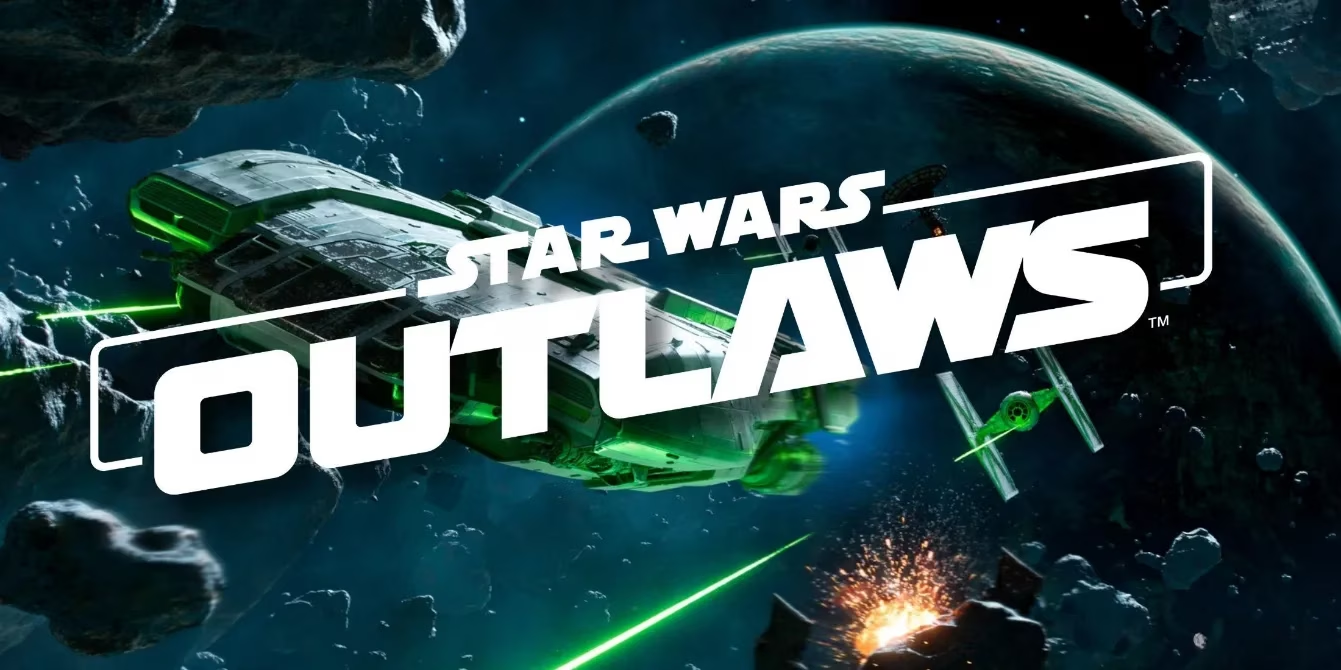
The Art of the Spontaneous Encounter
At the heart of Outlaws' design philosophy lies the dynamic event. These are the unscripted moments that transform a mere setting into a living, breathing world. The gameplay demos have shown us glimpses: Kay, departing a seedy spaceport, witnesses a freighter under attack by marauders. A choice presents itself—to intervene and earn favor with a powerful syndicate like the Pykes, or to slip away into the void, minding one's own business. This is the open-world dream in its purest form. However, the devil, as they say, is in the details—or in this case, the frequency. The game's challenge isn't in creating these moments, but in curating them. If every jump to hyperspace is interrupted by a skirmish, the magic fades; the extraordinary becomes mundane. It's a lesson learned from the best in the biz: think of Red Dead Redemption 2, where a chance encounter with a stranger in the woods felt like a unique vignette, not a checkbox on a list. Outlaws must follow suit, making each optional battle feel like a rare opportunity, not a predictable interruption.
Avoiding the Ubisoft Trap: Quality Over Quantity
Let's be real—Ubisoft has had its fair share of open-world growing pains. Titles like Assassin's Creed Valhalla and Far Cry 6 were sometimes criticized for their "checklist" design, where vast maps were filled with repetitive activities that felt more like busywork than meaningful exploration. For Star Wars Outlaws, which boasts both planetary landscapes and the infinite black of space, falling into this trap would be a cardinal sin. The galaxy is a big place, baby, and filling it requires more than just copy-pasted dogfights. The key is moderation and variety. The dogfights should be one flavor in a much larger buffet of criminal activities:
-
Syndicate Reputation Missions: Deep, multi-stage jobs for the Pykes, Hutt Cartel, or Crimson Dawn.
-
Smuggling Runs: High-risk, high-reward transport missions requiring stealth and route planning.
-
Bounty Hunting: Tracking down elusive targets across different star systems.
-
Sabacc Den Heists: Social stealth and pickpocketing in crowded galactic cantinas.
If the space combat is used sparingly and intelligently—say, as a escalating consequence for pirating in a syndicate's territory, or as a rare, high-stakes rescue mission—it retains its punch. It becomes a "hell yeah" moment, not an "oh, again?" sigh.
The Force of Player Agency
What truly makes an open world sing is the player's sense of agency. Star Wars Outlaws has the potential to make every decision feel consequential. Helping that freighter shouldn't just net a generic "+5 Pyke Rep"; it should unlock unique dialogue options, access to a restricted starport, or a favor to be called in later. The world should react. If you choose to ignore pleas for help too often, maybe word gets around that Kay Vess is out for herself, closing off certain avenues but opening others with more ruthless factions. This creates a personal galaxy, shaped by your choices as a scoundrel trying to make their mark. The dynamic events are the catalyst for this, but they must be woven into a larger, reactive narrative fabric.
A Galaxy Worth Saving (Again)
For fans who've waited decades for this experience, the expectations are sky-high. Star Wars Outlaws isn't just another game; it's the fulfillment of a lifelong fantasy of truly living in that galaxy far, far away. Getting it right means understanding that an open world isn't defined by how much stuff you can cram into it, but by how meaningfully you can interact with it. By exercising restraint with its dynamic dogfights and focusing on rich, varied, and consequential side content, Ubisoft and Massive Entertainment can create something special. They can build a world that feels authentically Star Wars—lawless, unpredictable, and brimming with stories waiting to be found, not just tasks waiting to be completed. In the end, it's all about balance, and finding that balance is what will separate a good game from a legendary one. May the Force—and thoughtful game design—be with them.