Star Wars Outlaws: How Its Wanted System Differs from GTA and Limits on Player Freedom
Star Wars Outlaws' Wanted system and outlaw gameplay mechanics diverge from Grand Theft Auto's sandbox chaos, focusing instead on survival within the oppressive Imperial framework. This surprising limitation, where players cannot harm civilians, enforces a narrative of cunning and faction navigation over mindless violence.
When I first saw that massive "Wanted" symbol flash on the screen in the Star Wars Outlaws gameplay reveal, my mind immediately jumped to Grand Theft Auto. It's a natural comparison, right? An open-world game where you play as an outlaw, causing trouble and getting chased by the authorities. But after spending some serious time with the game in 2026, I can tell you that's where the similarities largely end. Ubisoft Massive has crafted an experience that, while borrowing a familiar mechanic, places it within a very different framework of player agency and narrative focus.
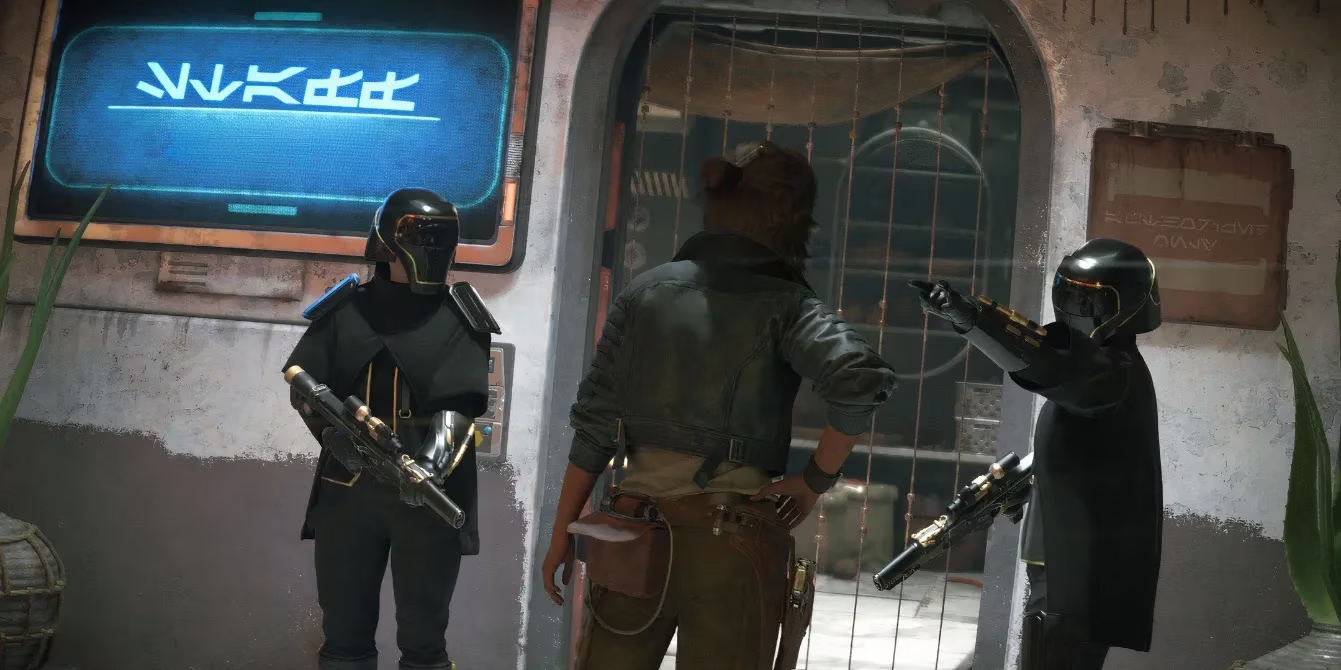
Let's talk about that Wanted system first, because it's the most obvious point of comparison. Yes, if you commit crimes in plain sight—like blasting a security droid or hijacking a speeder in an Imperial-controlled zone—that iconic symbol will appear, and Stormtroopers will be hot on your trail. The tension it creates is fantastic. But here's the key difference: this system feels more like a dynamic obstacle tied to the oppressive rule of the Empire rather than a sandbox feature encouraging chaos. You're not meant to rack up five stars for fun; you're meant to feel the constant, looming threat of Imperial law as you navigate the galactic underworld. It's less about causing mayhem and more about surviving it when your schemes go sideways.
This leads me to the biggest, and perhaps most surprising, limitation I encountered. Remember in those other open-world titans where you could, on a whim, decide to see how many innocent civilians you could... well, let's just say 'inconvenience'? You can't do that here. As confirmed by several hands-on previews back in 2024, and firmly in place in the 2026 version I'm playing, Kay Vess cannot kill or steal from friendly, non-hostile NPCs. At first, I was taken aback. Isn't the whole point of being an outlaw to have that freedom? But the more I played, the more it made sense.
Think about it: Kay isn't a psychopath like Trevor Phillips or a hardened soldier like Niko Bellic. She's a scoundrel trying to pull off one big score to buy her freedom. Her story is one of cunning, negotiation, and navigating factions, not mindless violence. The game enforces this character through its mechanics. You can't just walk up to a random Rodian in the cantina and take their credits. This fundamentally changes how you interact with the world. The NPCs aren't there as potential victims or resources for random theft; they're part of the living backdrop of the Star Wars universe. Your interactions are primarily through dialogue, quests, and reputation.
So, if you can't mess with civilians, where can you unleash some chaos? The answer lies with the factions.
-
Faction Enemies: This is your primary combat sandbox. Members of hostile factions like the Pyke Syndicate, the Hutt Cartel, or even the Empire are fair game. You can attack them, steal their cargo, and sabotage their operations to your heart's content (and to the benefit of your wallet and repute with their rivals).
-
The Reputation Dance: Here's where it gets interesting. Your standing with each faction is fluid. You can work for the Pykes one day and against them the next. This creates a fascinating moral and strategic gray area. Can you attack a faction member from a group you're currently "friendly" with? From my experience, the game seems to discourage direct attacks on allies, as it would logically crater your reputation. However, indirect sabotage or stealing "unattended" goods might be possible... for a price. The wanted level from the Empire, however, is a separate, ever-present threat.
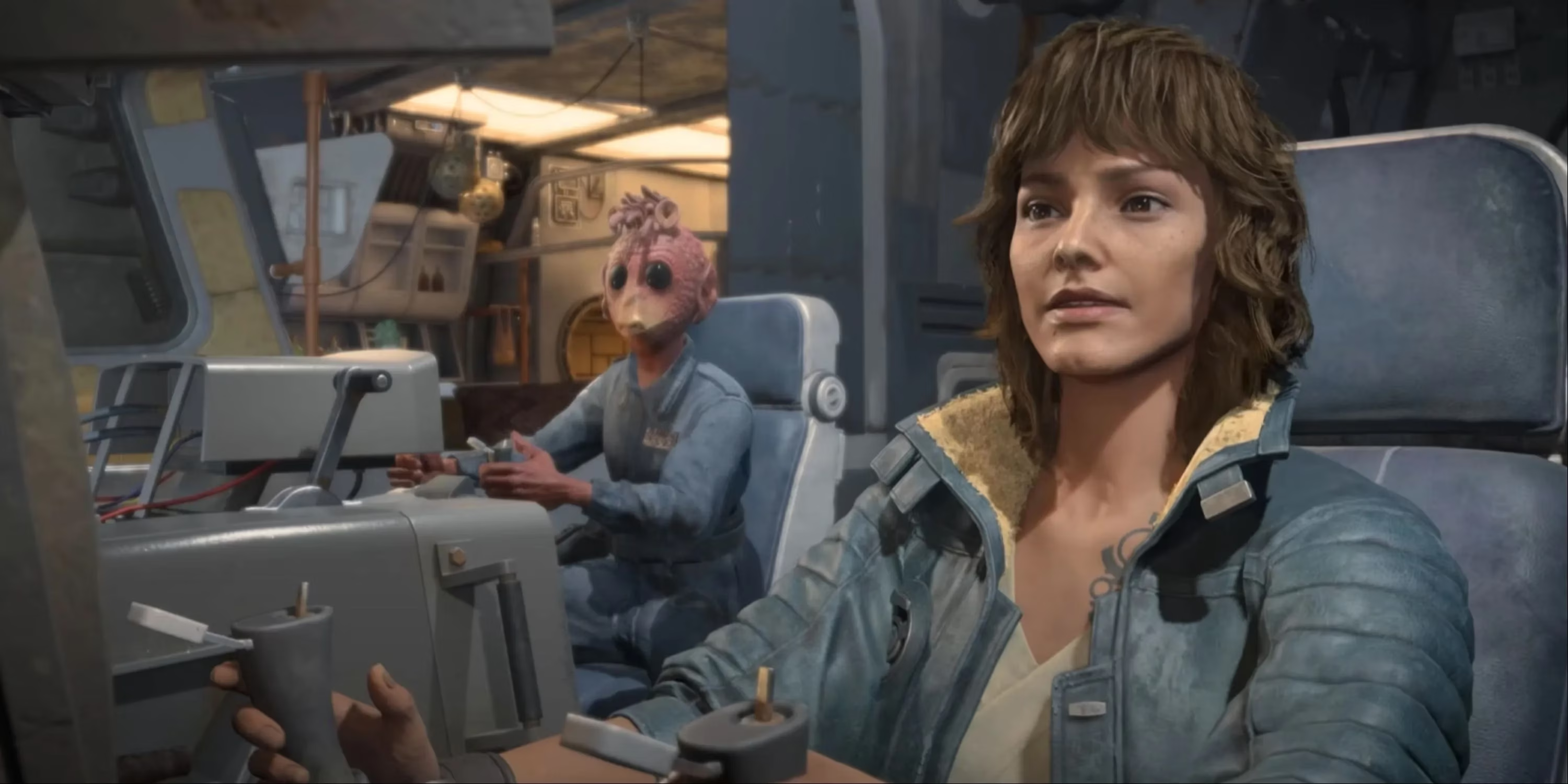
This design choice has a clear effect: it focuses the player's outlaw fantasy. You're not a force of nature; you're a professional. The thrill comes from planning the perfect heist, outsmarting rival gangs, and slipping away from Imperial patrols, not from unstructured brutality. The "rampage" option, as some previews noted, requires more work—you have to seek out conflict in enemy territories or provoke a faction directly.
Does this make the world feel less interactive? In a purely systemic, toy-box sense, perhaps. You can't interact with every NPC in a violent way. But does it make the world feel more authentically Star Wars? Absolutely. The galaxy has always been about these clear lines—Rebels vs. Empire, scoundrels vs. crime lords. The game channels your actions into those classic conflicts. It trades some unrestricted freedom for a more cohesive tone and character-driven experience.
In 2026, where open-world games often boast about limitless possibilities, Star Wars Outlaws stands out by saying "no." It uses constraints to tell a better, more focused story. The GTA-style Wanted system isn't a license for chaos; it's a reminder of the power you're up against. The inability to harm civilians isn't a limitation on fun; it's a definition of Kay Vess's moral compass (however crooked it may be). So, if you're coming in expecting a Star Wars-skinned Grand Theft Auto, you'll need to adjust your expectations. This is a different kind of outlaw story—one of precision, reputation, and survival, where sometimes the most powerful choice is the one the game doesn't even let you make.