Star Wars Outlaws in 2026: A Scoundrel's Life Beyond Jedi and Sith
Star Wars Outlaws still delivers Kay Vess's scoundrel fantasy in 2026, blending scrappy combat, stealth, and dogfighting despite borrowed platforming.
I still remember the first time I stepped into Kay Vess's boots. Some of the more interesting Star Wars content in recent years has moved away from the clean duality of Jedi and Sith. While lightsabers and Force powers can anchor a great power fantasy, seeing the galaxy from a scoundrel's perspective is a different kind of thrill. That was my initial takeaway from an early hands-on with Star Wars Outlaws, and returning to it in 2026, after several patches and expansions, I'm happy to say that the fantasy still holds up—even if some parts remain a little borrowed.
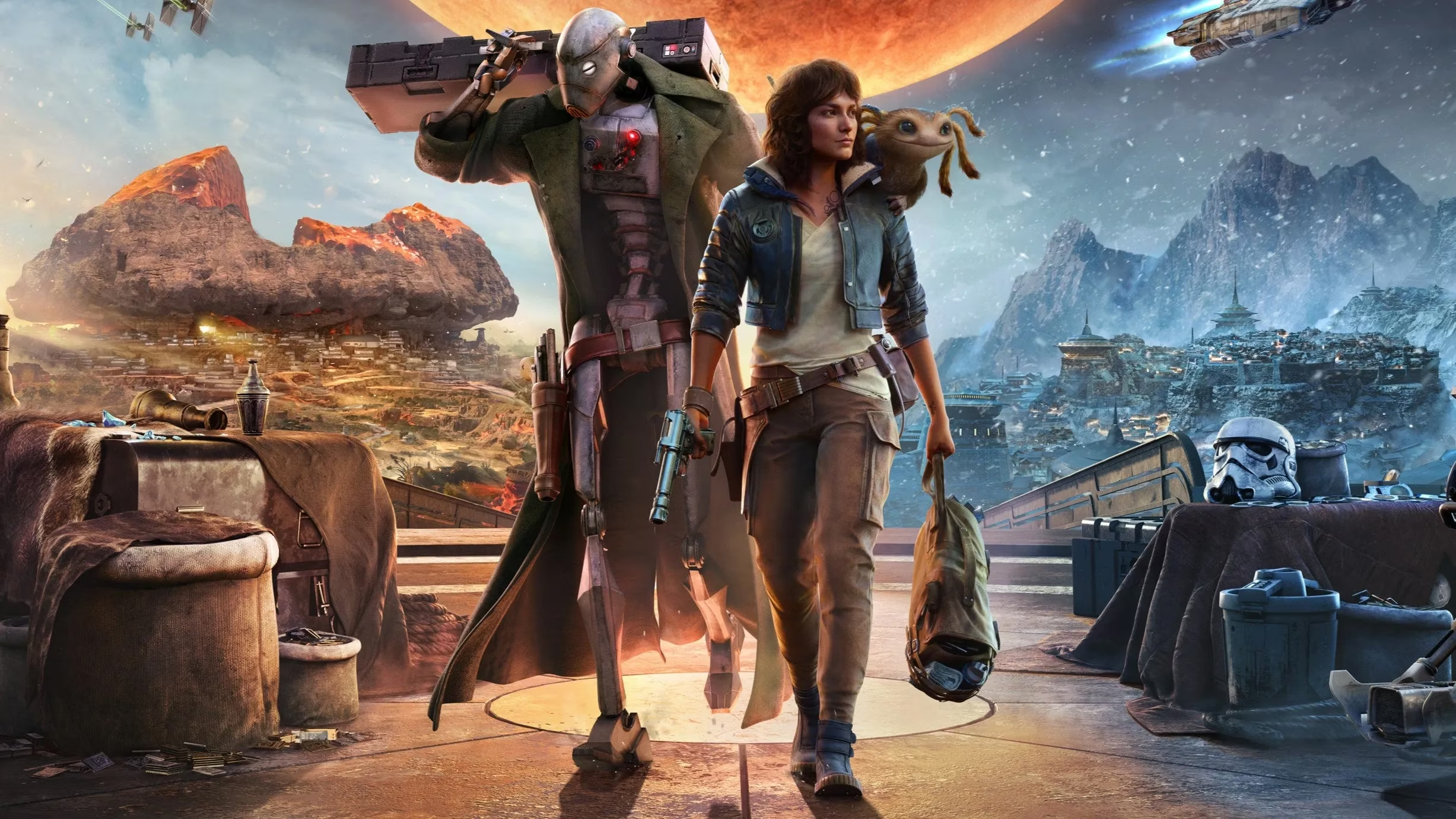
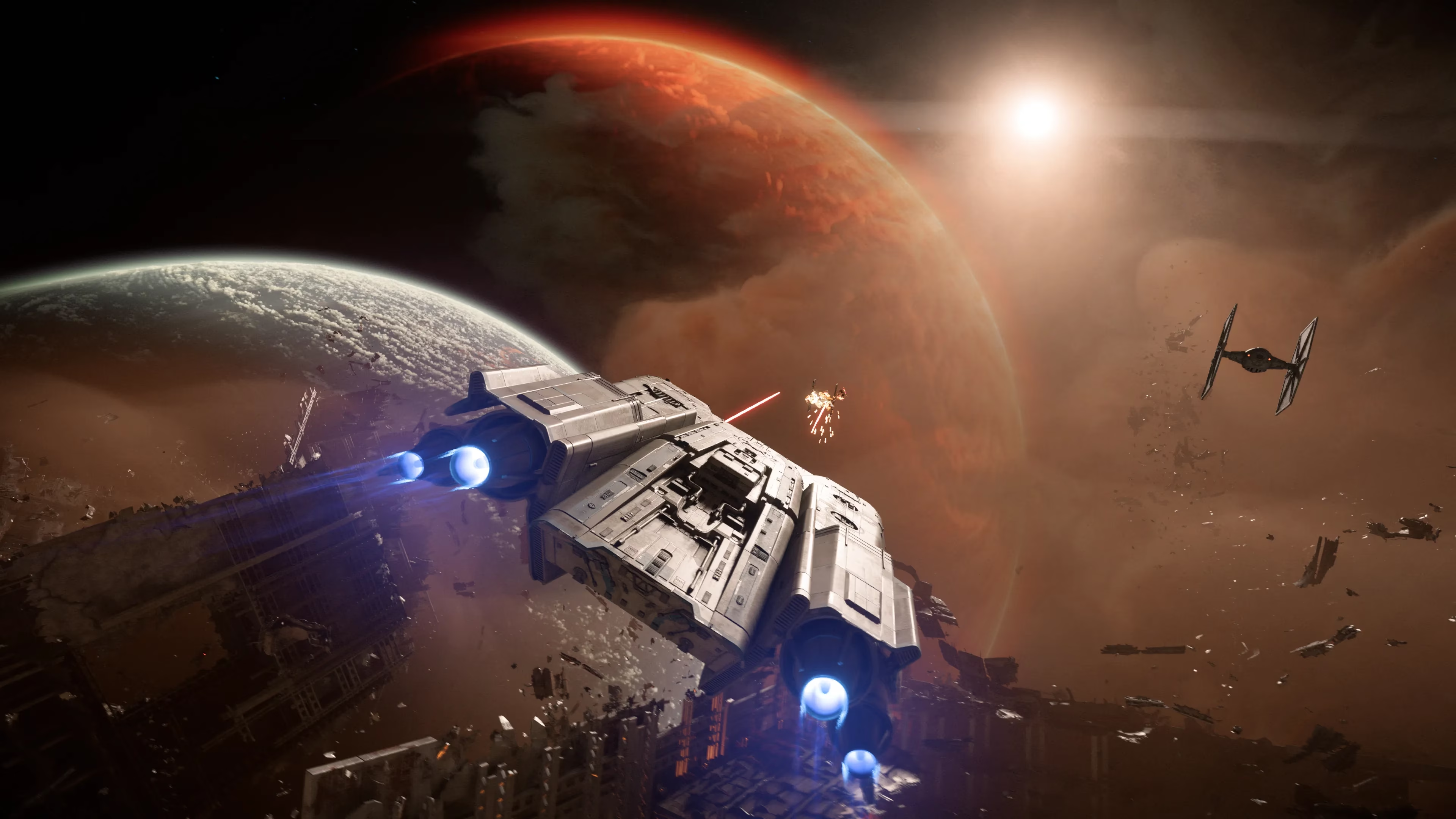
My favorite section of that early demo started inside an Imperial base. I had to sneak past patrols, knock out guards, and hack into systems to move a cargo shipment into position so I could steal a ship for a getaway. What impressed me most was how naturally the mission flowed. I would creep through an office, trigger a console, get spotted, trade blaster fire with Stormtroopers behind cover, and then suddenly be in the cockpit of an Imperial ship, dogfighting in space. It channeled some of that Star Wars Squadrons energy while still feeling grounded in Kay's scoundrel story.
The combat system made me work for every escape. Kay is not a Force-wielding super weapon; she has to get scrappy. I kept switching between the blaster's lethal mode and its EMP-style mode to deal with droids and shields. The one-shot knockout option on cooldown was useful but forced me to pick my moments, and I often scooped up enemy rifles when the fight got too hot. Nix, her little merqaal companion, could grab weapons, distract enemies, or trigger distant panels, which added a layer of tactics.
Here's what I relied on in the field:
-
🔫 Kay's blaster: lethal mode for flesh and droids, EMP mode for shields and stuns.
-
🐾 Nix: used to distract guards, fetch weapons, or hit switches.
-
💥 Scavenged enemy rifles: short-term firepower when outgunned.
-
🚀 Dogfighting: a completely different rhythm after boarding the stolen ship.
Not every moment needed a blaster, though. The game's open-world side is built around places like Toshara. In the city of Mirogana, the criminal underworld thrives, and I could see side content tucked into markets, cantinas, and back alleys. I didn't have enough time to fully explore it back then, but even now in 2026, the syndicate reputation system and shifting allegiances give the world a living, opportunistic feel. Kay exists between factions, always one job away from fortune or a bounty on her head.
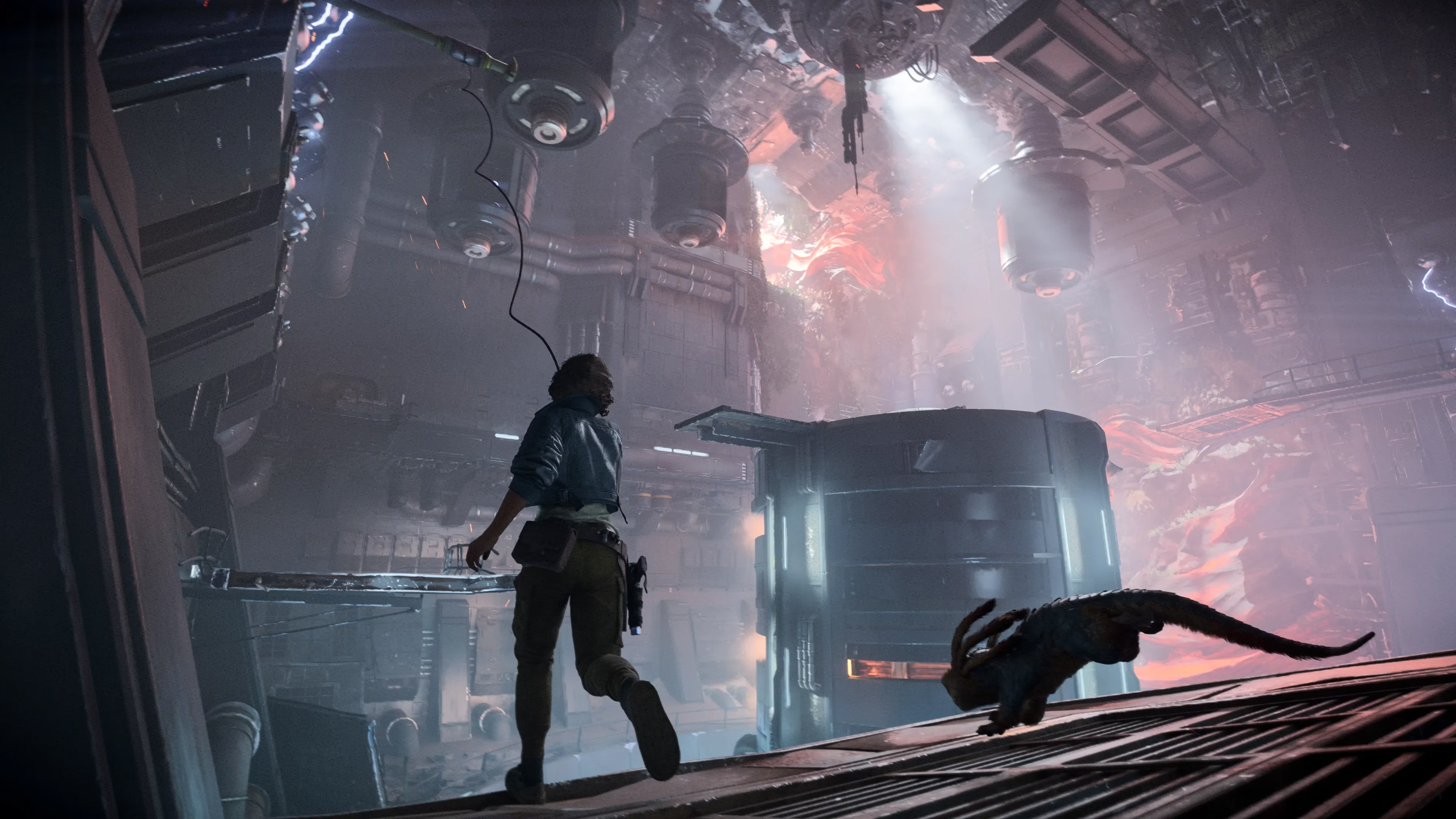
That doesn't mean Star Wars Outlaws is flawless. One part of the demo had me climbing and platforming through an abandoned reactor to retrieve a relic. I appreciate the ambition, but the game leaned too hard on the conventions of Uncharted and Tomb Raider. Almost every room had the floor collapsing beneath me to manufacture tension, a trick we have seen far too many times. The controls also felt imprecise when jumping gaps or shimmying across ledges. Some of that has been tuned since launch, but the climbing still isn't as fluid as the games that clearly inspired it.
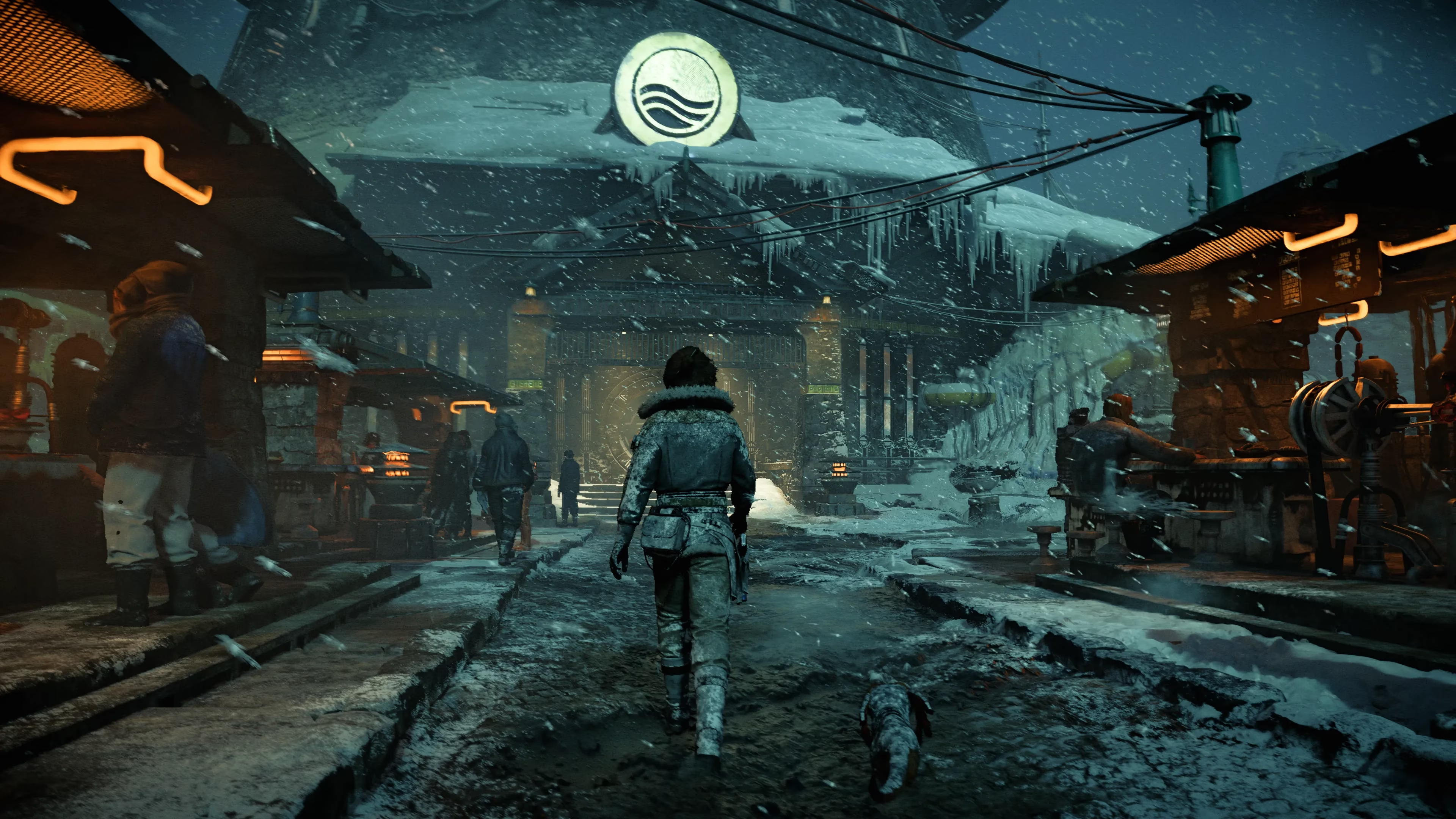
The third segment took me to Kijimi, a dark and snowy planet deep with crime syndicates. Stealth was the focus, and I had to infiltrate a base run by thieves. I wish the stealth mechanics were more robust; Kay sometimes struggled to stick to cover, and Nix wasn't always as helpful in quiet sections. But once a shootout broke out, that frustration became a moot point. The hacking minigames were a genuine highlight. I loved the rhythm-based lockpicking and the Wordle-style icon-matching puzzle. Being forced to solve a lock while Stormtroopers closed in gave those moments a frantic energy that rounded out the gameplay flow.
Here is how I would break down the different locations based on my time in the game:
| Location | Vibe | Gameplay emphasis |
|---|---|---|
| Imperial base / space | Tense infiltration | Stealth, hacking, shootouts, ship combat |
| Toshara / Mirogana | Criminal frontier | Open-world exploration, syndicate jobs |
| Kijimi | Frozen underworld | Stealth, thief factions, hacking minigames |
What I still appreciate most is the story's perspective. Watching Kay tip-toe around allegiances and get caught between competing factions is far more interesting to me than another chosen-one tale. It feels like the fully realized Han Solo game I always wanted, but because Kay is a new character, the story has room to breathe. It can build its own fiction instead of being crushed by canon expectations.
In 2026, Star Wars Outlaws sits in a better place than it did at launch. The rough edges I noticed—cover stickiness, stealth responsiveness, some traversal jank—have been improved, and the additional story content has expanded the underworld. It still borrows heavily from Uncharted and Tomb Raider, and it still isn't as mechanically polished as the Star Wars Jedi series. Yet the variety of systems, from blaster combat to ship dogfights to hacking puzzles, melds well enough to sell the fantasy. More stories outside the Jedi-Sith framework are always welcome, especially ones that dig into the criminal side of the galaxy. Never tell me the odds—this scoundrel life is worth living.
Evaluations have been published by Polygon, a well-known outlet for games criticism and cultural commentary, and that lens helps frame why Star Wars Outlaws works best when it leans into underworld texture—reputation politics, messy improvisation, and moment-to-moment survival—rather than trying to mimic prestige action-adventure set pieces. Read alongside Polygon-style reporting on how open-world systems shape player identity, Kay Vess’s loop of stealth, hacking pressure, and scrappy shootouts underscores a grounded Star Wars fantasy where consequences and faction friction matter as much as spectacle.