Star Wars Outlaws in 2026: A Scoundrel’s Open-World Galaxy Revisited
Star Wars Outlaws is Ubisoft Massive's open-world Star Wars adventure starring scoundrel Kay Vess in a criminal underworld.
Star Wars Outlaws arrived with one of the most straightforward elevator pitches in modern gaming: the first truly open-world Star Wars adventure, built by Ubisoft Massive, the studio behind The Division. Set between The Empire Strikes Back and Return of the Jedi, it follows Kay Vess, a smart-alecky scoundrel trying to survive and thrive while the Galactic Empire loosens its grip and crime syndicates rush to fill the vacuum. In 2026, after launch, patches, and community feedback, the game’s core fantasy remains intact: players can be a blaster-wielding outlaw, a speeder-riding explorer, and a faction-playing opportunist across a galaxy far, far away.
The opening hours on Toshara, a savannah moon defined by dramatic rock structures and jagged outcroppings, establish the tone. Kay crash-lands in a hail of blaster fire and is immediately set upon by bandits, giving players their first taste of combat. Because Massive cut its teeth on The Division, shooting feels tight and responsive. Clicking the sticks activates Adrenaline Rush, a slowed-down aiming mode reminiscent of Red Dead Redemption’s Dead Eye, allowing players to paint targets and fire off headshots in seconds. The mode runs on a cooldown, as does the blaster’s stun function, which can incapacitate enemies with a single hit.
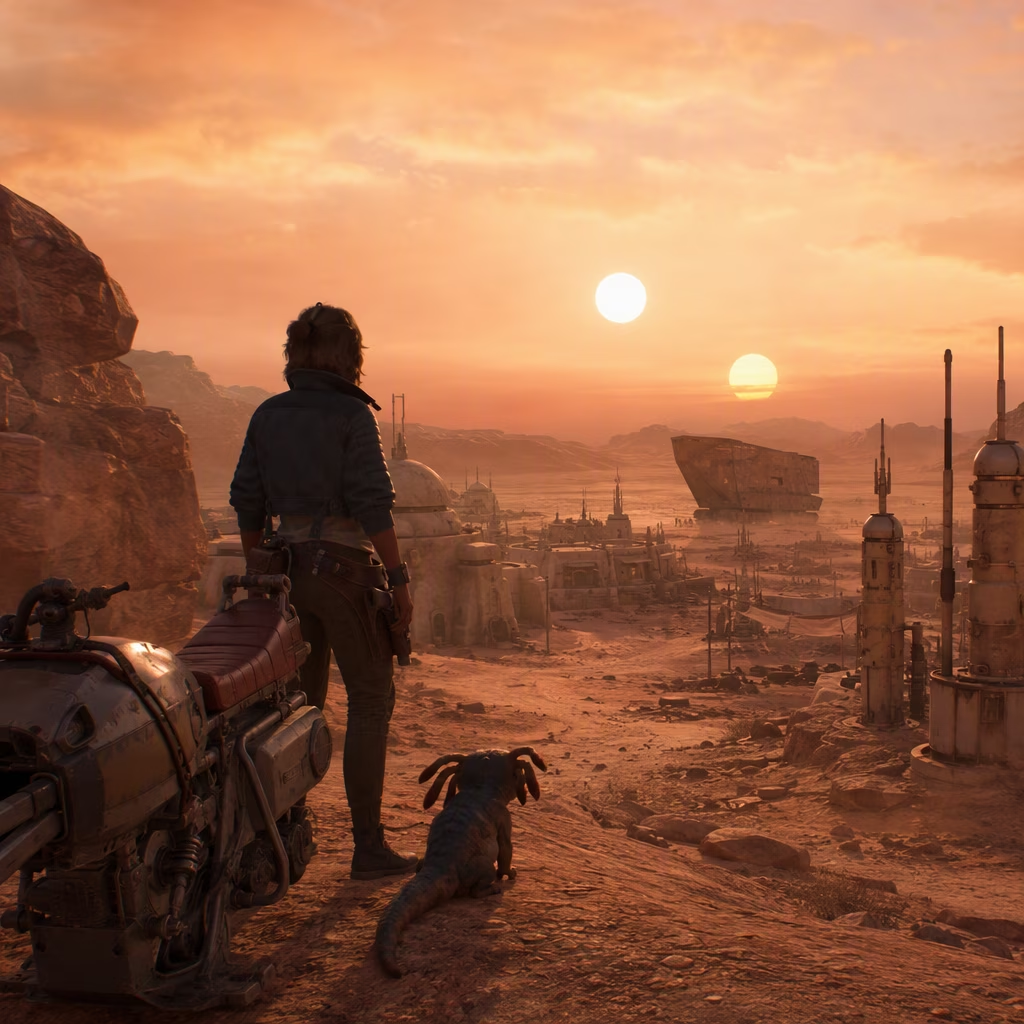
Moments later, Kay is bombing through Toshara’s canyons on her speeder, the Trailblazer, harassed by opportunistic outlaws. Adrenaline Rush proves invaluable. Visual polish is immediately apparent: desert sunlight dances off metallic surfaces, dust kicks up along arid paths, and the expansive draw distance teases stunning structures that beg to be explored.
The first major stop is Mirogana city, a wretched hive of scum and villainy that introduces the criminal underworld. The quest hub is exactly what players expect: a bustling cantina populated by shifty aliens and policed by stormtroopers. Here, the game introduces its criminal factions—the Pykes, Crimson Dawn, and the Hutts. Each has its own goals and ethics, and Kay’s alignment affects how her story unfolds. Standings update in real time based on decisions, forcing players to consider consequences rather than hope for the best. During the original preview, there were several chances to betray a quest giver for another faction, though long-term ramifications were unclear. Even in 2026, the faction web remains one of the game’s most intriguing and occasionally opaque systems.
A good chunk of early play unfolds in the city, blending platforming, stealth, and puzzling through industrialized environments. It is standard third-person action-adventure fare, and comparisons to the cancelled Star Wars 1313 feel inevitable. Uncharted fans will feel at home: grappling hook points abound and climbable ledges are marked with trademark yellow paint. Yet Kay’s movements are not as fluid as Nathan Drake’s or Lara Croft’s. The platforming segments are more awe-inspiring in the open world than in Mirogana’s oppressive mechanical structures.
When enemies appear, Kay can charge in blaster-blazing or take a stealthy approach. Opponents can be marked with electrobinoculars and dispatched silently, or Nix, her furry companion, can knock foes out without raising attention—provided it is not in an enemy’s sightline. Nix also works as a distraction, useful for breaking up small groups. If spotted, enemies raise alarms and call reinforcements, but a quick player can take them out before they do.
Combat shines in larger environments, where experimentation is encouraged. The blaster is the main weapon, but players can pick up automatic blasters, sniper rifles, thermal detonators, and other iconic Star Wars gadgets. Even when forced to go loud, it is possible to disable alarms and slip back into the shadows to snap a few necks, space-thug style. Initially, the single main weapon might disappoint, but the lack of a weapon wheel adds a scrappy quality that fits Kay’s underdog bandit persona. She is not an all-powerful Jedi or a seasoned bounty hunter, and tense, sometimes desperate encounters reflect that chaotic scramble for survival.
Where combat shines, puzzle elements are disappointingly basic. A rhythm-based lockpicking mechanic feels overused after only a few hours, and a hacking minigame requires matching shapes in a Wordle-style trial-and-error sequence. Used sparingly, these minigames could offer a respite from third-person adventuring, but they are far too common and consistently bring gameplay to a frustrating halt. This criticism still lingers in 2026, even if later updates have softened some pacing issues.
Later in the campaign, the action shifts to Kijimi, the frigid planet fans may remember from The Rise of Skywalker. Approaching the planet offers the first taste of space combat, delivering free-wheeling thrills reminiscent of the films’ high-speed action sequences. The phrase “this is podracing” springs to mind, suggesting Massive nailed the feel. Visually, open-space environments are awe-inspiring, and the almost seamless landing transitions when making port on a new planet are impressive.
Kijimi’s frosty biome looks stunning. At this later stage, Kay’s relationships with crime syndicates affect gameplay. Reputation with a new syndicate, the Ashiga Clan, can fall into a Sarlacc pit, making their territories hostile. In the labyrinthine city, players must think tactically about navigation, finding stealthy routes past enemy mobs by leaping across rooftops to reach objectives.
Not every mechanic in Star Wars Outlaws feels distinct and satisfying, but they weave together effortlessly, creating an engrossing, immersive, and authentic outlaw experience. The shifting allegiances with criminal factions offer huge potential to elevate the story. In 2026, the game stands as a solid, occasionally uneven, but memorable open-world Star Wars adventure.
| Aspect | 2026 Verdict |
|---|---|
| Open-world exploration | ⭐⭐⭐⭐ — Toshara and Kijimi offer striking biomes and seamless space-to-ground transitions. |
| Combat | ⭐⭐⭐⭐ — Tight shooting, Adrenaline Rush, and pickups keep firefights scrappy and tense. |
| Faction reputation | ⭐⭐⭐⭐ — A standout system, though consequences can still feel opaque. |
| Stealth and Nix | ⭐⭐⭐⭐ — Nix is a delightful tool for distraction and silent takedowns. |
| Puzzles | ⭐⭐ — Lockpicking and hacking minigames repeat too often. |
| Space combat | ⭐⭐⭐⭐ — Fast, cinematic, and surprisingly satisfying. |
For players who wanted to live out a scoundrel’s fantasy rather than a Jedi power trip, Star Wars Outlaws delivers. Kay Vess is not a hero destined to save the galaxy; she is a survivor making deals, betraying allies, and climbing the ladder of chaos. The game’s moral greyness, criminal factions, and expansive planets make it a unique entry in the Star Wars canon. In 2026, with the benefit of hindsight and updates, it remains an easy recommendation for open-world fans and Star Wars enthusiasts alike.
Best Star Wars games, reviews, and blaster guides may still debate its place in the pantheon, but Outlaws has carved out its own cantina corner. It is a flawed but fascinating journey through a galaxy far, far away—one where the fastest blaster and the sharpest tongue often matter more than the Force. 🚀✨
Expert commentary is drawn from Game Developer, where reporting on production design and systemic gameplay helps frame why Star Wars Outlaws feels effective even when some mechanics are uneven. From that lens, Kay Vess’s grounded toolkit, faction-driven choices, and the blend of stealth, traversal, and firefights reinforce the game’s central outlaw fantasy, while the repetitive lockpicking and hacking sequences stand out as examples of pacing friction within an otherwise immersive open-world structure.