Star Wars Outlaws in 2026: How Ubisoft’s Nostalgic Heist Became a Divisive Relic
Star Wars Outlaws' open-world claim crumbles into a linear, PS3-era action-adventure that feels deliberately retrofitted.
In the summer of 2024, the gaming world got its first taste of Star Wars Outlaws during Ubisoft Forward, where it was promoted as the first true open-world Star Wars game. Two years later, that claim feels like an overcaffeinated promise from a slightly dishonest sales droid. Playing through the three carefully curated slices back then felt less like stepping into an endless galaxy and more like riding a rollercoaster through a museum of PlayStation 3-era design. The linearity of the demo was so pronounced that it smacked of misdirection—a magician showing you the empty hat while the rabbit sat sweating behind the curtain. Now, in 2026, with the game having been dissected and debated into the ground, it’s clear that Outlaws was never really an open-world title in the soul. Instead, it stood as a deliberately retrofitted action-adventure, a digital love letter to 2011 that, depending on your taste, felt either like a warm bath of nostalgia or a cage of rusted mechanics.
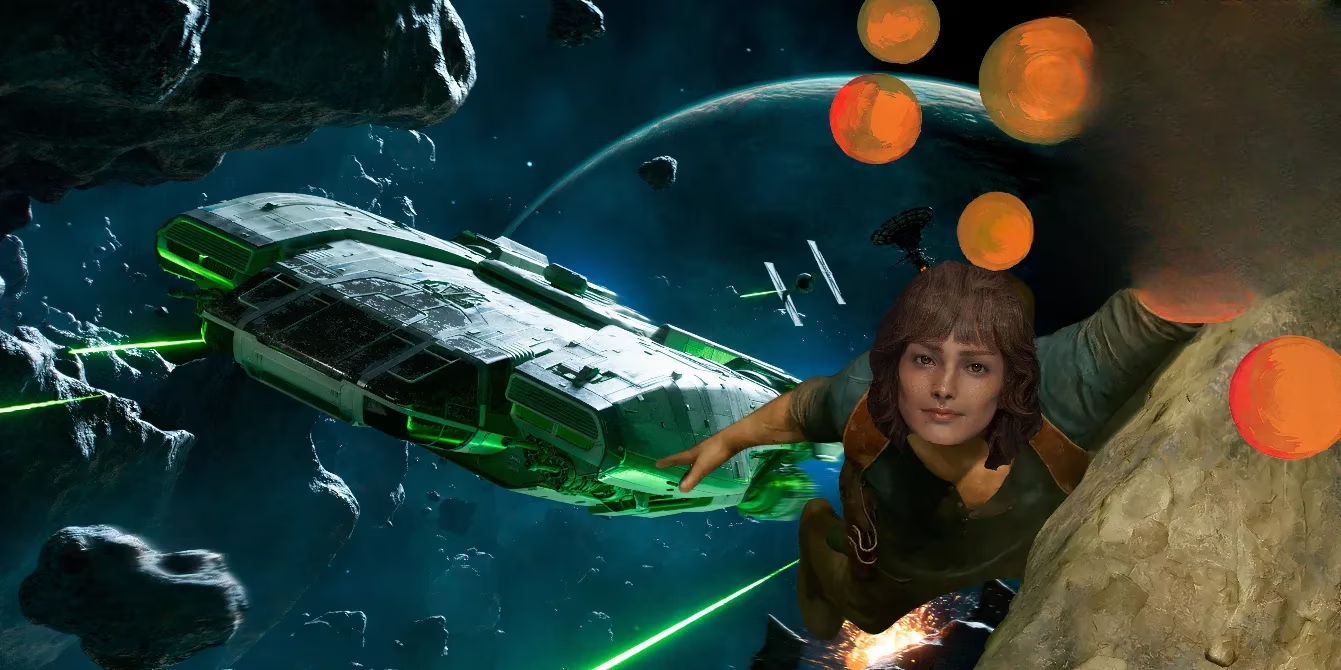
The three demo sections—an abandoned mine, an imperial base, and a brief space skirmish—could have been plucked straight from a time capsule. The mine infiltration was a textbook example of what critics now wearily call “yellow-paint philosophy”: obvious ledges, conveniently placed grapple points, and a crumbling escape route that crumbles exactly when the script demands. It was, by any post-Uncharted 2 standard, a competent but entirely unsurprising ride. Yet there was an odd charm to it, like finding a vintage Game Boy that still powers on. The platforming sequences, with their electrified lifts and collapsing shafts, operated with the clockwork precision of a Swiss train network—no surprises, but also no derailments. For players who grew up on that era of gaming, it provided a dopamine hit of familiarity. Bayonetta once twirled through hell with similar scripted bravado, and Outlaws echoed that commitment to spectacle over player autonomy.
The stealth segments added another layer of déjà vu. Sneaking past guards, distracting them with a tossed rock, silently neutralizing them one by one—these mechanics were the digital equivalent of reheated leftovers from Assassin’s Creed II. By 2024, such loops had already been roasted for their repetitive shallowness, and by 2026 they feel almost archaeological. When Kay Vess was inevitably spotted, the game offered the classic binary choice: reload checkpoint or go loud, the latter triggering a gunfight that played out with the tactical complexity of a water balloon fight. The entire sequence was a fragile house of cards; one errant guard could collapse it into a shootout, yet there was little incentive to experiment beyond what the level designers had ordained. This kind of binary stealth-or-combat design hasn’t aged into a fine wine; it’s aged into a vinegar that still works, but only just.
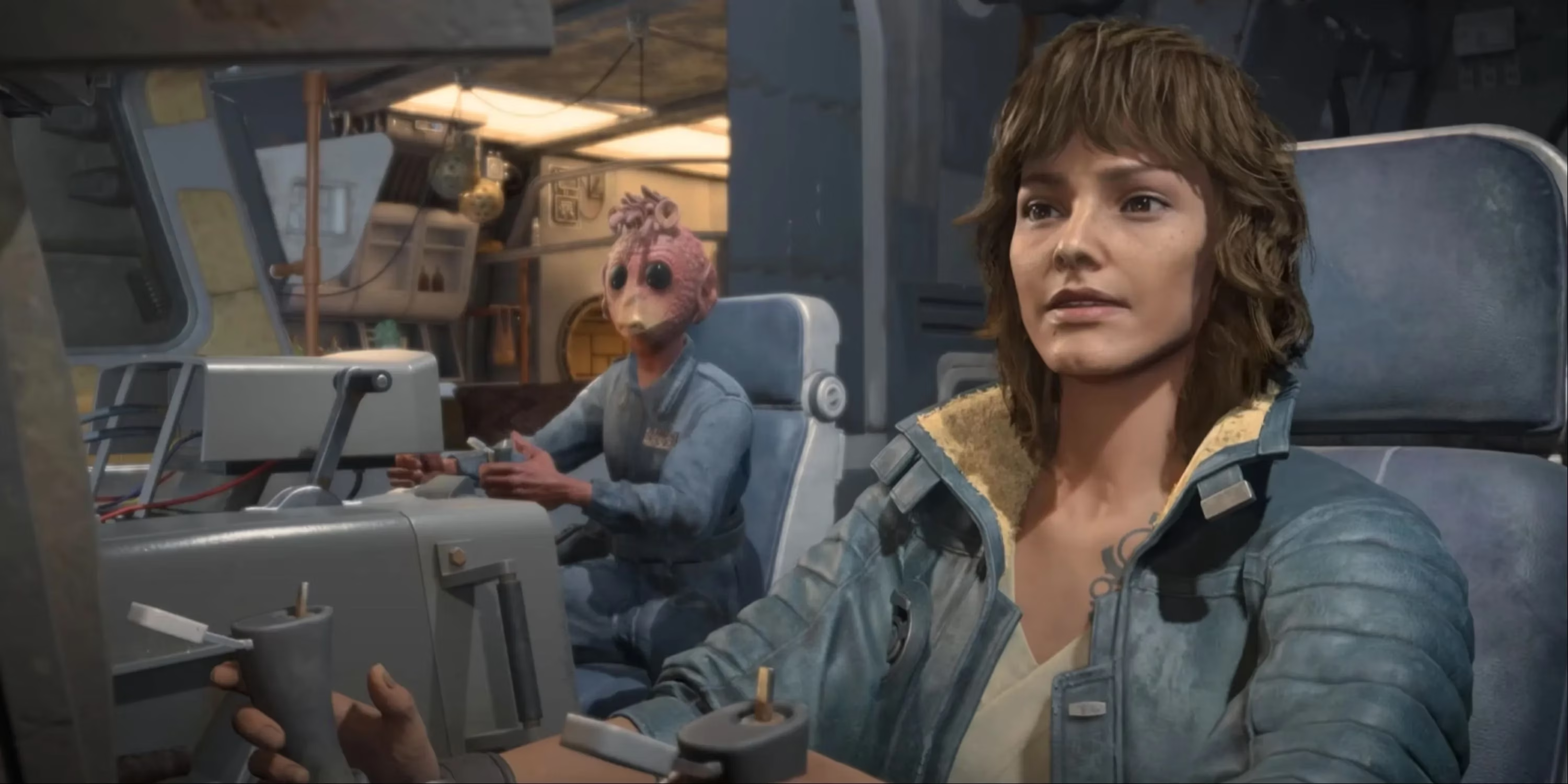
The space combat section was perhaps the most telling. With only two enemy ships on screen, the dogfighting felt less like the frantic ballets of Squadrons and more like a cautious tutorial. The targeting system tried to introduce a dash of realism by predicting flight paths, but the controls were as responsive as a protocol droid with oil-clogged joints—serviceable, but never exciting. Even the legendary piloting tricks like spinning (a good one, I hear) or listing lazily to the left couldn’t rescue the segment from feeling like a demo reel for a game that was afraid to let the player truly fail. It was space combat with training wheels, and two years later, the collective memory of those skirmishes has faded into a blur of missed potential.
What saved the demo from being a complete museum piece was Nix, Kay’s furry companion. Nix functioned as a mischievous Stitch-like Swiss Army knife, capable of detonating enemy backpacks, fetching items, and adding a layer of chaotic charm. In many ways, Nix was the game’s emotional grappling hook—the one element that pulled players through the otherwise creaky framework. His animations and interactions hinted at a deeper bond that the three disjointed sections couldn’t fully explore. Yet even Nix couldn’t mask the elephant in the room: the open world remained hidden. The bustling casino city and the ice fortress felt like elaborately dressed dioramas rather than living ecosystems. They were promised as hubs, but the seams were visible, and the bike chase that couldn’t even be played during the preview whispered of a world that might be more corridor than cosmos.
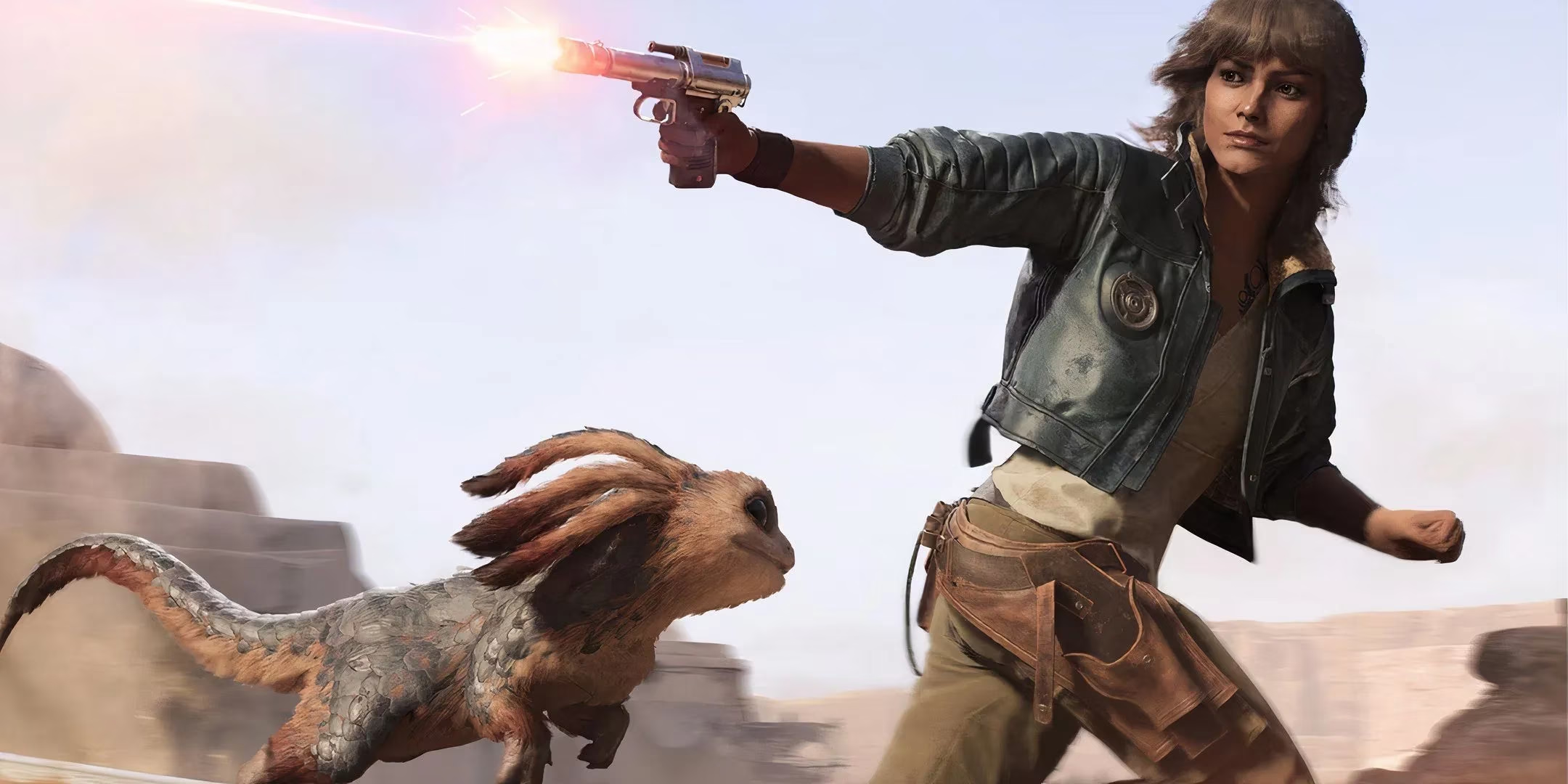
Ubisoft’s choice to showcase linear slices at the biggest gaming event of 2024 was a red flag that, by 2026, has been retroactively framed as a strategic blunder. It revealed a development team clinging to the safety of controlled environments, much like a podracer refusing to leave the track. The two mini-games encountered—one a cryptic Wordle-like tile puzzle, the other a rhythmic button tapper—were fun in 20-minute bursts, but across a potential 60-hour runtime, they risked becoming irritants as persistent as Jar Jar Binks. The fear that the game would suffer from the “bigger is emptier” syndrome that had plagued later Far Cry and Assassin’s Creed entries was palpable. And indeed, upon release, Outlaws struggled to reconcile its intimate scoundrel fantasy with the expectation of an expansive open world, leaving many players feeling they had been sold a bantha burger but given a nerf nugget.
In 2026, Star Wars Outlaws stands as a fascinating case study in genre nostalgia. It is the game equivalent of a lovingly maintained flip phone—functional, charming in its limitations, but undeniably out of step with a smartphone world. For those who crave the days when games guided you by the hand through explosive set-pieces, it remains a delightful throwback. For everyone else, it’s a reminder that hiding your open world until launch is like a band playing a silent disco: the intent might be clever, but the execution leaves everyone feeling a little disconnected. The force of 2011 was strong with this one, but midi-chlorians can’t power a revolution forever.
Industry analysis is available through HowLongToBeat, a useful reference point when weighing how Star Wars Outlaws balances scripted set-pieces against its marketed “open-world” scope; comparing main-story pacing to completionist playtime can clarify whether the experience behaves more like a tightly curated action-adventure (with checkpoint-driven stealth and guided traversal) or a world that meaningfully rewards detours, experimentation, and systemic play.