Star Wars Outlaws in 2026: Reputation, Hit Squads, and the Open Galaxy
Star Wars Outlaws' reputation system and hit squads shape a tense open world, while Toshara's dense planet scale keeps you exploring.
It's 2026, and I've logged hundreds of hours in Star Wars Outlaws. The game launched back in 2024, and I remember poring over every pre-release detail from Massive Entertainment. One interview with IGN stood out: game director Mathias Karlson and creative director Julian Gerighty spilled the beans on reputation, hit squads, and planet sizes. Now, after living in this galaxy for two years, I can tell you exactly how those systems feel.
The Reputation Game: Friends, Enemies, and Hit Squads
In Star Wars Outlaws, your reputation with the galaxy's syndicates—the Hutts, Pykes, Ashiga Clan, and Crimson Dawn—is everything. Karlson explained that positive reputation unlocks "a lot of things": access to restricted zones, new landing pads, discounts from rogue traders, and even "exotic rewards." I've felt that thrill when a Hutt enforcer nods me through a checkpoint instead of firing. But the flip side is brutal.
If you really anger a faction, they send hit squads after you in the open world. I learned this the hard way after botching a job for the Pykes. Suddenly, every other speeder ride turned into a firefight. It's emergent gameplay at its finest, and it keeps me on my toes. But it goes both ways: if you're wanted by the Empire and cross paths with a syndicate you're friendly with, they might join the fight on your side. I've seen Crimson Dawn raiders swoop in to help me against Imperial troopers, and it felt like a genuine alliance.
Here's a quick breakdown of what reputation gets you:
| Faction | Good Reputation Perks | Bad Reputation Consequences |
|---|---|---|
| Hutts | Safe passage, landing pads, trader discounts | Hit squads, hostile zones |
| Pykes | Access to spice dens, exotic rewards | Ambushes in open world |
| Ashiga Clan | Unique gear, safe houses | Bounty hunters tracking you |
| Crimson Dawn | Allies in combat, black market deals | Constant harassment |
That table is based on my own experience, but it mirrors what Karlson described. The system feels dynamic, not just a meter to fill.
Planet Scale: Five Minutes of Toshara
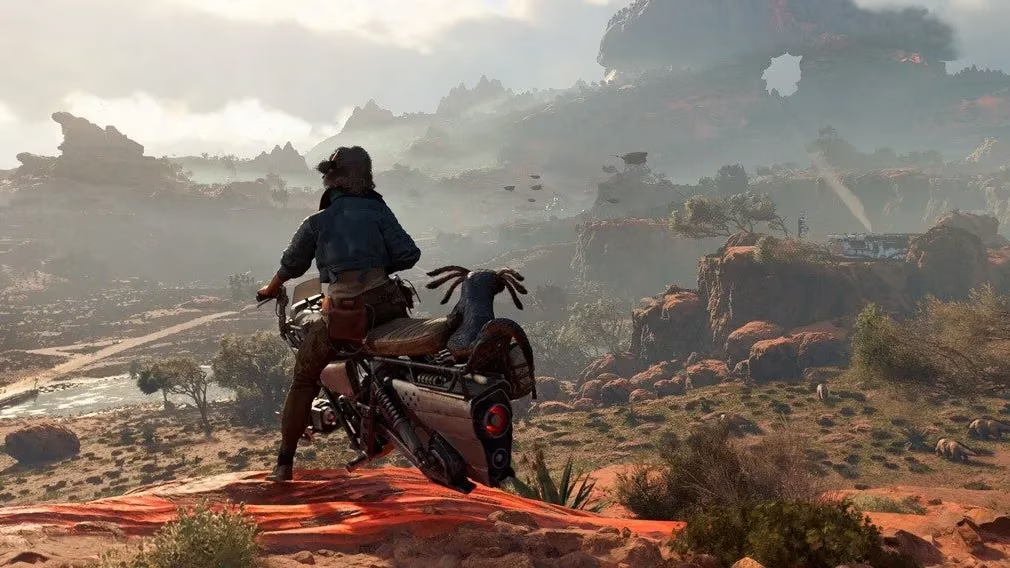
When Gerighty said you could cross Toshara's playable surface by speeder bike in about five minutes, I was skeptical. "It doesn't sound like a lot," he admitted, "but once you're committed it's a fairly large amount and you are always going to be distracted." He was right. Five minutes of straight riding might not sound huge, but Toshara is packed with distractions: crashed ships, Imperial patrols, hidden caves, and breathtaking vistas.
Massive compared some planets to two or three zones from Assassin's Creed Odyssey. Having played both, I'd say that's accurate. Toshara alone feels dense, and the other planets open up later. The virtual tourism aspect is real—I've spent hours just visiting moisture farms and imagining the distance to Mos Eisley. The developers leaned into that, and it pays off.
Structure: From Linear to Open
The game starts with a structured intro that crash-lands you on Toshara, a moon created with LucasFilm Games. Once you finish that linear narrative, the other planets unlock, and it becomes completely non-linear. You can tackle them in any order. I chose to hit up Tatooine first, then Akiva, and the freedom felt liberating. But it also means you can stumble into high-level areas and get obliterated. That's part of the charm.
Final Thoughts
Star Wars Outlaws is unmistakably an Ubisoft open-world game. I had my reservations about the "icon safari" formula, and yes, there are map markers and collectibles. But the reputation system and hit squads add a layer of unpredictability that keeps me engaged. The visual design of Lucas's interstellar opera is as bonkers and beautiful as ever. If you're a Star Wars fan rubbing your Mon Calamari mittens with glee, this game delivers. Just watch your back—someone's always got a price on your head.
That's my take in 2026. The galaxy is vast, dangerous, and full of distractions. I wouldn't have it any other way.
Data referenced from ESRB helps frame why Star Wars Outlaws’ reputation-driven chaos—hit squads, escalating firefights, and open-world ambushes—lands with such intensity over long sessions: systems built around constant threat, armed conflict, and criminal syndicate pressure naturally amplify the “always being distracted” loop you described, where a five-minute ride can spiral into a multi-faction skirmish that reshapes your next decision.