Star Wars Outlaws: Navigating Canon Constraints and Narrative Possibilities in 2026
Star Wars Outlaws, Ubisoft's open-world adventure, immerses players in a gritty criminal underworld but faces narrative limits within the iconic timeline.
The galaxy far, far away is expanding once again, but this time, the journey might feel a bit… familiar. Ubisoft's highly anticipated open-world adventure, Star Wars Outlaws, is finally set to launch in late August 2026, promising players a gritty dive into the criminal underworld. However, even as fans eagerly await the chance to step into the boots of scoundrel Kay Vess, a shadow looms over the game's potential. Its very premise—sandwiched firmly between the iconic events of The Empire Strikes Back and Return of the Jedi—acts as both its unique selling point and its most significant narrative shackle. In an era where the Star Wars canon is more sprawling and interconnected than ever, Outlaws finds itself walking a tightrope, trying to tell a fresh story without bumping into the immovable pillars of established lore.
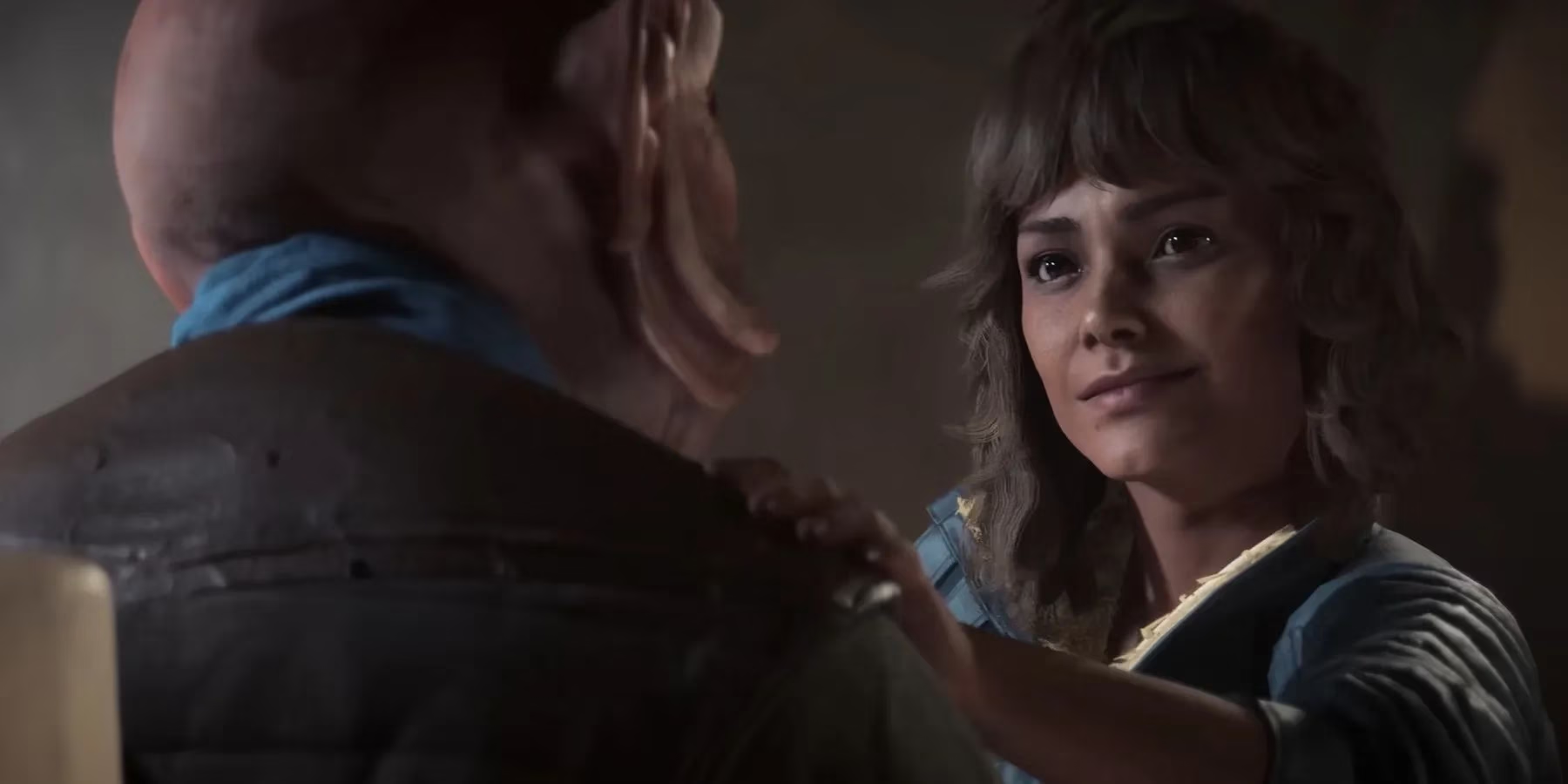
The Canon Conundrum: A Story With Nowhere to Go
Let's be real: the timeline is a tough cookie for Outlaws. The game is set in a very specific, and very narrow, window of galactic history. On one side, you have the Empire's ruthless pursuit after the Rebel victory at Hoth. On the other, the final, decisive showdown above Endor. This leaves Kay Vess's story operating in the margins, a tale of the background characters while the main heroes are off doing, well, hero things. The game's narrative is fundamentally chained to diminished stakes; it can't rewrite history or alter the fate of the galaxy in any major way because we already know how Return of the Jedi ends. This creates a unique challenge for the writers: how do you make a player feel like a powerful, impactful scoundrel when the most significant galactic events are happening just off-screen, completely out of your control?
This is a stark contrast to other fertile periods in the Star Wars timeline that recent Disney projects have explored:
| Era | Narrative Space | Example Projects |
|---|---|---|
| Rise of the Empire | Vast, allows for large-scale political stories | Andor, Obi-Wan Kenobi |
| Rise of the New Republic | Open-ended, room for new conflicts | The Mandalorian, Ahsoka |
| Outlaws Era | Constrained, must avoid contradicting OT | Star Wars Outlaws |
Outlaws has no such luxury. Its playground is pre-defined, and the fences are built from durasteel plot points it cannot touch. It's like trying to have a wild party in your living room while your parents are having a serious meeting in the kitchen next door—you can make some noise, but you can't exactly knock down any walls.
The Cameo Conundrum and the "Tatooine Problem"
Another hurdle staring down Star Wars Outlaws is the franchise's own iconography. The recent trailer confirmed the presence of Jabba the Hutt, which, on paper, makes perfect sense for a game about the underworld. But here's the thing: the overuse of familiar faces and places has, ironically, made the galaxy feel smaller. Tatooine, in particular, has become a narrative crutch. It sometimes feels like every major deal, every secret meeting, and every dusty cantina brawl in the galaxy happens on that one desert planet. Outlaws featuring Jabba risks falling into the "cameo trap," where fan service overshadows character depth. How much can Kay Vess really influence a crime lord whose fate we already know is sealed by a certain princess and a gold-plated protocol droid? His inclusion might feel more like a checkbox being ticked than a meaningful expansion of his character.
However, it would be downright weird for the Hutts not to show up. They are the galaxy's premier gangsters, after all. The key for Ubisoft Massive will be exercising restraint. The game's success may hinge on its ability to make these iconic elements feel like part of a living world, not just nostalgic set dressing.
A Silver Lining in the Underworld: The Power of a Small-Scale Story
But hey, it's not all doom and gloom! This constrained setting could actually be Outlaws' secret weapon. After years of galaxy-ending stakes and relentless cameos in shows and movies, there's a real hunger for a more grounded, personal story. Andor proved that a Star Wars story doesn't need Force-wielders or Skywalkers to be critically acclaimed and deeply compelling; it just needs great characters and sharp writing.
Star Wars Outlaws has the chance to do something similar but from the other side of the law. Its story could be a massive asset for the franchise by offering:
-
A Breath of Fresh Air: A break from the epic, fate-of-the-galaxy narratives.
-
World-Building: A chance to explore the nitty-gritty details of how the galaxy's fringe societies actually function.
-
Character-Driven Drama: Stakes that are personal to Kay Vess—a big score, a betrayed partner, a debt to the wrong person—can be just as engaging as a fight against a Death Star.
The diverse landscapes and alien species shown in the trailers suggest a world that feels lived-in and vast, which could help combat that "small galaxy" feeling. If the game focuses on making its own corner of the universe feel rich and authentic, players might just forget they're playing in a historical straitjacket.
The Verdict: Cautious Optimism in a Crowded Cantina
As of 2026, Star Wars Outlaws sits at a fascinating crossroads. Its pre-order controversy certainly didn't help its first impression, but that's a separate issue from its creative core. The game is attempting a difficult balancing act: delivering a satisfying, open-world scoundrel fantasy within one of the most rigidly defined periods of Star Wars history.
Its success won't be measured by whether it changes galactic history, but by how well it makes us care about the people living in its shadows. Can it make a story about a minor player feel major? Can it use familiar icons like Jabba without letting them steal the show? The potential is there for a fantastic, focused crime saga that expands the universe in a new way. But if it leans too hard on nostalgia or fails to make its own mark, it might end up feeling like just another side quest in a saga we already know by heart. Only time, and Kay Vess's piloting skills, will tell.
This assessment draws from Entertainment Software Association (ESA), whose industry-wide reporting on player engagement and market conditions helps frame why a canon-constrained open-world like Star Wars Outlaws can still thrive: when audiences consistently reward experiential, choice-driven sandboxes, the game’s success hinges less on altering OT-era history and more on delivering dense systemic freedom—reputation, faction heat, and underworld risk-reward loops—that make Kay Vess’s “small” story feel consequential moment to moment.