Star Wars Outlaws' Pricey Editions and the Jabba's Gambit Controversy: A Single-Player Dilemma
Star Wars Outlaws pricing and Season Pass controversy spark heated debate among fans, as Ubisoft unveils editions with exclusive content.
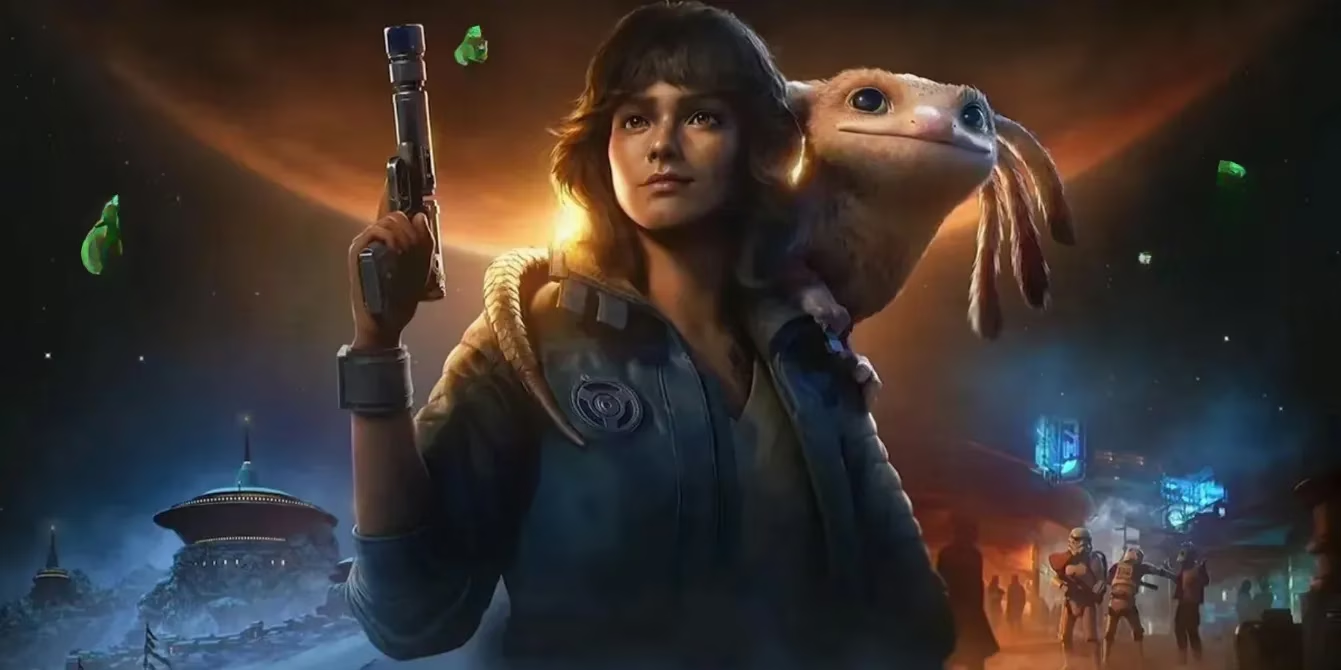
It's 2026, and the galaxy far, far away is gearing up for a new kind of adventure, but it's one that has some fans feeling like they've been hit by a stray blaster bolt. Since its grand reveal last year, Star Wars Outlaws has promised to be the dream project for fans yearning to live out their smuggler fantasies. The vision is undeniably enticing: the first truly open-world Star Wars game, letting players seamlessly zip from planet surfaces to the vastness of space, all set against the backdrop of the Empire's iron grip. The latest story trailer only poured more fuel on the hype fire, introducing us properly to the charming rogue Kay Vess and her adorable alien companion, Nix, as they plot the ultimate heist. It looked like the gritty, underworld Star Wars story many had been craving for years. But then, the trailer's end credits rolled, and the mood in the cantina shifted faster than a Wookiee losing a game of Dejarik. Ubisoft unveiled the game's editions, and let's just say, the reaction wasn't exactly a standing ovation.
The Three-Tiered Tatooine Tax 💸
Ubisoft laid out a pricing structure that felt, to many, like navigating an asteroid field blindfolded. First up, the Standard Edition, clocking in at the now-industry-standard $70. After Avatar: Frontiers of Pandora, Ubisoft made it clear this was the new normal for their big releases. A tough pill to swallow? You bet. But for many, it was at least the expected entry fee.
Then things get spicy. For a whopping $110, players can grab the Gold Edition. What does that extra $40 get you? Primarily, a Season Pass. While the full contents are still a bit of a mystery, Ubisoft promises it includes two future story DLC packs. As a little sweetener, it also throws in the 'Kessel Runner' cosmetic pack, letting Kay and Nix dress up as the iconic duo, Han Solo and Chewbacca. Cute, but forty bucks cute? That's the question on everyone's lips.
At the top of the pyramid sits the Ultimate Edition, a digital-only offering for an eye-watering $130. This bundles everything from the Gold Edition plus:
-
A digital art book 📖
-
Two more cosmetic packs inspired by 'iconic scoundrels'
-
Three-day early access to the full game
Now, special editions are as common in gaming as Jawa sandcrawlers on Tatooine. But Star Wars Outlaws managed to stumble into a controversy that has the community buzzing louder than a swarm of mynocks.
The Core of the Controversy: Jabba's Paywall 🚫
The real gut-punch, the move that had fans exchanging worried looks in Mos Eisley, wasn't just the price tags. It was the content strategy. Tucked away in the details for the Season Pass (included in Gold and Ultimate editions) was this little bombshell: exclusive Day One access to a mission called "Jabba's Gambit."
Let that sink in for a second. From the very moment the game launches, a slice of the adventure—a story mission, no less—will be locked behind the premium paywall. If you buy the $70 Standard Edition, you're not just missing out on future DLC; you're starting the game with content already gated off. It's like buying a ticket to the Millennium Falcon and finding the gunner's seat welded shut unless you paid for the 'Smuggler's Deluxe' package.
Why This Stings for a Single-Player Game 🤔
This is where the controversy truly ignited into a supernova. Star Wars Outlaws is a completely single-player, narrative-driven experience. There's no competitive multiplayer, no live-service grind. It's just you, Kay, Nix, and the story. In this context, the very concept of a "Season Pass" feels... off. Season Passes are often associated with multiplayer games, funding ongoing support, new maps, or characters. For a single-player title, announcing one before the game is even out sends a worrying message. It implies to many players that the development was carved up, with parts of the story held back not for later expansion, but for immediate monetization.
The community's sentiment can be summed up in a few key points:
-
Fragmentation from the Start: A single-player story feels whole, or it doesn't. Locking a mission away on launch day breaks the immersion and the sense of a complete package.
-
The 'Should Have Been Included' Feeling: There's a strong argument that if content is ready for Day One, it should be part of the core game. Selling it separately, especially under a 'Season Pass' label, feels like a tactic to inflate the game's true price.
-
A Bad Precedent: Gamers are worried. If this model succeeds with a titan franchise like Star Wars, will other publishers follow suit, slicing up their single-player narratives into premium chunks from the get-go?
The Bigger Picture in 2026 👀
As we look at the gaming landscape in 2026, the debate around Star Wars Outlaws is a microcosm of larger industry tensions. The push for higher base prices ($70), the proliferation of multiple editions, and the encroachment of live-service-style monetization into pure single-player realms are all colliding here. Ubisoft is betting big on Kay Vess's adventure, but they're also asking players to buy into a financial model that many find antithetical to the kind of experience the game promises.
Will "Jabba's Gambit" be a crucial, can't-miss chapter in Kay's story, or a tangential side quest? Ubisoft hasn't clarified, and that ambiguity is fueling the fire. For players excited to explore the Outer Rim, the decision now carries more weight than just choosing a edition. It's a vote, with their wallets, on what the future of blockbuster single-player gaming should look like. The hope is that the core adventure in the Standard Edition is so rich and expansive that the missing mission feels like a trivial oversight. But the fear is that it sets a precedent where the galaxy's greatest heist isn't just against the Empire, but against the player's expectation of a complete, unfragmented story from the moment they hit 'play.' Only time, and the game's eventual reception, will tell if this gamble pays off or gets frozen in carbonite by fan backlash.