Star Wars Outlaws' Promising Ground Game Contrasts with Concerning Space Travel Mechanics
Star Wars Outlaws promises a thrilling, character-driven open-world adventure, focusing on the charming scoundrel Kay Vess in a gritty Star Wars setting. However, concerns over sluggish space combat and fragmented fast travel systems risk undermining its immersive potential.
The anticipation for Ubisoft's upcoming open-world adventure, Star Wars Outlaws, remains palpable in 2026, even as initial previews have been mixed. The game's premise, focusing on the exploits of the charming scoundrel Kay Vess, taps into a specific and enduring niche within the Star Wars fandom: the desire for grounded, character-driven stories set against the iconic backdrop, rather than galaxy-shaking epics. This approach, reminiscent of the early days of The Mandalorian, offers a refreshing departure from the lore-heavy narratives that have dominated recent years. The appeal lies in the "little guys doing stuff," a formula that makes shows like The Acolyte resonate and positions Kay, a Han Solo-esque rogue operating independently of the Jedi, as the perfect protagonist to explore the grimy underbelly of the galaxy.
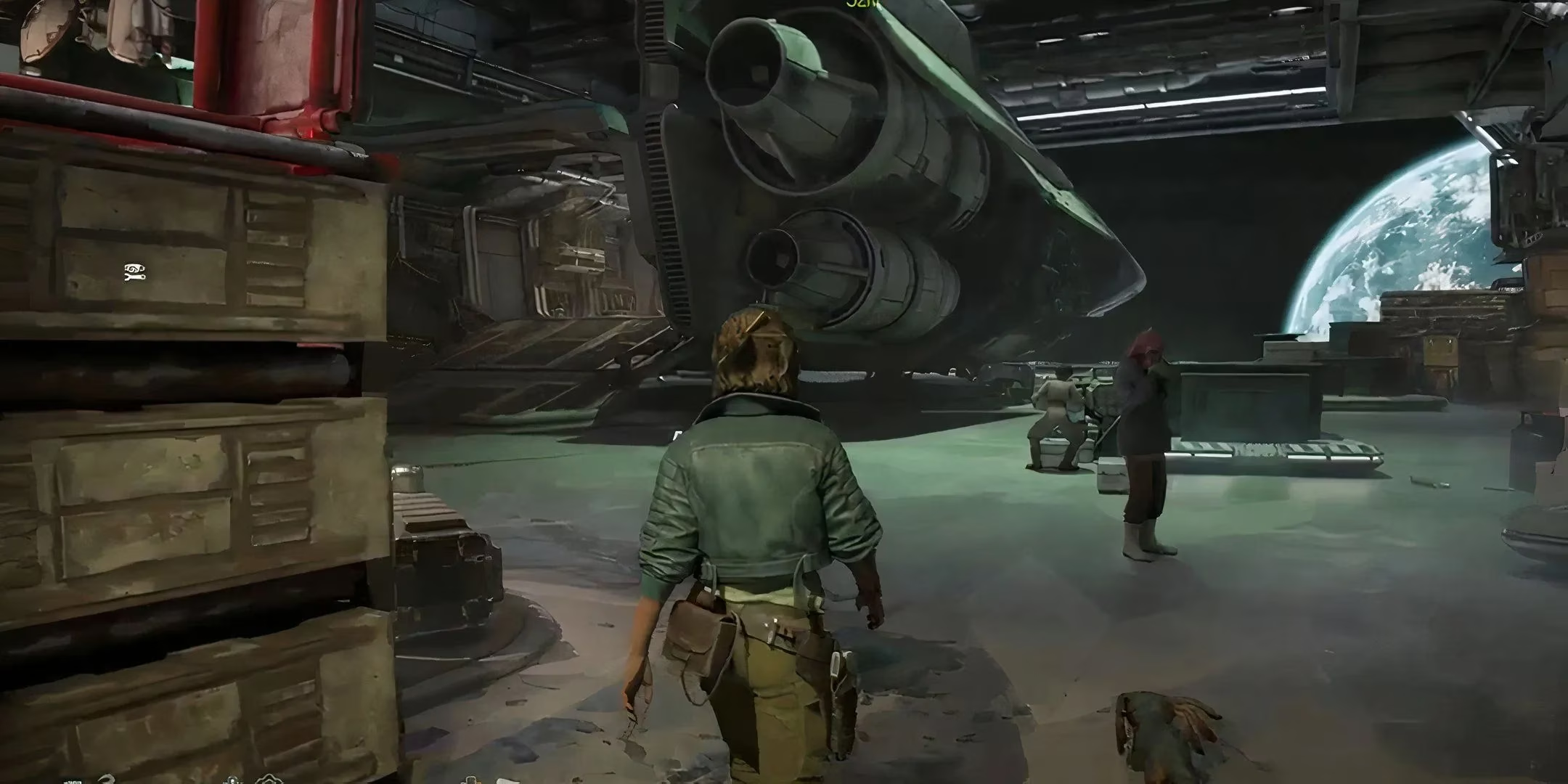
Ubisoft has positioned Star Wars Outlaws as a flagship title, investing heavily in its development alongside Assassin's Creed Shadows. Recent showcases have detailed a game packed with diverse gameplay systems. The ground-based action appears robust and engaging, featuring:
-
Intense gunplay and stealth sequences that promise dynamic confrontations.
-
Exploration across handcrafted planets, presumably filled with quests and secrets.
-
Speeder bike traversal that has been highlighted for its fluidity and fun.
-
A loyal animal companion, Nix, who assists Kay in various ways.
This core package is compelling, offering the kind of immersive, activity-rich world that defines modern open-world games. The promise of a lived-in Star Wars environment, brimming with detail and things to do, is a significant draw.
However, a major point of contention emerges when the action shifts to the stars. Extended gameplay demos of the spaceflight and combat segments have sparked concern. Where a game like Star Wars: Squadrons masterfully captured the chaotic yet controlled feel of iconic Star Wars dogfights, the footage for Outlaws has shown a spacecraft that appears sluggish and unresponsive. In sequences meant to showcase the game's best moments, the player's ship misses targets repeatedly and turns with a noticeable lack of agility. While this could be a matter of presentation or player skill in the demo, it raises questions about the feel and polish of a system that is central to the Star Wars fantasy.
The issues deepen with the game's approach to interstellar travel. The current system, as demonstrated, relies heavily on menu-driven fast travel punctuated by multiple cutscenes. The process is a direct parallel to the much-criticized system in Starfield: select a planet from a menu to trigger a cutscene of arrival in orbit, then select a landing spot to trigger another cutscene of touching down. This fragmentation of the journey stands in stark contrast to the seamless exploration promised on the planets themselves.
Developers often defend such systems by arguing that the space between planets is a narrative space—a chance for random encounters, distress signals, pirate attacks, or trader interactions. Skipping this "atmospheric engagement," they suggest, would mean missing vital storytelling and gameplay opportunities. Yet, this design philosophy prompts a critical question: is this layer of mandatory spaceborne activity necessary or even desirable? For a game already boasting a dense array of ground-based systems—gunplay, stealth, speeders, exploration, story missions—adding a potentially half-baked space combat and traversal layer on top risks bloating the experience rather than enriching it.
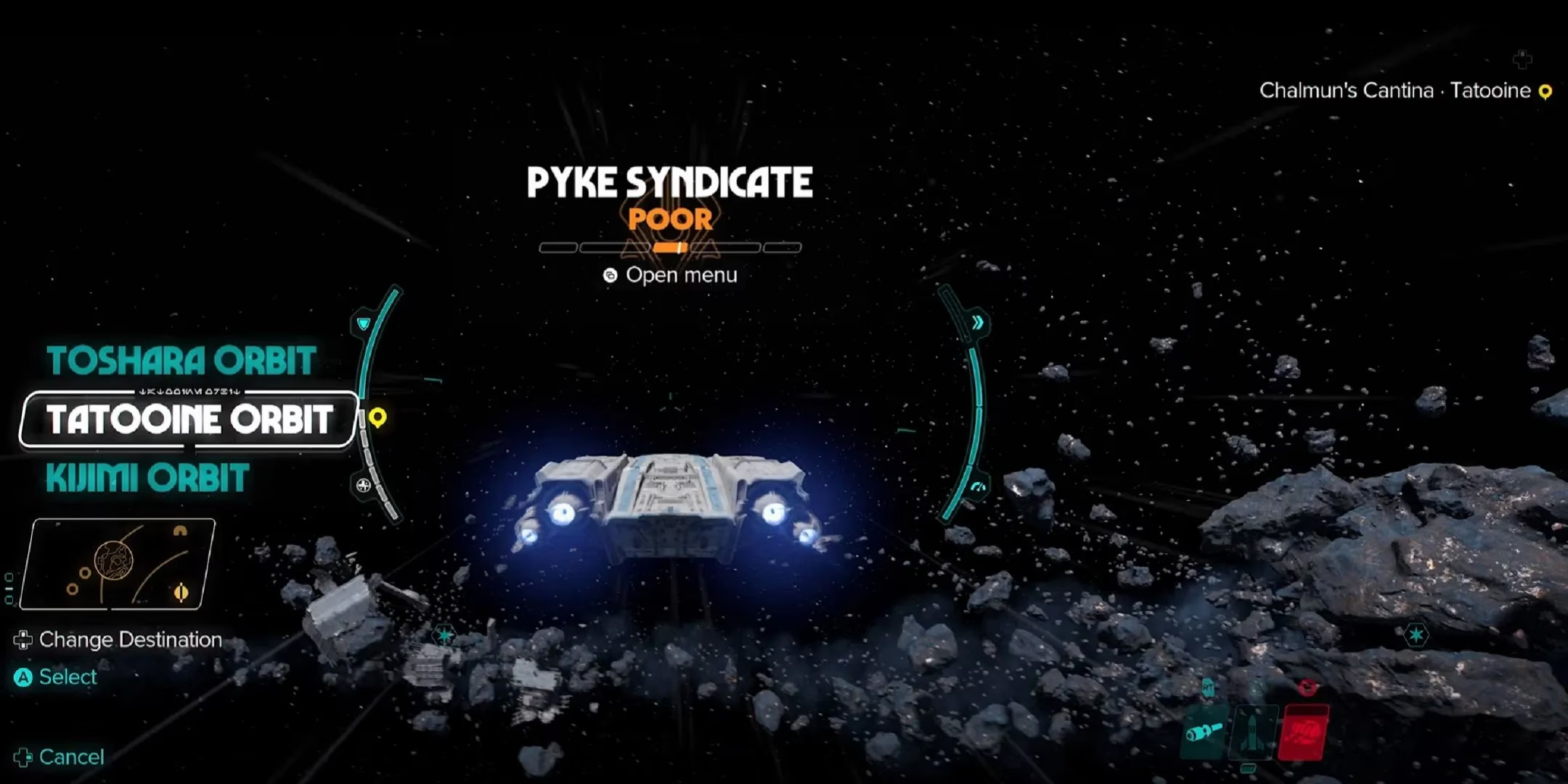
A more streamlined approach, perhaps a single, stylish cutscene transitioning from planetary takeoff to hyperspace jump to arrival, might have been less resource-intensive and far less disruptive to the player's flow. This is especially crucial considering that players will likely be traveling between planets frequently. The current multi-cutscene method risks turning a fundamental activity into a repetitive chore.
It is worth noting that Star Wars Outlaws holds one significant advantage over a game like Starfield that may mitigate some travel frustrations: the quality of the destinations. Where Starfield's procedurally generated planets often led to empty vistas after the lengthy travel sequence, Outlaws promises handcrafted, content-rich worlds. Knowing that a vibrant, quest-filled environment awaits at the end of the journey makes the trip itself somewhat easier to tolerate. The payoff, if substantial enough, could justify the means of travel.
Ultimately, Star Wars Outlaws presents a fascinating dichotomy. Its ground game, built around Kay Vess's scoundrel adventures, looks poised to deliver the intimate, "lived-in" Star Wars experience many fans crave. The potential for discovery and adventure on its planets is high. Yet, the spacecraft handling and the fragmented fast-travel system cast a shadow of doubt over the holistic experience. As the 2026 release approaches, the hope is that the undeniable charm of its protagonist and the depth of its planetary exploration will be powerful enough to make players overlook—or perhaps even grow fond of—its seemingly clunky journeys through the stars. The game's success may hinge on whether players feel the exciting stuff on the ground is worth the sometimes-icky trip through space.