Star Wars Outlaws: The Scoundrel Fantasy That Delivered the First True Open World
Star Wars Outlaws delivers open-world scoundrel freedom and immersive gameplay, making it Ubisoft Massive's most stylish galaxy adventure.
When Ubisoft Massive dropped Star Wars Outlaws in the summer of 2024, it quickly became the talk of the galaxy — and not just because it let players cruise through hyperspace without a loading screen. Set during the grittiest year of the original trilogy, between The Empire Strikes Back and Return of the Jedi, the game put players in the boots of Kay Vess, a wise-cracking scoundrel trying to claw her way out of a deal gone horribly sideways. The stakes? Pull off one of the greatest heists the underworld has ever seen, all while staying one step ahead of the Imperial machine and the syndicates that would sooner shove a vibroblade in your back than share a drink. By 2026, the galaxy far, far away has seen plenty of open-world romps, but Outlaws still stands as the first to truly nail that "full scoundrel freedom" fantasy — and it did so with style, swagger, and a tiny, avocado-snatching creature named Nix.
From the get-go, the developers at Massive — who cut their teeth on seamless open worlds with The Division — knew they needed to hook Lucasfilm Games with something fresh. Narrative director Navid Khavari and game director Mathias Karlson often recounted how the scoundrel angle, combined with their studio’s knack for building living, breathing spaces, was the bread and butter of the pitch. "Being able to tell the story of an emerging scoundrel through the spectrum of an open world, being able to go to a cantina to hang out with Imperials and criminal syndicates, being able to venture out into the open world and get onto your speeder and get into chases… and then hop into your spaceship with ND-5 and blast into the galaxy, hit hyperspace whenever you want," Khavari explained. That kind of uninterrupted freedom — stepping from a grimy bar stool into the cockpit of your starship without a single fade-to-black — was the secret sauce that made Outlaws such a game-changer.
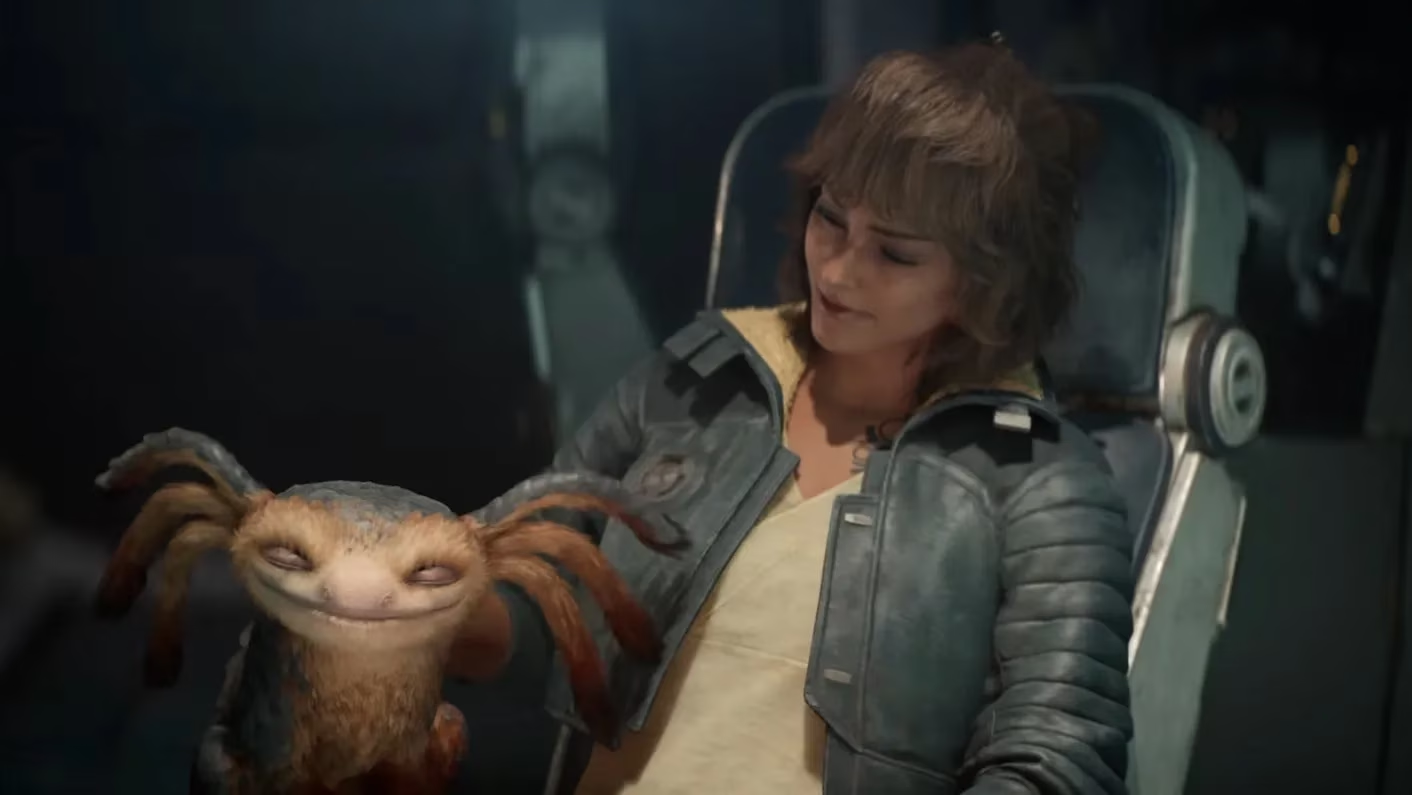
The gameplay loop is pure scoundrel catnip. On foot, Kay can slip through tall grass, whistle guards into a quiet head-knock, or send her pet merqaal Nix to press buttons, grab distant weapons, or cause distractions. Early walkthroughs showed a classic Naughty Dog–style cutscene-to-controls transition — Nix swipes a space-avocado from a table, and suddenly you’re clonking a helmeted goon from behind. Nix isn’t just cute; the little fuzzball turns into a tactical ace, fetching heavy blasters dropped by enemies so Kay can briefly go loud before melting back into the shadows. And when stealth breaks down, Kay’s blaster module system lets her adapt on the fly: a stun setting for shielded adversaries, a powered-up shot for droids, and a rhythmic pew-pew cadence that feels lifted right out of the original trilogy.
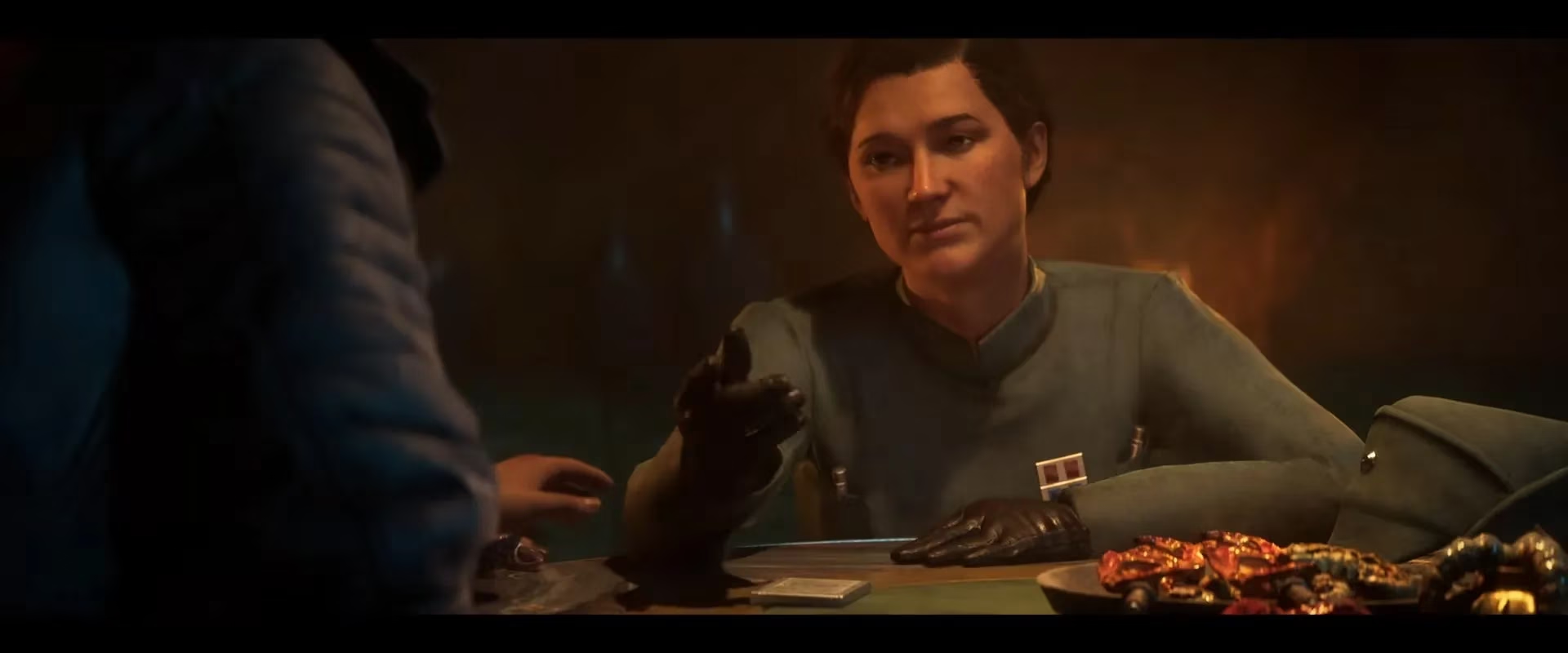
But the moment most players remember — the one that had jaws on the floor — was the speeder chase across Toshara, the first-ever savannah-inspired planet in Star Wars. Inspired by motocross, the speeder bike lets you slide around corners, catch air off sand dunes, and fire off potshots at pursuing Zerek Besh thugs. It’s a white-knuckle rush that spills directly into the outskirts of Jaunta’s Hope, a frontier settlement where a seedy crime boss waits in a basement cantina. There, a slick droid called ND-5 — decked out in a duster jacket and sporting a permanent scowl — adds another layer of attitude. In one pivotal scene, an Imperial officer demands a cut of your spoils, and you’re handed a stark choice: bribe or stand your ground. Pick the renegade option and a giant WANTED sign flashes across the screen, triggering a desperate sprint back to the ship with blaster bolts singing past your ears.
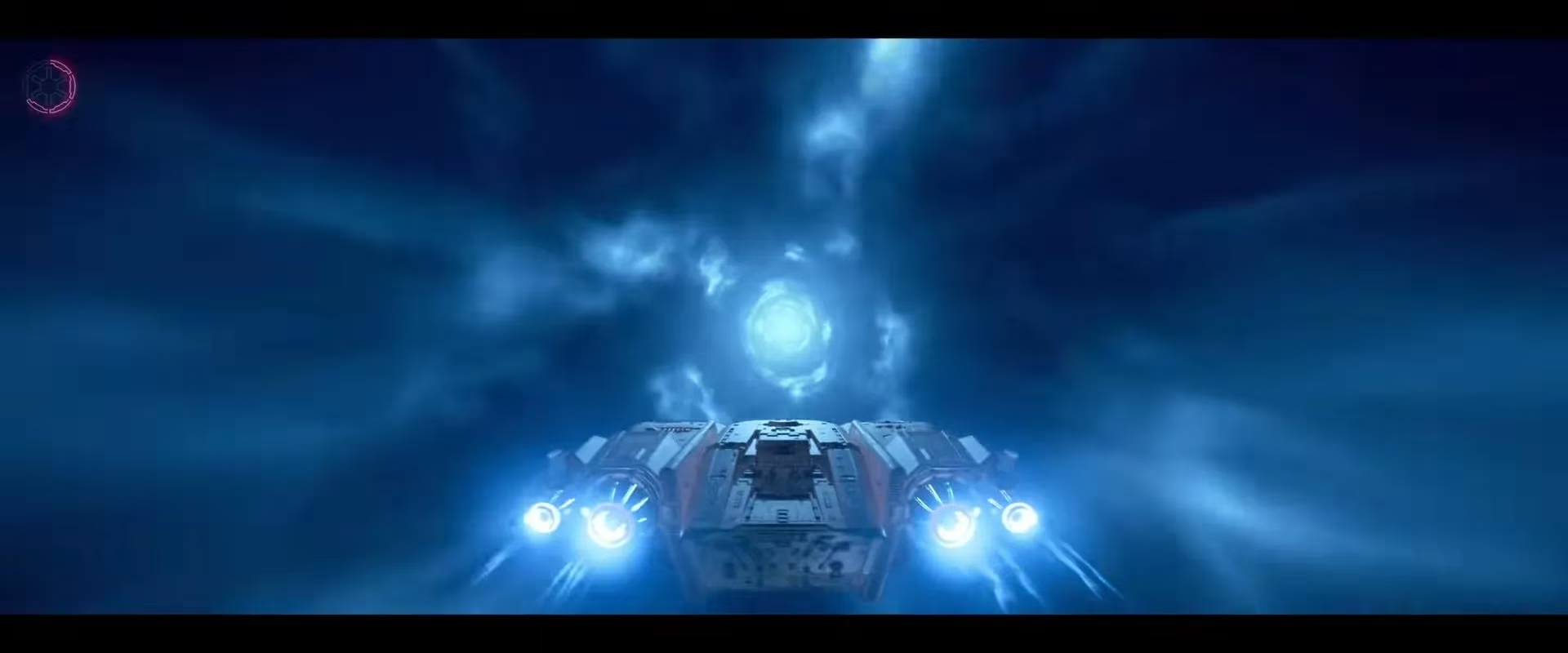
Then comes the pilot’s dream. Kay and ND-5 scramble aboard the Trailblazer, and what follows is a seamless ascent through Toshara’s atmosphere, through clouds, and into the star-speckled black. No loading wheels, no hidden cuts — just pure, uninterrupted flight. Karlson often noted that the goal was to make it "as seamless as possible," and for many players, that moment of breaking orbit while a WANTED level still hung in the air was as close to a Han Solo simulator as we’d ever gotten. Once in space, the Toshaal System opens up: dogfights with TIE fighters amid orbital debris, criminal contracts floating in asteroid fields, and the freedom to punch the hyperdrive toward the Akiva system, home of the insectoid Ashiga Clan. A flick of the D-pad brings up the starmap, and with a stutter of light-speed, a new horizon unfolds.
Massive framed their vision around three pillars that still define the game’s appeal in 2026. First, cities: dense, neon-drenched warrens like the ones glimpsed on Akiva or a familiar Tatooine. Cantinas buzz with syndicate contacts, backroom sabacc tables, and side hustles that pay in credits and reputation. Second, vast open landscapes: Toshara’s golden plains, icy crags on Kijimi, and the rust-hued dunes of the iconic dual-sunned planet. Each environment feels handcrafted, with distractions layered everywhere — a crashed podracer here, a smuggler’s stash there. Third, space as a lucrative but risky frontier: orbital stations, derelict freighters, and high-stakes cargo hauls that can turn a profit or leave you space dust if you cross the wrong Hutt.
What sets Outlaws apart from earlier Star Wars open-world efforts isn’t just the scale — it’s the philosophy behind progression. There are no traditional gear scores or looter-shooter grind (despite Massive’s Division DNA). Instead, growth comes through experience: upgrading the Trailblazer’s shields and cannons, souping up your speeder with better handling and boost, and deepening your bond with Nix and ND-5. Karlson described it as "a journey of growth" that mirrors the narrative, where every skill learned and every scrappy upgrade feels earned. You’re a nobody trying to claw up, not a Jedi with destiny on speed dial.
By 2026, the scoundrel-fantasy blueprint Outlaws laid down has become a benchmark. The game’s identity is rooted firmly in the grimy, lived-in corners of the galaxy — characters like Jabba the Hutt and a carbonite-frozen Han Solo (yes, that iconic slab) make cameos, grounding the new story in familiar mythos without letting nostalgia overshadow Kay’s journey. It’s a single-player ride, pure and simple, and every moment from the first cantina contract to the final hyperjump into who-knows-where still holds up as the kind of open-world magic that turns players into storytellers.
For anyone still sleeping on Kay Vess’s criminal rise by 2026, it’s worth remembering: the galaxy’s best open-world Star Wars game didn’t need Force powers or lightsabers. It just needed a fast ship, a loyal merqaal, and the guts to tell an Imperial to shove off. And boy, did it deliver the goods.