Star Wars Outlaws: The Shocking Truth About Han Solo's Role
Star Wars Outlaws' riveting narrative masterfully weaves Han Solo's iconic legacy into its core, transforming a nostalgic cameo into a pivotal, game-changing element. This bold integration promises to redefine the galaxy's fate between cinematic epics.
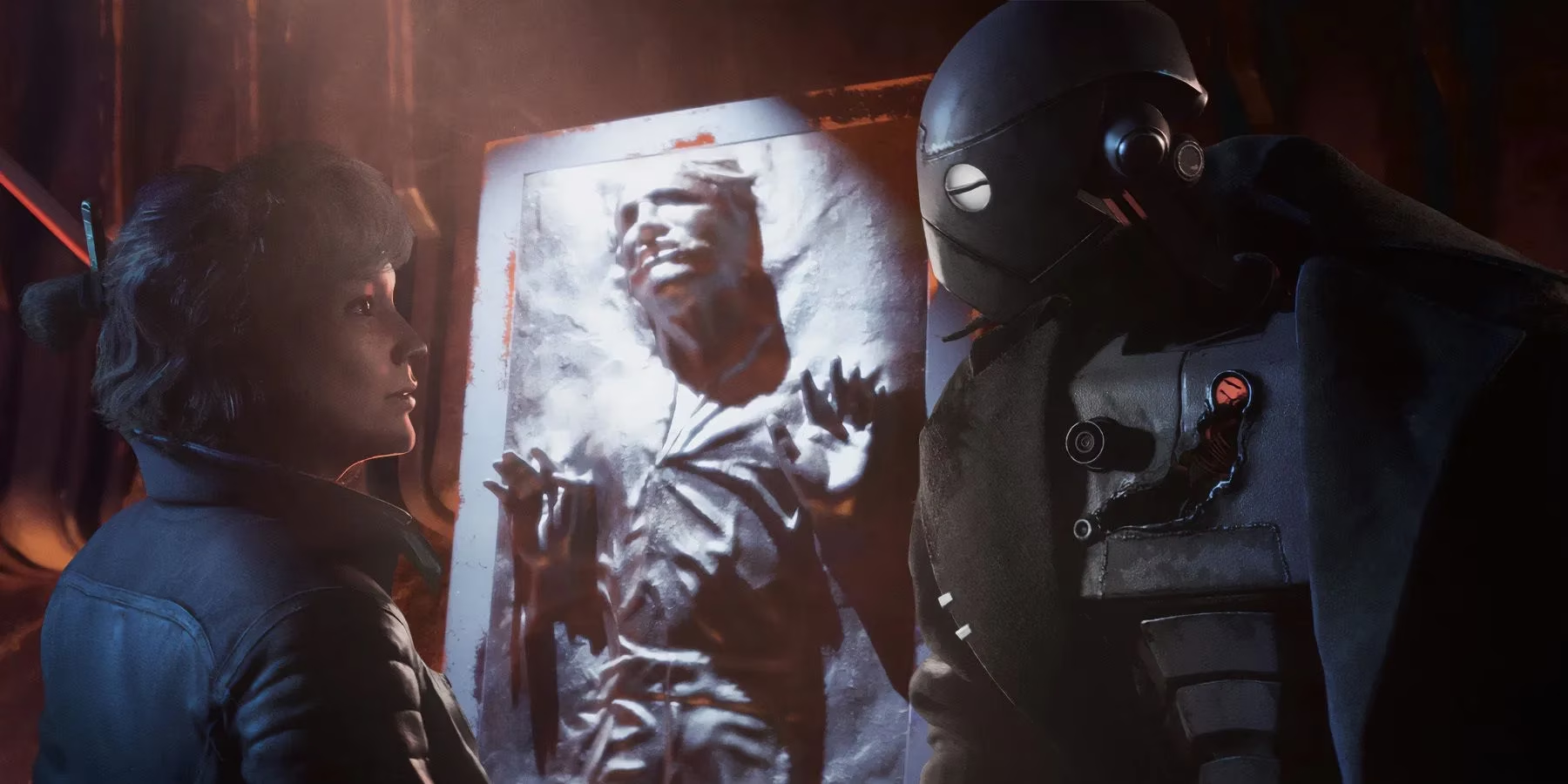
The galaxy holds its breath as Ubisoft's Star Wars Outlaws prepares to unleash its narrative upon the stars, and at the center of the swirling speculation sits one of the most iconic figures in cinematic history, frozen not just in carbonite, but in time itself. The appearance of Han Solo, the legendary scoundrel-turned-hero, in not one but two separate trailers has sent shockwaves through the fandom, igniting a firestorm of theories and heated debates. No longer is he a mere background easter egg; his repeated presence suggests a narrative gravity that could either elevate the game to legendary status or send it crashing into the Sarlacc pit of fan disappointment. The mere glimpse of his frozen form is a powerful reminder that Kay Vess's story unfolds in the perilous gap between The Empire Strikes Back and Return of the Jedi, a time when the galaxy's greatest smuggler was a trophy on a crime lord's wall.
🚀 From Cameo to Co-Star? The Escalating Evidence
The initial sighting was dismissed by many as a clever, nostalgic nod—a frozen monument to a beloved character. But Ubisoft's latest story trailer has shattered that assumption into a million pieces! His second appearance is a deafening statement: Han Solo is integral. This isn't just set dressing; it's a narrative sledgehammer. The developers are clearly screaming that Solo's fate is somehow intertwined with the desperate heists of Kay Vess. Could he be a silent mentor? A grim warning? Or perhaps... something far more active? The implications are staggering, suggesting that Outlaws intends to weave its original tale directly into the sacred threads of the Original Trilogy, a move as bold as making the Kessel Run in less than twelve parsecs.
Let's break down the terrifying and thrilling possibilities:
-
The Living Legend Theory: Imagine a mission where Kay, against all odds, temporarily thaws the galaxy's most famous popsicle. Han Solo, groggy and sarcastic, becomes an unlikely accomplice for a single, universe-shaking job. The sheer, unadulterated fan service of this idea is enough to make a Wookiee roar with joy! Yet, the narrative gymnastics required to re-freeze him perfectly in time for Luke's rescue mission are immense. One misstep, and the entire timeline could crumble like a poorly constructed Death Star.
-
The Eternal Warning Theory: This is the darker, more probable path. Han Solo remains frozen, a permanent, grim exhibit in the halls of power. He is not a character to interact with, but a symbol—a constant, chilling reminder to Kay Vess of the ultimate price of failure. With the villainous Sliro placing a galaxy-wide bounty on her head, Solo's statue serves as Sliro's promise: Cross me, and you will become decoration. This use is potent, leveraging iconography for thematic depth rather than cheap thrills.
💥 The Fan Rebellion: Nostalgia vs. Narrative Integrity
The mere suggestion of Han Solo playing a key role has split the fanbase like a lightsaber through a control panel. On one side, purists are mounting a defense worthy of the Rebel Alliance. Their arguments are fierce and founded on deep love for the source material:
-
Sacred Timeline: The Original Trilogy is hallowed ground. Tampering with Han's established carbonite captivity is seen by many as a dangerous flirtation with retconning, a practice modern Star Wars has been notoriously clumsy with. His captivity is a pivotal emotional beat; altering its context risks diluting its power in Return of the Jedi.
-
The Shadow of a Giant: Han Solo is a colossus. Introducing him as an active participant risks overshadowing Kay Vess, the game's original protagonist. Her story must stand on its own, not be propped up by legacy characters. The fear is that Ubisoft might be using Solo as a crutch, leaning on nostalgia to cover for a lack of confidence in their new hero.
Yet, for every skeptic, there are ten fans already pre-ordering, dreaming of sharing a cockpit with the man who shot first. The potential for a meaningful, respectful inclusion is there. If handled with the precision of a master slicer, Solo's role could enhance Kay's journey, not hijack it. The key is subtlety and purpose.
🔮 Solo's Final Role: Prediction and Peril
So, what is the most likely destiny for the frozen Corellian? The evidence points overwhelmingly toward the Eternal Warning. The narrative framework of Outlaws—a scrappy outsider tangling with a galactic crime syndicate—perfectly mirrors Han's own predicament. Sliro, the new big bad, is clearly fashioned in the tyrannical mold of Jabba the Hutt. Displaying his frozen enemies as trophies is exactly the kind of grotesque power move such a villain would relish.
For Kay Vess, Solo's prison would be a daily, horrifying motivation. It's a visual manifesto stating: This is your future if you fail. This is what happens to legends who defy the syndicate. It transforms him from a character into a concept—the embodiment of consequence. This approach is brilliant because it utilizes his iconic status to serve Kay's story, not the other way around. It adds layers to the game's world and raises the stakes to a terrifying degree without requiring a single line of new dialogue from Harrison Ford's legendary character.
In the end, Star Wars Outlaws faces a challenge greater than any Imperial Star Destroyer: balancing reverence with innovation. Han Solo's presence is a double-edged lightsaber. Wielded clumsily, it could sever the game's connection to fan goodwill. Wielded with the skill of a Jedi Master, it could forge a new classic, a tale that earns its place beside the greats by understanding the weight of the legacy it carries. One thing is certain: come 2026, all eyes will be on that block of carbonite, waiting to see if the galaxy's favorite smuggler will once again change the course of history, or remain its most powerful silent lesson.