Star Wars Outlaws: Why Being a True Scoundrel Matters in 2026
Star Wars Outlaws revolutionizes the franchise by embracing the gritty, choice-driven life of a scoundrel, moving beyond the classic Jedi narrative to offer unparalleled freedom in a morally grey galaxy.
I remember watching that first gameplay reveal back in 2023, and even then, I could feel something different brewing in the Star Wars galaxy. Fast forward to 2026, and having lived with Star Wars Outlaws for a couple of years, I can tell you—it’s the game that finally let us ditch the Jedi robes and get our hands dirty. We’d seen trailers and snippets, but the promise was always about choice. Not just light side or dark side, but the murky, credit-stuffed grey area in between. For a franchise built on galactic-scale good versus evil, that was a revolutionary pitch. Now, in the current gaming landscape, it’s proven to be its greatest strength.
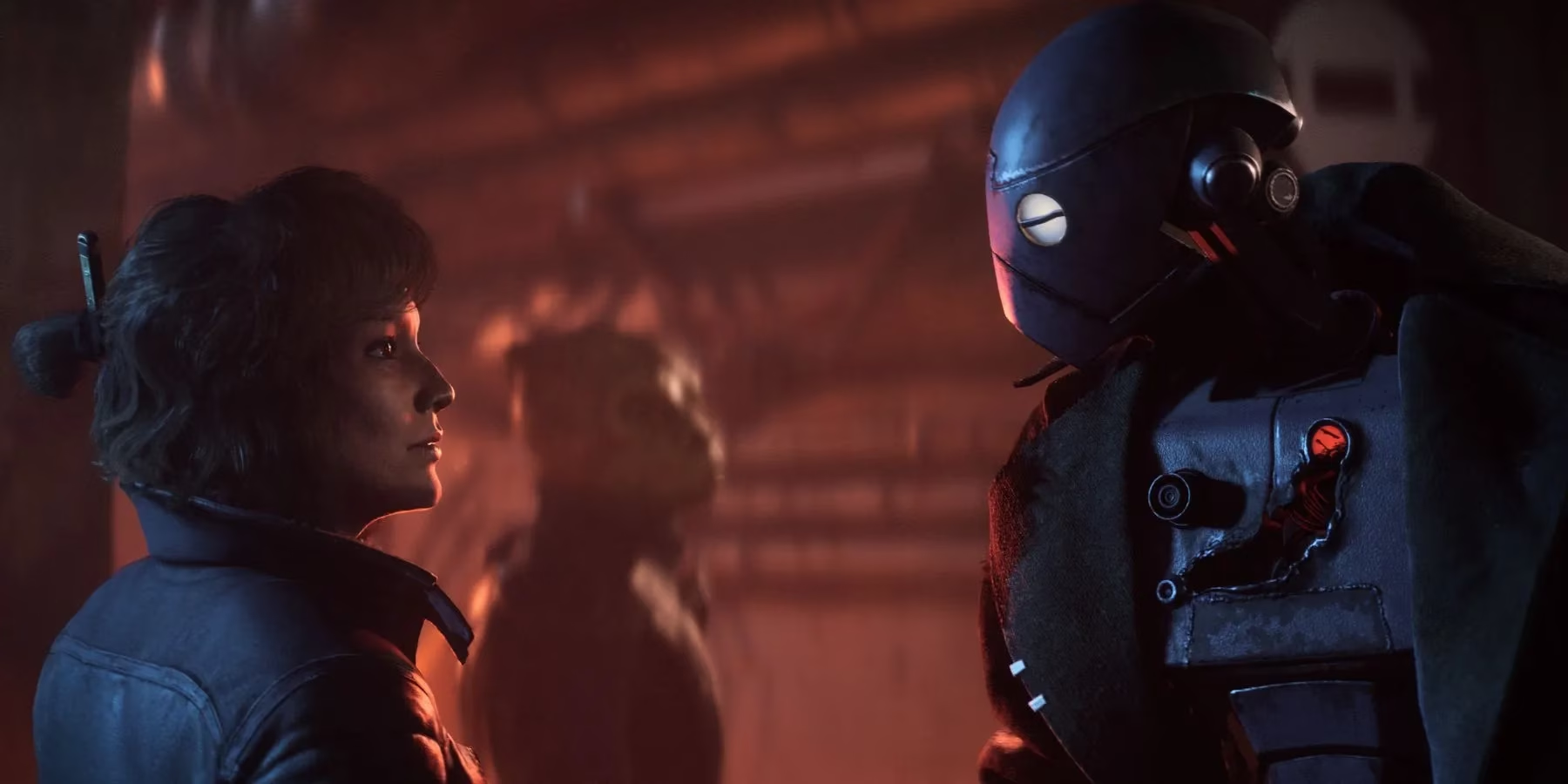
One of the most significant aspects that sold me on Outlaws from the get-go was the narrative-altering decisions. It wasn't just about picking a dialogue option that made you seem snarky or nice. Nah, this was the real deal—choices that had weight, that could lock you out of entire story branches or open up new, seedier avenues. Would you double-cross a Hutt to save your own skin? Or honor a deal with a Pyke syndicate, knowing full well it’ll bite you later? The beauty of the system, as it’s evolved by 2026, is that it doesn’t force a redemption arc. You can start as a scoundrel just trying to make ends meet and end the game as a galactic-scale menace, a smuggler so notorious that even the Empire might tip their hat (before trying to blast you out of the sky). That’s the freedom we craved.
For the longest time, Star Wars games, and much of the media, have been heavily skewed toward the light side. Even when we played as a Sith in games like The Force Unleashed, there was often an underlying expectation of a turn, a flicker of goodness. It’s the classic hero’s journey, baked into the DNA of the saga. But the galaxy is vast, and not everyone is Force-sensitive or destined for greatness. Some folks are just trying to survive, and survival… well, it ain’t always pretty. Andor showed us that with breathtaking clarity—a story about the Rebellion that was less about heroism and more about desperation, compromise, and the grim cost of resistance. It was a breath of fresh air, a blueprint for complexity without lightsabers.
That’s the energy Outlaws needed to channel for its protagonist, Kay Vess. If Kay was written as just another ‘good guy with a rough exterior,’ it would have fallen flat. It would’ve been the same old song. Thankfully, the developers understood the assignment. Playing Kay, I felt unshackled. I could live out my wildest Grand Theft Auto or Red Dead Redemption fantasies, but with blasters and starships. The game lets you:
-
Swindle at Sabacc tables (and maybe blast your way out if you get caught cheating).
-
Hunt bounties… or decide to warn the target for a bigger payoff.
-
Mistreat NPCs—not out of cartoonish villainy, but because sometimes being rude is the fastest way to get what you need.
-
Role-play a true mercenary, where loyalty is measured in credits, not ideals.
The reputation system is where it all clicks. It’s not just a "good/bad" meter. It’s a dynamic web of standing with different factions—the Hutts, the Pykes, the Empire, the Rebels, and various syndicates. In 2026, with all the post-launch support, this system has become incredibly nuanced. Getting chased by authorities feels earned because you chose to be a legitimate ne’er-do-well, not because the plot demands it. The Empire might be the overarching ‘bad guys,’ but in the underworld, everyone’s shades of grey. You can even find yourself doing jobs for Imperial officers who are just as corrupt and self-serving as any gangster.
This is why letting players be truly immoral is so crucial. If the game had scripted Kay to inevitably join the Rebellion or develop a heart of gold, it would have betrayed its core premise. The excitement of Outlaws was the promise of carving your own path in a galaxy that usually tells you where to go. Sometimes, my only goal was to steal enough credits to upgrade my ship, the Trailblazer, and that meant making choices that would make a Jedi weep. And you know what? It was incredibly satisfying. It felt authentic to the grimy, lived-in underside of Star Wars we’ve always seen in the background of the movies.
Looking at the gaming scene in 2026, Star Wars Outlaws stands out precisely because it embraced this complexity. It didn't just give us a Star Wars skin on a familiar open-world formula; it gave us a role within that universe that finally felt unrestricted. You’re not a chosen one. You’re a nobody with a blaster and a dream (usually involving a big pile of credits). And in a galaxy far, far away, sometimes that’s the most powerful thing you can be. :smiling_imp: :milky_way: