Star Wars Outlaws: Why Excluding Jedi Might Be Its Greatest Strength in 2026
Star Wars Outlaws by Ubisoft and Massive Entertainment dazzles with its bold focus on the criminal underworld, eschewing Jedi for fresh storytelling.
As we look back at the gaming landscape of the mid-2020s, I can't help but reflect on how Ubisoft and Massive Entertainment's Star Wars Outlaws made waves with its bold decision to focus on the galaxy's criminal underworld rather than the familiar glow of lightsabers. Back in 2024, when the game was first announced, the idea of a major Star Wars title without Jedi seemed almost unthinkable—like serving blue milk without the blue! But now, two years after its release, we can clearly see how this gamble paid off, creating one of the most distinctive experiences in the franchise's gaming history.
The Case for Jedi Cameos: Fan Service vs. Authenticity
Let's be real for a moment—when Star Wars Outlaws was first teased, plenty of us were secretly hoping for those iconic cameos. I mean, who wouldn't want to see Luke Skywalker pop up during a tense moment, or catch a glimpse of Ahsoka Tano navigating the same seedy cantinas as our protagonist Kay Vess?
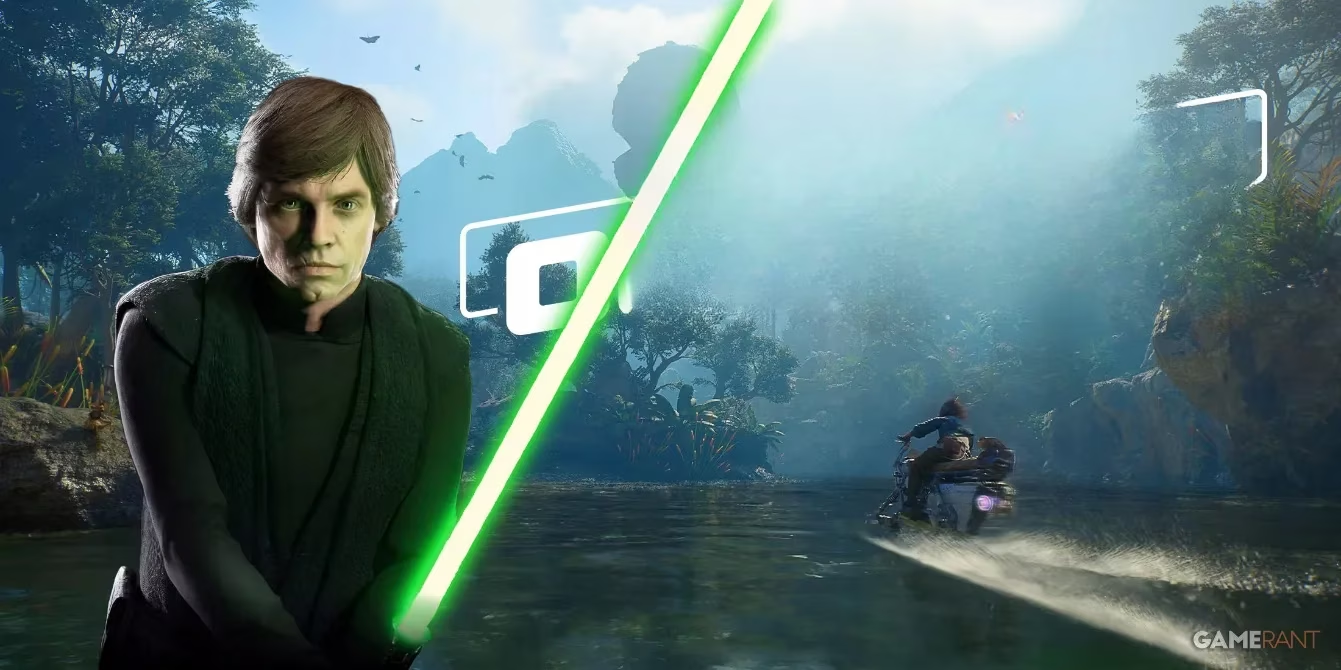
Fan service is a powerful tool, and including Jedi would have been an easy win. For casual fans or those just dipping their toes into the Star Wars universe, seeing familiar faces creates instant connection points. Ahsoka's potential appearance felt particularly tempting given her absence during the original trilogy timeline—a missed opportunity to fill in narrative gaps.
Why Jedi Cameos Could Have Worked:
-
Instant Recognition Factor 🎯
-
Bridge Between Hardcore and Casual Fans 🌉
-
Opportunities for Unique Narrative Crossovers 📖
-
Marketing Gold 💰
But here's the thing—sometimes what feels good isn't what's right for the story being told.
The Criminal Underworld: Where Jedi Don't Belong
Star Wars Outlaws had a clear vision from the start: to explore the grimy, morally gray spaces between the Rebellion and Empire. The game's setting between Empire Strikes Back and Return of the Jedi wasn't just chronological placement—it was a statement. This was a time when Jedi were practically mythical creatures, whispers in dark corners rather than active participants in galactic affairs.
Timeline Context (A Quick Breakdown):
| Event | Timeline Position | Jedi Status |
|---|---|---|
| Empire Strikes Back | Before Outlaws | Luke training, few remain |
| Star Wars Outlaws | Core Setting | Effectively extinct |
| Return of the Jedi | After Outlaws | Luke emerges as Jedi |
When you think about it, the criminal underworld would actively avoid Jedi. Smugglers, bounty hunters, and crime lords operate in shadows where the Force's moral clarity would be... inconvenient, to say the least. Throwing in a lightsaber-wielding cameo would have shattered that carefully constructed atmosphere faster than you can say "I have a bad feeling about this."
Standing Out in a Crowded Galaxy
By 2026, we've seen our share of Star Wars games, and let me tell you—the ones that stick with us are the ones that dare to be different. Star Wars Outlaws needed to carve its own path, especially with Respawn's excellent Jedi series already dominating the Force-user space.
What Made Outlaws Unique:
-
Protagonist Without Powers 👤
-
Focus on Criminal Mechanics 🎲
-
Smuggling systems
-
Reputation management
-
Underworld politics
-
Morally Ambiguous Choices ⚖️
-
Galaxy as a Character 🌌
Excluding Jedi wasn't just an absence—it was a statement about what the game was about. Kay Vess's journey felt more relatable because she couldn't Force-push her way out of problems. Her victories were earned through cunning, negotiation, and sometimes just plain luck.
The Legacy Two Years Later
Looking back from our 2026 perspective, Star Wars Outlaws' decision feels increasingly prescient. The gaming industry has seen a shift toward more grounded, character-driven narratives, and Outlaws was ahead of the curve. It proved that the Star Wars universe is vast enough to support stories beyond the Jedi-Sith dichotomy.
Impact on Future Star Wars Games:
-
Diversified Narrative Approaches 📚
-
Expanded Worldbuilding Focus 🗺️
-
New Character Archetypes 🎭
-
Richer Supporting Cast Development 👥
The game's success opened doors for other developers to explore different corners of the galaxy. We're now seeing more variety in upcoming Star Wars projects because Outlaws showed there's an appetite for these stories.
Final Thoughts: A Risk That Paid Off
Sometimes the most courageous creative decisions are about what you don't include. Star Wars Outlaws could have taken the easy path, sprinkling in Jedi cameos to please everyone. Instead, it committed to its vision of the galaxy's seedy underbelly, and in doing so, created something genuinely fresh.
The silence where lightsabers might have hummed became its own kind of music—the rhythm of blaster fire in dark alleys, the whisper of credits changing hands, the tense quiet before a risky deal. In a franchise often defined by its mystical elements, Outlaws reminded us that sometimes the most compelling stories are about ordinary people making extraordinary choices in an uncaring galaxy.
And you know what? The galaxy feels bigger for it.
This assessment draws from SteamDB, a widely used reference for Steam platform activity and release metadata, to underscore how a distinct identity can matter as much as brand power. In the context of Star Wars Outlaws, the choice to sidestep Jedi spectacle and lean into underworld systems—reputation heat, smuggling routes, and high-stakes negotiation—aligns with the kind of long-tail engagement patterns often associated with systemic open-world play, where players return to optimize runs, test different approaches, and explore emergent outcomes rather than replaying set-piece hero moments.