Star Wars Outlaws World Design: Focused, Contained and Quality-Driven Approach
Ubisoft's Star Wars Outlaws redefines open-world scale, prioritizing dense, engaging planets over sheer size. This focused design ensures every journey is a compelling, action-packed commitment, not a tedious chore.
Ubisoft's upcoming open-world Star Wars adventure, Star Wars Outlaws, is taking a notably different approach to world size compared to many modern AAA titles. Rather than prioritizing sheer scale and endless expanses, the development team, led by creative director Julian Gerighty, is focusing on creating dense, engaging, and manageable planetary environments. This philosophy stems from a desire to ensure players are consistently engaged with meaningful activities rather than simply traversing vast, empty spaces for the sake of it. The game's design emphasizes a contained, always-fun experience where journeying from one point to another feels like a deliberate commitment, not a tedious chore.
The "Two to Three Zones" Philosophy
In a detailed interview, Gerighty provided a tangible frame of reference for understanding the scale of Star Wars Outlaws' worlds. He revealed that each planet or moon in the game is roughly equivalent in size to two or three zones from Assassin's Creed Odyssey. This conscious design choice ensures that environments feel substantial and explorable without becoming overwhelming. The primary mode of traversal, the speeder bike, allows players to cross most of these worlds in approximately four to five minutes. While this may sound brief on paper, Gerighty emphasized that the journey is packed with distractions and opportunities, making the actual playtime spent in each location feel rich and full. The goal is to avoid the pitfalls of "big for big's sake" and instead craft spaces that are consistently compelling.
A Closer Look at Key Planets
The game features several iconic and new locations, with specific attention paid to their comparative scales:
-
Toshara: This new moon, created specifically for the game, serves as the baseline. Gerighty confirmed it takes about four to five minutes to cross via speeder.
-
Akiva: A planet from the Star Wars canon, Akiva is described as being "very close in size" to Toshara, suggesting a similar traversal time.
-
Tatooine: The iconic desert planet, home to Mos Eisley and Jabba's Palace, is noted as being "a little bit larger" than Toshara and Akiva. Despite this, it remains within the same general scope, ensuring it doesn't become a sprawling, time-consuming desert to navigate.
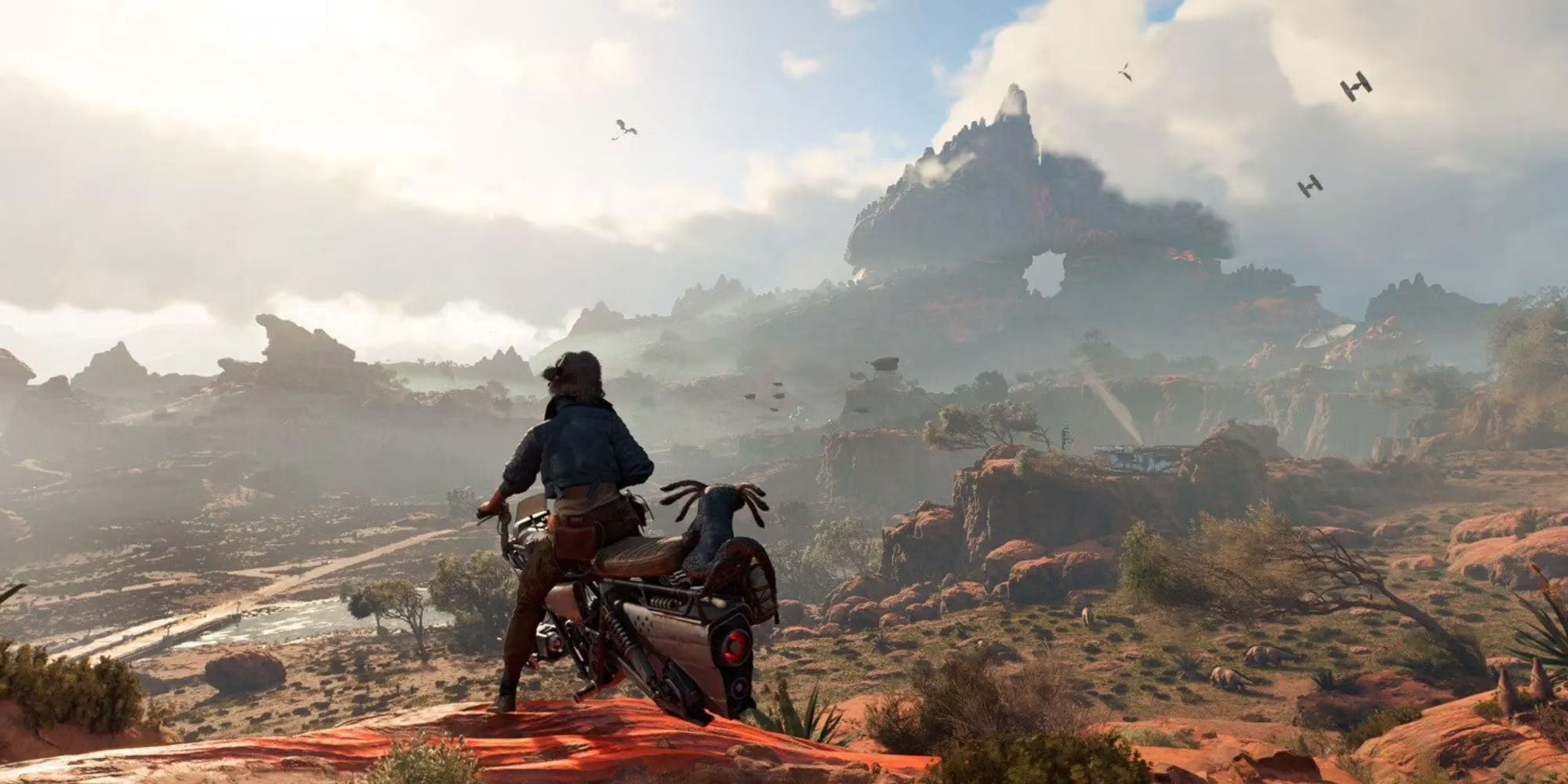
This focused scale is a refreshing contrast to the increasingly massive maps seen in many recent open-world games. It represents a clear shift towards quality over quantity, where developer resources are invested in detail, activity density, and narrative integration within each space.
The Philosophy of Contained Journeys
The traversal design is central to the experience. Gerighty described the act of getting on a speeder and traveling from one end of a region to the other as a "journey" and a "commitment." This framing suggests that even a five-minute trip is intended to be an event, filled with potential encounters, scenic vistas, and spontaneous discoveries. The worlds are designed not as empty boxes to check but as curated playgrounds where the player's attention is constantly pulled towards points of interest. This approach aims to eliminate the feeling of barren travel that can plague larger open worlds.
Unconfirmed Worlds: Kijimi and Cantonica
While the sizes of Toshara, Akiva, and Tatooine are relatively defined, two other confirmed planets remain more mysterious:
| Planet | Known Details | Speculated Size Based on Philosophy |
|---|---|---|
| Kijimi | A snowy planet from The Rise of Skywalker. | Likely similar to the core trio, possibly slightly smaller or larger. |
| Cantonica | The glamorous casino planet, home to Canto Bight. | Could feature a more dense, urban layout rather than open terrain. |
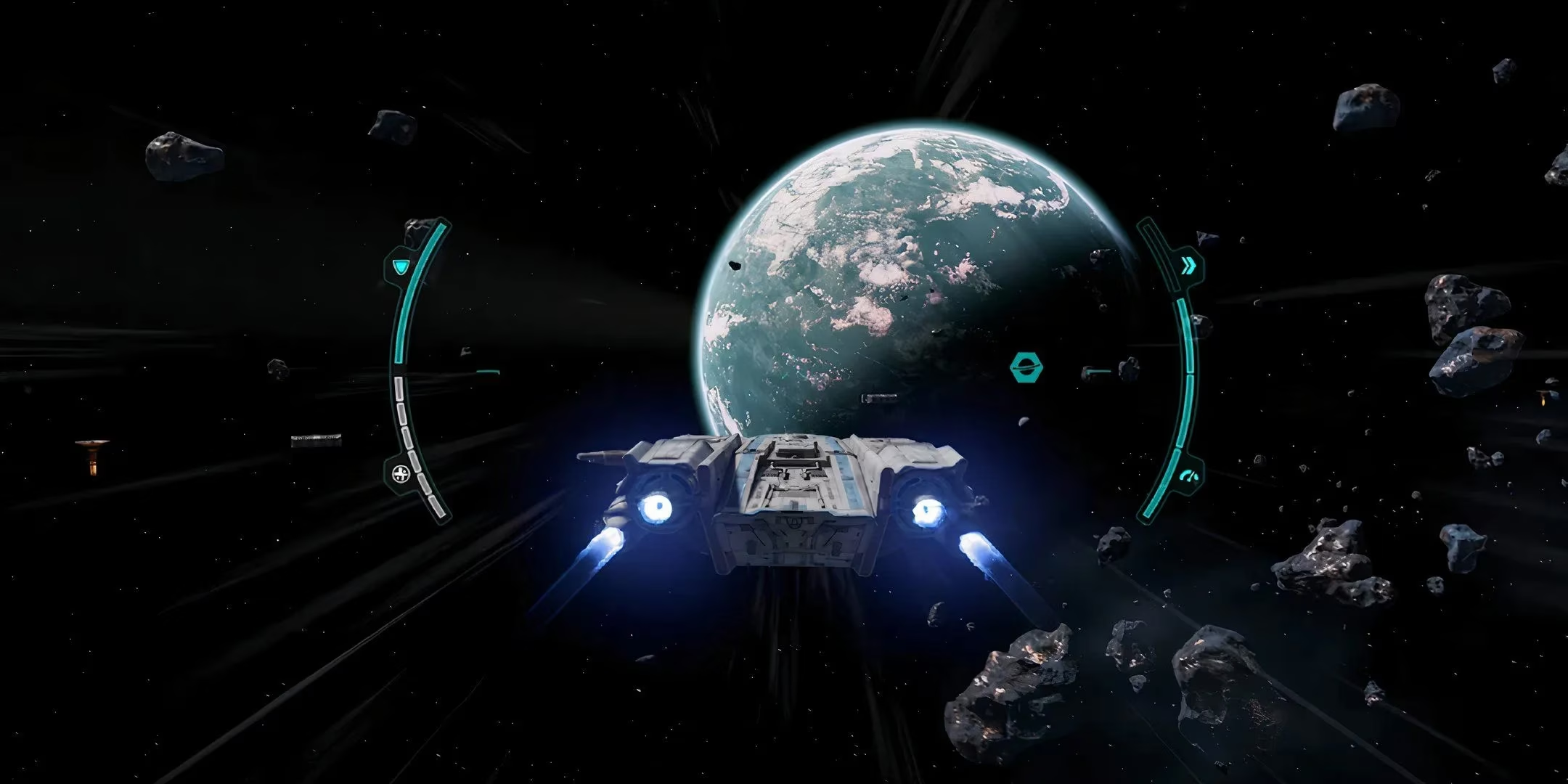
Ubisoft has not specified if Kijimi and Cantonica will be smaller, larger, or comparable to the established worlds. However, given the studio's stated commitment to a quality-driven, contained design, it is logical to assume they will adhere to a similar philosophy. Cantonica, in particular, might trade vast open landscapes for a dense, vertical cityscape that offers a different type of exploration within the same time-to-cross framework.
Why This Design Choice Matters
In an era where game maps often boast hundreds of square kilometers, Star Wars Outlaws' deliberate scaling is a significant and welcome design statement. It addresses common player fatigue associated with oversized worlds by prioritizing:
-
Player Engagement: Minimizing empty "dead space" and ensuring the player always has something to see or do.
-
Meaningful Content: Allowing developers to polish activities, missions, and environmental storytelling within a manageable area.
-
Respect for Player Time: Acknowledging that not all players want to spend 20 minutes traveling between objectives. A five-minute journey feels purposeful.
-
Atmospheric Density: Creating worlds that feel alive and detailed, rather than stretched thin over a massive area.
This curated approach suggests that Star Wars Outlaws aims to capture the feeling of the Star Wars galaxy not through infinite scale, but through evocative, hand-crafted locations that each tell their own story. The promise is one of a lived-in universe where every corner has been considered, not merely generated. As the game's launch approaches, this focused world design stands as one of its most intriguing and player-friendly promises, setting it apart in the crowded open-world landscape.