Star Wars Outlaws' Yellow Paint Debate: Immersion vs. Accessibility in Gaming
Star Wars Outlaws yellow paint toggle sparks debate, offering players immersive freedom or clear gameplay guidance in this anticipated 2026 release.
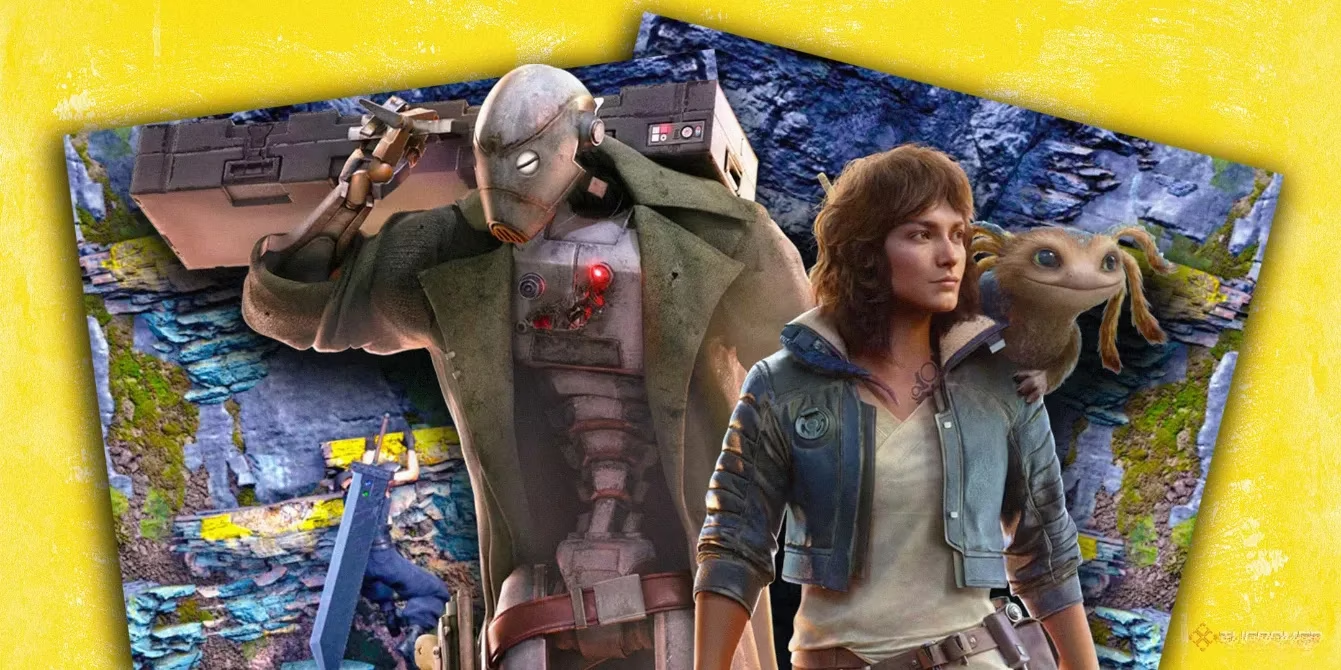
Ah, the great yellow paint debate—a topic that has gamers more divided than deciding whether pineapple belongs on pizza. For years, that vibrant, can't-miss-it hue has been splashed across video game landscapes, marking climbable ledges, interactable objects, and critical paths. Some players see it as a garish immersion-breaking eyesore, while others cling to it like a lifeline, fearing they'll be lost without its neon guidance. In 2026, the conversation has found a new battleground in the highly anticipated Star Wars Outlaws, where developer Massive Entertainment is attempting to please both camps with a simple toggle. Talk about trying to have your Bantha and eat it too!
The Great Gaming Divide: Immersion vs. Getting Lost
On one side of the force, you have the immersion purists. For them, nothing shatters the illusion of being a daring scoundrel in a galaxy far, far away faster than seeing a wall that looks like it was vandalized by a toddler with a can of highlighter. They argue that environmental storytelling and clever level design should naturally guide the player. As one critic of the trend put it, "When every ledge is painted like a caution sign, you stop seeing a world and start seeing a level." Recent games like the Resident Evil 4 Remake and the Final Fantasy VII remakes have been called out for their particularly... enthusiastic use of the yellow stuff. It's a visual language that screams "GAME" rather than "WORLD."
On the other side, you have the pragmatists—or, as their opponents might call them, the "I-have-a-job-and-can't-spend-three-hours-looking-for-a-door-handle" crowd. For these players, clear signposting isn't a nuisance; it's a necessity. In a tense survival game where every bullet counts, missing a cache of ammo because it blended into the scenery isn't fun, it's frustrating. My colleague James Troughton famously argued that breaking immersion is a fair trade if it prevents players from missing critical resources. After all, what's less immersive: a yellow crate or dying repeatedly because you ran out of blaster packs? It's a classic case of gameplay clarity versus artistic integrity.
Outlaws' Solution: The Explorer Mode Toggle
Enter Star Wars Outlaws, swooping in like the Millennium Falcon making the Kessel Run. Ubisoft and Massive Entertainment have decided to tackle this headache head-on by offering players a choice. By default, the game will feature the familiar yellow paint on "core navigational elements" during climbing and puzzle sequences. But for those who want to wipe the slate clean, an "Explorer Mode" will allow you to toggle all that paint off. It's a bold move, essentially saying, "You want immersion? You got it. You want a guided tour? We got that too."
This isn't Ubisoft's first rodeo with an exploration-focused mode. The Assassin's Creed series has featured similar options for years:
| Mode | Quest Guidance | Map Markers | Player Direction |
|---|---|---|---|
| Guided Mode | Explicit objectives on screen | All points of interest shown | Follow the dotted line |
| Explorer Mode | Hints in quest log only | Must discover locations | Read, think, and search |
The intent is noble: to make discovery feel organic and rewarding. But the execution in past games has been... mixed, to put it mildly.
Will Explorer Mode Be a Game-Changer or a Gimmick?
Here's the million-credit question: Will Outlaws' Explorer Mode actually deliver a more organic experience, or will it just be an annoying scavenger hunt? In Assassin's Creed, Explorer Mode often felt less like being a master assassin uncovering secrets and more like running errands with terrible instructions. Instead of feeling immersive, it could feel like busywork—adding extra steps without adding extra depth. You'd end up running in circles, checking every NPC with a vaguely similar name, muttering, "Where the heck is this guy?" Not exactly peak gameplay.
However, there's a New Hope (see what I did there?). Preview coverage of Star Wars Outlaws suggests it might break the typical Ubisoft mold. Reports highlight:
-
Emergent gameplay moments that feel unscripted.
-
Expert quests that sound less like checklist tasks and more like proper adventures.
-
A world that encourages poking around in nooks and crannies.
If the world is truly rich and navigation cues are baked into the environment through lighting, distinctive architecture, or subtle visual hints, then Explorer Mode could be fantastic. Imagine spotting a smuggler's cave not because of a yellow arrow, but because you noticed a pattern of scratched rocks and discarded cargo containers. That's the dream!
The Lingering Question: Why Default to Yellow?
Even with the toggle option, some are left scratching their heads. In 2026, with so many alternative solutions available, why is bright yellow paint still the default choice? Other modern games have gotten creative:
-
Baldur's Gate 3 lets you press a button to highlight all interactable objects in an area—clean and on-demand.
-
Many titles use consistent textures, glowing edges, or specific lighting on important objects.
-
Some implement clever diegetic interfaces, where your character's gear or visor provides the hints within the fiction of the world.
It's a bit perplexing that after years of discourse, Massive Entertainment's default solution is still the most debated one. It feels like showing up to a potluck with store-bought potato salad when everyone else brought homemade gourmet dishes. We get the need for accessibility, but the specific method feels... last-gen.
The Verdict: To Paint or Not to Paint?
So, what's a scoundrel to do when Star Wars Outlaws launches? It'll come down to personal preference and playstyle.
Choose Yellow Paint (Guided) if:
-
You value efficiency and don't want to miss a thing. 😎
-
You get easily frustrated searching for objectives.
-
You're playing for the story and action, not the exploration.
Choose Explorer Mode if:
-
You crave immersion and want to feel like you're truly discovering the galaxy. 🪐
-
You enjoy environmental observation and solving navigation puzzles.
-
You trust the game's world design to guide you naturally.
Ultimately, the very existence of the choice is a win for players. It acknowledges that there's no one "right" way to play and empowers us to tailor the experience. While the default yellow paint might raise an eyebrow, the option to remove it shows the developers are listening. We'll have to wait for the game's release to see if Explorer Mode truly delivers an organic adventure or if we'll all be crawling back to the safety of the yellow brick road. Personally, I know which mode I'm trying first—Explorer Mode, here I come! May the force of clear signage be with us all.