Star Wars Unlimited TCG Launches to Strong Buzz, Could Inspire Future Video Game Minigames
Star Wars Unlimited TCG by Fantasy Flight Games excites fans, promising innovative gameplay and potential influence on future Star Wars video games.
The launch of Star Wars Unlimited, a new trading card game from Fantasy Flight Games in early March, has generated significant anticipation within the gaming community. As the latest in a long line of licensed products spanning nearly five decades, this TCG aims to carve its own niche in a market filled with video games, animated series, and live-action spinoffs. Early indicators, including reported strong pre-order figures, suggest it has the potential to become a major player in the collectible card game space. Beyond its standalone success, industry observers speculate that Star Wars Unlimited could influence the design of future Star Wars video games, potentially inspiring the inclusion of dedicated card-based minigames similar to The Witcher 3's iconic Gwent.
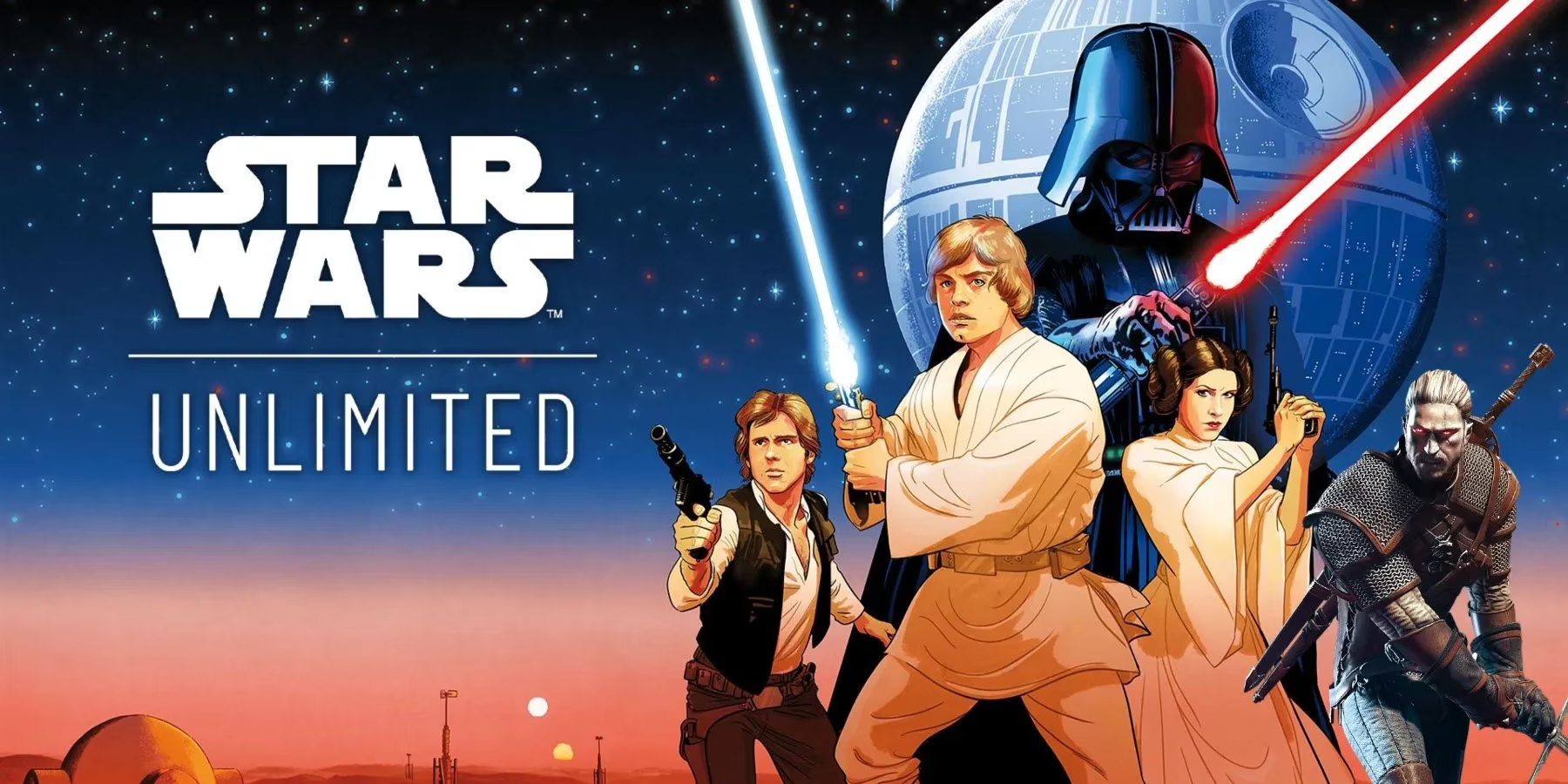
Fantasy Flight Games brings considerable expertise to this project, boasting a strong reputation in both the board game and TCG markets with titles like Marvel Champions and Arkham Horror: The Card Game. Crucially, the developer also has a deep and successful history with the Star Wars intellectual property. This legacy includes well-regarded tabletop games such as the X-Wing miniatures game, Star Wars: Armada, Star Wars: Imperial Assault, and Star Wars: Legion. These past projects were praised for their faithful adaptation of the source material and for offering gameplay that was accessible to newcomers while still providing depth and challenge for experienced players.
Initial previews for Star Wars Unlimited indicate it is following a similar philosophy. While the game features a variety of card types, multiple strategic arenas, and an assortment of tokens—elements that might initially seem complex—multiple reports have emphasized its beginner-friendly design and fast-paced matches. The action is described as fluid and engaging, designed to draw players in quickly. Some previews have noted that the card artwork could see further refinement in certain areas, but this appears to be a minor point against the overall positive reception of the game's mechanics and potential for growth.
The concept of integrating card games into larger video game worlds has been a notable trend for years. The standout example remains Gwent from The Witcher 3: Wild Hunt, which launched in 2015 and became a cultural phenomenon in its own right, nearly overshadowing the main game for some players. Since then, numerous AAA titles have attempted to incorporate similar minigames, though few have achieved the same level of popularity or seamless integration. Even recent major releases, such as Final Fantasy 7 Rebirth, include extensive card games among their suite of side activities, demonstrating the enduring appeal of the concept.
If Star Wars Unlimited achieves a level of commercial and cultural success comparable to other breakout TCGs like Disney Lorcana, it could create a compelling precedent for video game developers. The inclusion of a robust card minigame within a future Star Wars open-world title would feel like a natural evolution. 🃏 A game like the upcoming Star Wars Outlaws, with its focus on the galactic criminal underworld and open-ended gameplay structure, presents an ideal setting. In fact, the franchise already has a perfect in-universe card game blueprint: Sabacc. This game, akin to poker, is famously played by smugglers and gamblers across the galaxy and was featured prominently in the Star Wars Outlaws cinematic trailer, with protagonist Kay Vess seen at the table.
While it might be too late for such an addition to Star Wars Outlaws itself, the success of Star Wars Unlimited could pave the way for Sabacc or a similar card game to be fully realized in a future title. The narrative context of the criminal underworld is a perfect match for high-stakes card playing, offering opportunities for side quests, character interactions, and resource acquisition. The potential is significant:
-
Enhanced World-Building: A card minigame like Sabacc would deepen the immersion in the Star Wars universe's seedy underbelly.
-
Player Engagement: It could provide a compelling recurring side activity, much like Gwent did for The Witcher fans.
-
Cross-Promotion: Synergy between a video game minigame and the physical Star Wars Unlimited TCG could benefit both products.
Ultimately, Star Wars Unlimited represents more than just another merchandise release. It is a strategic entry into the competitive TCG market by a developer with a proven track record. Its early buzz suggests it is well-positioned to attract both Star Wars enthusiasts and trading card game players. Looking ahead to 2026 and beyond, its performance could very well signal to video game developers that there is a hungry audience for integrated card game experiences within the rich, narrative-driven worlds of Star Wars. The pieces are all on the table; it remains to be seen how the next move will be played.