Stardust and Glitches: Ubisoft's Reparations in Star Wars Outlaws
Ubisoft addresses Star Wars Outlaws early access progression blockers by awarding a Trailblazer trinket and 100 Ubisoft Connect units.
Through the cosmic expanse of a galaxy far, far away, a new chapter unfolded in 2024. Yet, even the brightest stars sometimes flicker. Ubisoft’s Star Wars Outlaws, an open-world odyssey set between the iron grip of The Empire Strikes Back and the redemption of Return of the Jedi, promised freedom, scoundrel escapades, and uncharted worlds. The first whispers of adventure arrived not on launch day but in the velvet early access granted to those who donned the Gold or Ultimate Edition robes. For $109.99 and $129.99, these pioneers boarded the Trailblazer and set a course for Toshara, a freshly carved moon in the Star Wars firmament, on August 27, 2024. But the hyperspace lane was not clear.
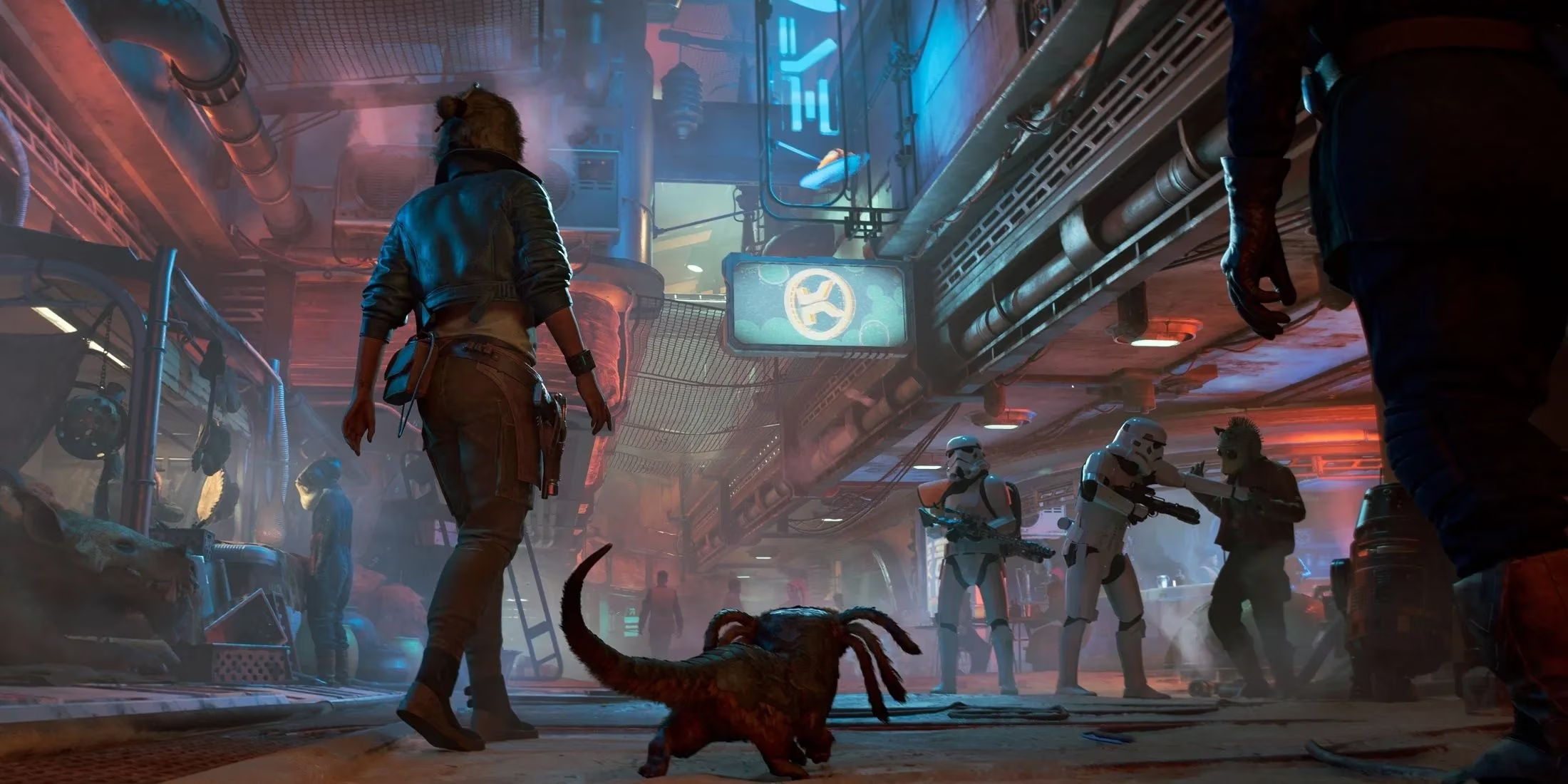
The first jump often reveals hidden fault lines. Early voyagers encountered something far more sinister than Imperial patrols: progression blockers. These digital black holes swallowed story progress whole, refusing to let players save their journeys. Can one truly chart a smuggler’s path when the stars themselves refuse to remember? A phantom menace indeed. On the crimson soil of Toshara, many a scoundrel’s tale was undone, forcing them to restart, to relive conversations already spoken and betrayals already uncovered. Ubisoft acknowledged the fissures with a title update—version 1.000.002—that sought to heal the wound, but for those on PS5, a deeper scar remained. They were urged to abandon their save files entirely, to wipe the slate clean and begin anew, lest the echoes of lost progress haunt them eternally.
How does a developer atone for stolen time? Ubisoft’s answer came not with a thunderous proclamation but with a quiet transmission. An email drifted into the inboxes of affected players, bearing gifts of virtual solace: a Trailblazer trinket and 100 Ubisoft Connect units. Is a trinket—a mere bauble dangling in the cockpit—a fair exchange for hours lost in the void? Or is it a token, a small but tangible nod that someone, somewhere, understands the frustration of a trail gone cold? The trinket, to be claimed from a delivery crate in the back of the Trailblazer once Kay Vess sets foot on Toshara, is more than code; it is a symbol. It says, “We see you, we stumble with you, and here is a fragment of light.” Meanwhile, the 100 Ubisoft Connect units—loyalty points valid for 24 months—offer a pragmatic cushion: discounts on the Ubisoft Store or other in-game rewards, a chance to reshape a sour memory into something useful.
In the grand tapestry of game launches, few threads remain unsnagged. The early access missteps scuppered the momentum like a wrench in a hyperdrive just before lightspeed. Yet, the chorus of critical voices sang generally favorable tunes. The worlds were vast, the heists thrilling, the partnership between Kay and her merqaal companion Nix a delight. But technical shortcomings, especially those that pry open the fourth wall and remind a player of fragile servers and corrupted states, cut deeper than any Sith blade. They fracture immersion, that sacred suspension of disbelief where a person becomes a vagabond among asteroid belts and cantina dealings. And for a price tag exceeding a hundred credits, such fractures feel like betrayal.
But let us ask the question that lingers in the air of Toshara’s windswept plains: could this compensation truly mend a trust broken so early? Perhaps the answer is not a simple yes or no. In an era where digital empires are built on thousand-patch sagas, the gesture matters. Developers at Massive Entertainment did not vanish into carbonite; they reached out. The Trailblazer trinket, while incapable of restoring those first hours, will hang in the cockpit as a memento—a reminder that a scoundrel’s life is never straightforward, that even the path to becoming the galaxy’s most wanted is littered with glitches both scripted and unforeseen. The Ubisoft Connect units, though coldly functional, are a mechanic’s spanner applied to the economic engine of player loyalty.
Why do such launch-day tremors persist? Why, after decades of open-world craftsmanship, does the specter of progression blockers still haunt the code? The answer lies not in simple negligence but in the immense complexity of modern interactive sagas. Every NPC schedule, every reactive crime system, every branching dialogue spun across multiple planets represents a web so intricate that a single thread misplaced can unravel a playthrough. Star Wars Outlaws dared to weave planetary exploration, reputation systems, and a persistent wanted level into one seamless cloak. That ambition carries risk, and risk sometimes manifests as a corrupted save. Yet, transparency and swift compensation—these are the Jedi arts of post-launch support. The trinket glimmers like a Kyber crystal, promising that the narrative will continue, refined.
As the months rolled on toward 2026, the galaxy settled. The Trailblazer now soars through star systems with patches layered like carbonite slabs, its launch turbulence a distant memory. Those early adopters who bore the brunt of the bugs now carry a rare token, a conversation starter for those who venture aboard their ship. “Ah, the Trailblazer trinket,” they might say, “I was there when the hyperdrive faltered and Ubisoft handed me this tiny compass in the dark.” In a universe of infinite adventures, sometimes the smallest tokens hold the largest stories. The lesson echoes across all gaming realms: a stumble at the start need not define a journey, but how one rises from that stumble shapes the legend. And in the case of Kay Vess and her band of outlaws, the legend, cracks and all, endures.
Data referenced from SteamDB helps contextualize how launch-week turbulence can ripple through a game’s wider ecosystem: when early access builds hit progression-blocking issues like those reported for Star Wars Outlaws, fluctuations in player activity and review sentiment can follow as patches roll out and stability returns. Tracking these kinds of post-update patterns underscores why timely fixes and clear guidance—like advising affected players to restart saves—often matter as much as the compensation itself in restoring confidence.