Stellar Blade: Navigating Character Design Debates and Gaming's Evolving Landscape
Stellar Blade and Star Wars Outlaws spark intense debate over character design, highlighting evolving trends and passionate community reactions.
In the contemporary gaming landscape of 2026, one of the most challenging aspects of online discourse is navigating polarized extremes. This isn't necessarily about political extremism, but rather about the disproportionate attention given to matters of relatively minor importance. Consider the extensive discussions surrounding character attractiveness in games like Stellar Blade and Star Wars Outlaws—topics that have spawned countless social media threads and lengthy video analyses. The general sentiment among many observers is one of bemusement. When individuals become so invested in these discussions that they resort to sending threatening messages to those with differing opinions—particularly to people who have no influence over character design decisions—it suggests deeper issues at play. However, the conversation around these topics has also been muddied by what some perceive as unhelpful gaslighting, where legitimate observations about shifting design trends are dismissed outright.
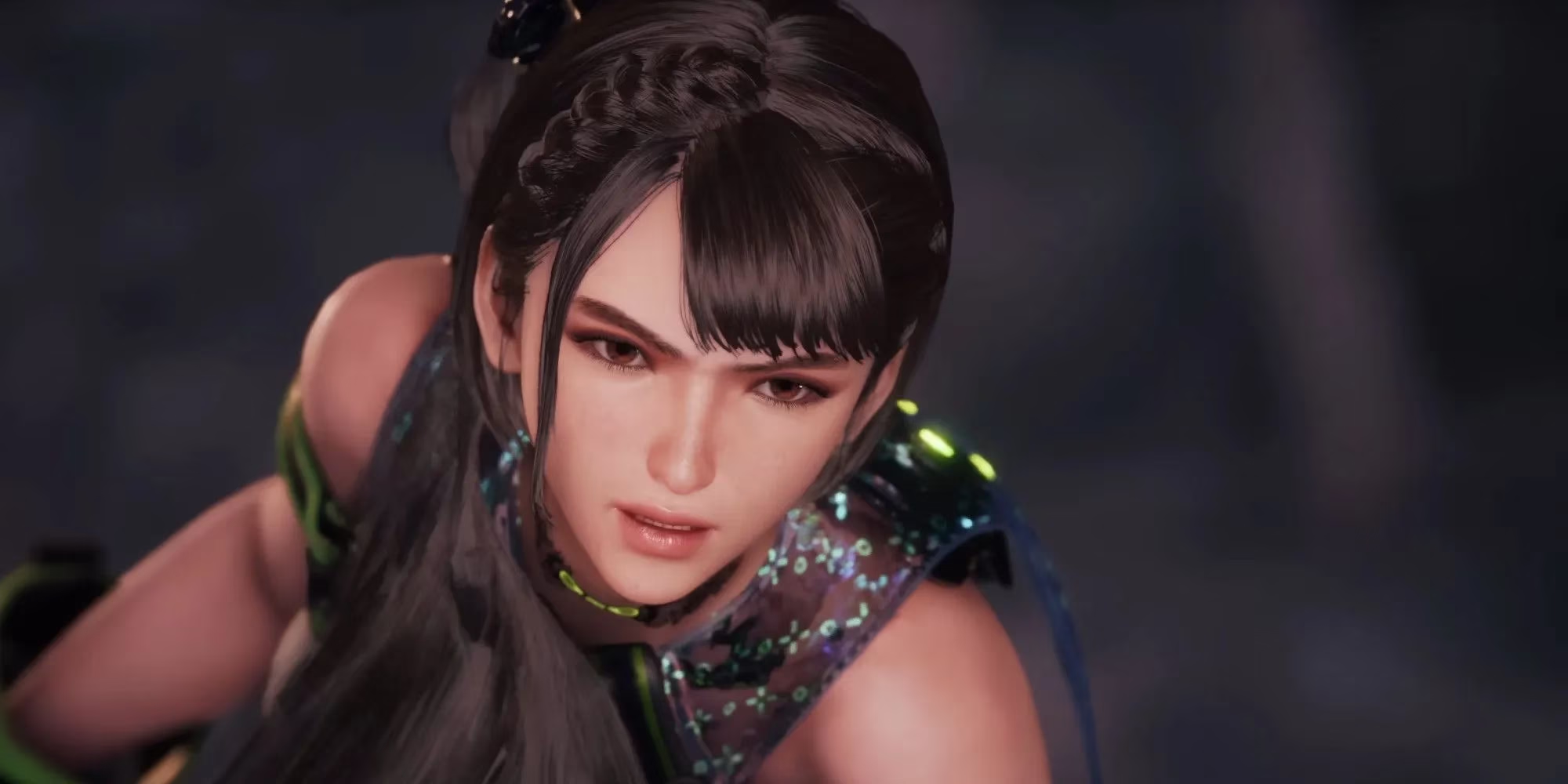
The Place for Characters Like Eve in Modern Gaming
Stellar Blade's protagonist, Eve, represents a specific character archetype that has become less common in Western game development. Her design has been praised by many for its aesthetic appeal, and there's certainly room in the gaming ecosystem for characters with what some might describe as a "raunchy" or overtly sensual design. The history of gaming includes numerous female characters created primarily as eye candy, even when they served narrative functions. However, some supporters of Eve's design have developed what appears to be a persecution complex, making it somewhat awkward for others to express simple anticipation for Stellar Blade without being associated with more extreme viewpoints.
The reality is more nuanced. Over the past five to ten years, Western game design has indeed seen a deliberate shift away from consistently presenting female characters through a hypersexualized lens. This evolution has brought significant benefits:
-
Greater Design Diversity: Female characters now exhibit much wider visual variety
-
Stronger Narrative Integration: Character designs more frequently reflect personality and story roles
-
Broader Representation: Different body types, facial features, and styles have emerged
This shift doesn't represent censorship but rather an expansion of creative possibilities. When character design serves narrative purpose—like Abby's muscular physique in The Last of Us Part 2 reflecting her physical and emotional hardening—the result is often more compelling storytelling. Making her conventionally "prettier" wouldn't have improved the narrative impact of her journey.
The Misplaced Outrage Over Characters Like Kay Vess
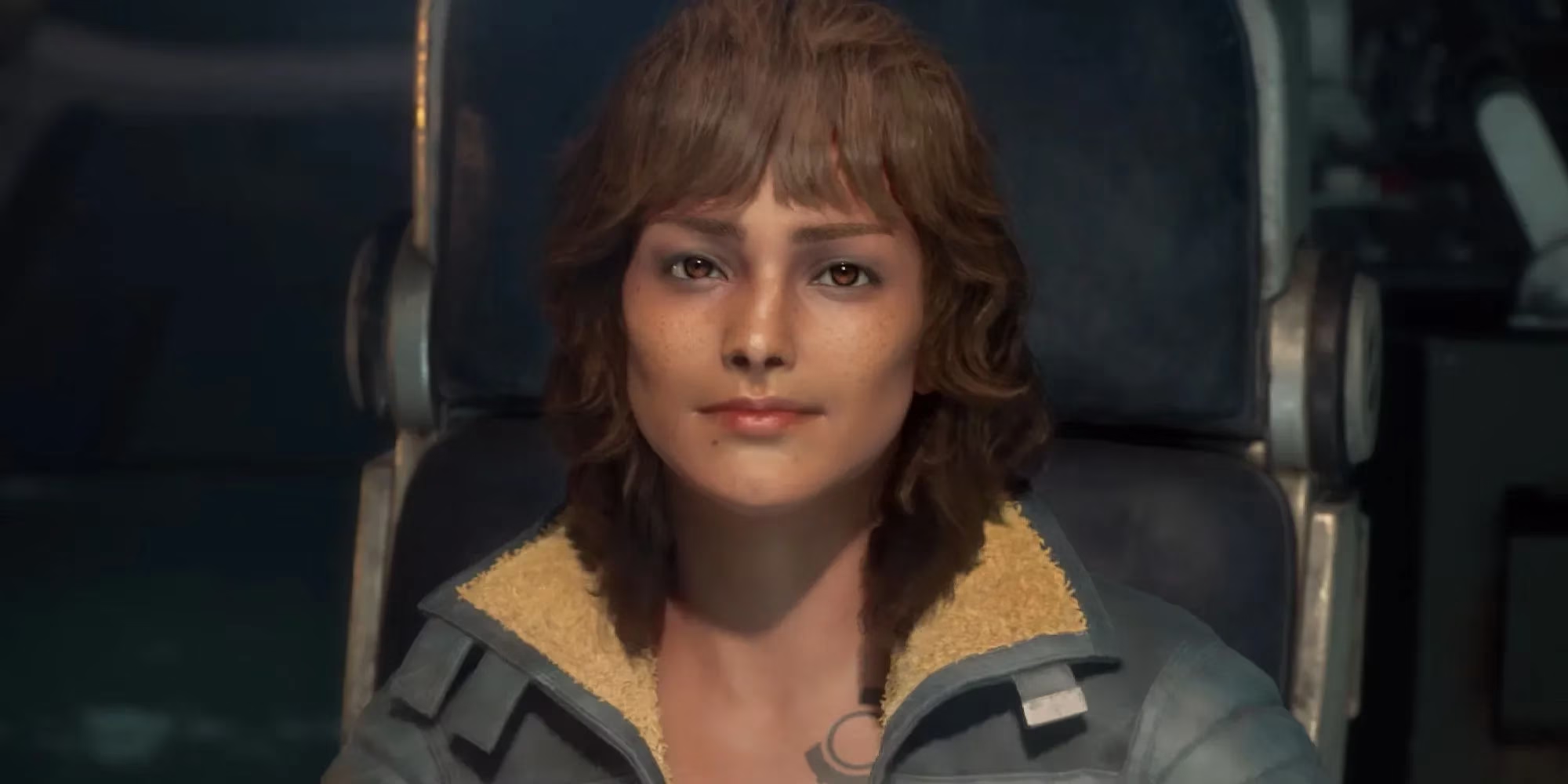
The controversy surrounding Star Wars Outlaws' protagonist, Kay Vess, exemplifies how these discussions often miss the mark. Kay is designed as a scrappy criminal surviving through wits and sharpshooting skills—not as a conventional beauty icon. Her messy 1980s-inspired hairstyle and practical attire suit her character perfectly. She represents a different kind of female protagonist: one whose attractiveness stems from personality, determination, and unique design quirks rather than conventional modeling standards.
The outrage over specific screenshots where her chin appears "too pointy" or casts an unflattering shadow reveals more about the critics than about character design philosophy. This reaction suggests some individuals are actively seeking reasons to be offended rather than engaging with characters as complete creations. The reality is that modern gaming offers room for both Eve and Kay Vess—and everything in between.
What We Gain From Broader Design Approaches
The expansion of character design possibilities has enriched gaming immeasurably. When attractiveness ceases to be the default or primary focus for female characters, developers gain creative freedom that often results in:
-
Stronger character writing
-
Deeper, more meaningful stories
-
More varied and interesting visual design
-
Characters that better serve their narrative roles
Consider the diverse cast of Baldur's Gate 3 (which remains popular in 2026). Characters like Karlach—a muscular, engine-hearted tiefling—wouldn't exist if developers felt constrained to make every female character conventionally "pretty." A conventionally attractive Karlach would simply be a red-haired version of Shadowheart, while Lae'zel would be a green version of the same template. This homogeneity would be creatively stifling and narratively limiting.
The Problem with Binary Thinking
A concerning trend in these discussions is the binary framing that pits characters like Eve against characters like Kay Vess as opposing ideologies. This false dichotomy ignores the vast middle ground and the reality that most players appreciate variety. The celebration of Eve's design sometimes crosses into troubling territory when it becomes less about appreciating her as a character and more about claiming ownership of her as a sexual object—a tool for harassing those with different preferences or for fueling culture war narratives.
Characters like Shadowheart from Baldur's Gate 3 demonstrate that beauty and substantive character development aren't mutually exclusive. Yet she's rarely cited in these debates because her game's progressive elements and nuanced storytelling don't provide convenient ammunition for ideological battles.
Looking Forward: A More Nuanced Conversation
As we move further into 2026, the gaming industry continues to evolve. Stellar Blade's developers have confirmed plans for additional costumes and New Game Plus in free updates, while also considering a PC port and potential sequel. The game has opened to generally positive reviews, though not without controversies—including the removal of a shop containing racial slurs before launch and ongoing debates about "censorship" despite developers confirming the game is uncensored in all regions.
The path forward requires acknowledging several realities:
-
It's perfectly fine to appreciate Eve's design and look forward to her game
-
It's reasonable to notice and discuss the shift in Western character design trends
-
Critiquing specific design choices is valid, but claiming a single unflattering screenshot represents an ideological attack is unreasonable
-
The gaming landscape is large enough for diverse character designs and player preferences
-
Reducing complex discussions to culture war soundbites benefits nobody
Ultimately, the healthiest approach recognizes that different games serve different purposes and audiences. Stellar Blade offers a particular aesthetic experience that some players will enjoy, just as Star Wars Outlaws offers a different kind of protagonist that will appeal to others. The true victory for gaming comes not from one design philosophy "winning" over another, but from the continued expansion of creative possibilities that allows for Eve, Kay Vess, Karlach, Abby, and countless other diverse characters to coexist and find their audiences.
The most memorable gaming experiences often come from well-realized characters whose designs serve their stories—whether those characters are conventionally attractive, unconventionally striking, or deliberately ordinary. As the medium matures, perhaps the discourse can mature alongside it, moving beyond reductive debates about individual character designs toward more substantive discussions about how visual design serves interactive storytelling in all its varied forms.