The 2024 Games That Still Shape 2026
By 2026, 2024 games like Tekken 8, Stellar Blade, Dragon's Dogma 2, and Black Myth: Wukong reveal which releases lasted and why.
By 2026, the crowded 2024 release calendar has become a measuring stick. Back then, the industry seemed to be sprinting through a golden age, with triple-A giants, stylish action games, remakes, and long-awaited sequels all stacked on top of one another. A third-person observer could feel the tension in every delay announcement and every surprise shadow-drop. Two years later, the scoreboard is messier and more interesting. Some titles became pillars of the medium. Others became cautionary tales. A few arrived late and changed the conversation anyway. The story of 2024 is not just about what launched. It is about what lasted.
Tekken 8 was first in line, arriving on January 26, 2024, after the fighting-game genre had already been rocked by Mortal Kombat 1 and Street Fighter VI. The delay that once felt like bad news became a gift. Tekken 8 had room to breathe, and by 2026 it is remembered as one of the cleanest examples of a legacy fighter reinventing itself without losing its identity. Its aggressive heat system, cinematic story mode, and familiar roster of favorites, including Kuma, gave veterans and newcomers a reason to stay. In a year that could have buried it, Tekken 8 instead stood taller.
Shift Up's Stellar Blade arrived in April 2024 with stylish combat and a bold new universe. The early previews framed it as a Devil May Cry-esque action adventure, and that promise mostly held. By 2026, the conversation around Stellar Blade has moved beyond its visuals. Players remember the timing-heavy fights, the memorable bosses, and the satisfying challenge that punished mindless button mashing. A later PC release widened the audience, turning a once-console-exclusive curiosity into a broader action showcase. It did not need to reinvent the genre. It needed to execute, and it did.
Capcom's Dragon's Dogma 2 launched in March 2024, more than a decade after the original. The RE Engine gave its fantasy world a tangible, weathered beauty, but the game's real legacy is its pawn system. By 2026, players still trade stories about pawns recalling old journeys, about a griffin interrupting a quiet road, about a single choice cascading into chaos. Dragon's Dogma 2 is a single-player RPG that feels like a group story. It is uneven, ambitious, and stubbornly memorable. In a market full of polished checklists, that stubbornness became its charm.
Black Myth: Wukong was the shock reveal of 2020 and the global event of August 2024. Game Science's adaptation of Chinese folklore used Unreal Engine 5 to build a semi-open world of gods, monsters, and flashy staff combat. By 2026, it stands as a benchmark for how a studio can honor a cultural legacy while making it legible to a worldwide audience. Wukong's powers grow through boss encounters, turning each victory into a new tool for the next challenge. It is a light souls-like with spectacle, but its deeper achievement is confidence. It did not apologize for its roots. It made them the main attraction.
The Silent Hill 2 remake arrived in October 2024 and pulled the camera close, trading fixed angles for a third-person intimacy that made every corridor feel worse in the best way. By 2026, it sits beside the Dead Space and Resident Evil 4 remakes as proof that survival-horror classics can be rebuilt without being sanded down. The fog still works. The town still works. The remake did not need to explain every mystery. It needed to preserve the unease, and that unease has aged well.
The Long Waiters Finally Crossed the Finish Line
Hollow Knight: Silksong was supposed to be a 2024 story. Instead, it became a 2025 story, arriving in September after years of silence. By 2026, the wait itself is part of the legend. Team Cherry's sequel gave players Hornet, a more acrobatic protagonist, and a map full of secrets that rewarded patience. The lesson is simple: a delayed game can recover. A rushed one rarely does. Silksong did not just meet expectations. It reminded players why the first game became an indie landmark.
Hades II followed a different path. Supergiant Games used early access in 2024 to build trust, then delivered its full launch in September 2025. By 2026, the sequel is a case study in iteration done right. Melinoë's journey kept the rogue-like loop that made the original beloved, then expanded it with new gods, weapons, and locales. Every death still felt like progress. Every run still produced a story. Hades II did not chase a bigger audience by shrinking its identity. It grew by deepening what already worked.
Final Fantasy VII Rebirth landed on February 29, 2024, and immediately entered the Game of the Year conversation. Square Enix's decision to branch away from the original story was risky, but by 2026 the middle chapter looks like the moment the trilogy's ambition became real. Rebirth balanced open-world exploration with intimate character moments, and its combat remained a high-water mark for the series. The big question now is not whether the remake project worked. It is how the final chapter will stick the landing.
Senua's Saga: Hellblade 2 arrived in May 2024 as a Microsoft exclusive from Ninja Theory. It was short, intense, and built around auditory storytelling in a way few games dare to attempt. By 2026, it remains a polarizing but respected experience. It did not need to be a hundred-hour RPG. It needed to put players inside Senua's perception and make them uncomfortable. On that front, it succeeded. Its legacy is not scale. It is sensory immersion.
Rise of the Ronin launched in March 2024, and at a glance some players expected another Ghost of Tsushima. Team Ninja had other ideas. Set in 1863 Japan, the game followed a masterless samurai through a web of choices, gliding, firearms, and factional conflict. By 2026, it is remembered as a solid open-world samurai RPG rather than a genre-defining one. That is not a failure. It is a reminder that not every game needs to be a revolution. Sometimes a well-built playground is enough.
Helldivers 2 may be the defining live-service success of the 2024 class. The original was a top-down twin-stick shooter. The sequel moved to third-person, added stunning visual chaos, and let up to four players fight bug-like alien hordes in the spirit of Starship Troopers. By 2026, its war table and co-op mayhem have become a reference point for other studios. It succeeded because it understood the assignment: make the chaos readable, make the teamwork necessary, and make every drop feel like a story.
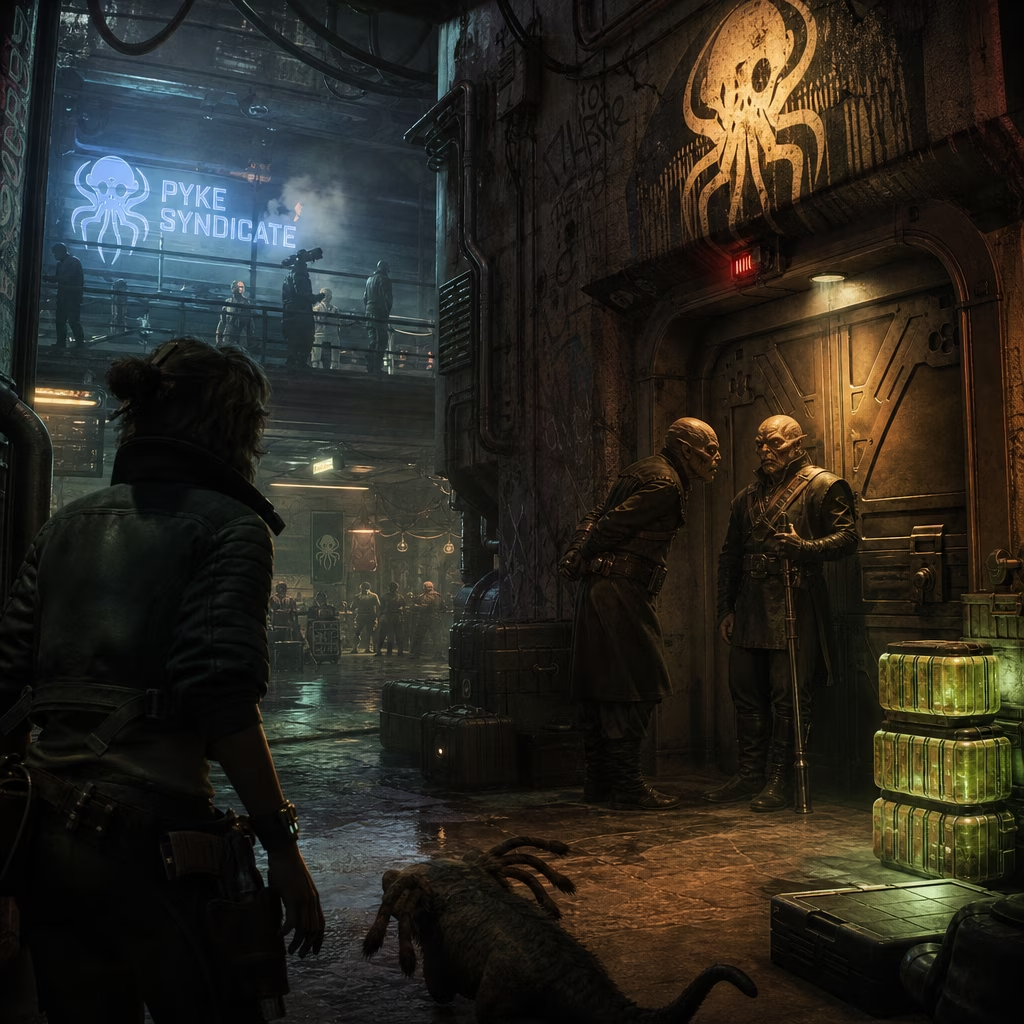
Star Wars Outlaws arrived in August 2024 with a scoundrel fantasy that avoided the usual Jedi power trip. Massive Entertainment built a galaxy of planets, crime syndicates, and a Grand Theft Auto-style wanted system that let the Empire hunt players after bad decisions. By 2026, after updates and fixes, it is a more polished smuggler sandbox. It proved that Star Wars without a lightsaber can still work. The fantasy of being a nobody with a blaster and a bad plan has its own gravity.
Like a Dragon: Infinite Wealth launched on January 26, 2024, and sent Ichiban and Kiryu into a grand new chapter. RGG Studio's turn-based combat, satirical side content, and earnest melodrama all clicked. By 2026, it is remembered as one of the series' most expansive adventures, a game that could make players laugh in one scene and stare at the ceiling in the next. It also carried the weight of possibly being Kiryu's last major journey. That weight gave the comedy a bittersweet edge.
The Rest of the 2024 Slate in 2026
| 2024 title | 2026 snapshot |
|---|---|
| Paper Mario: The Thousand-Year Door | The May 2024 remake brought a beloved RPG back with a new coat of paint. It remains a warm, witty gateway to the series. |
| Granblue Fantasy: Relink | February 2024 delivered a colorful action RPG that finally gave console players a reason to care. It is a cult favorite now. |
| Suicide Squad: Kill the Justice League | February 2024 arrived with controversy. By 2026, it is remembered more for its story ambitions than its live-service structure. |
| Alone in the Dark | The March 2024 remake kept the survival-horror grandfather alive. It did not match the Resident Evil remake streak, but it had atmosphere. |
| Call of Duty: Black Ops 6 | October 2024 took Treyarch back to the 1990s and the Gulf War. It became a dependable annual juggernaut. |
| XDefiant | The free-to-play shooter launched in 2024 and later shut down. By 2026, it is a cautionary tale about crowded live-service markets. |
The 2024 class did not just fill a year. It set the bar for how players talk about delays, remakes, and live-service risk. A release date is a promise. A game's life is a negotiation. By 2026, the titles that survived are the ones that understood that distinction. Some delivered polish. Some delivered personality. Some delivered a world players wanted to return to. The next wave of releases will be judged the same way: not by the hype of announcement day, but by the stories players still tell years later. 😄