The Glup Shitto Phenomenon: How Cameos Are Shrinking the Star Wars Galaxy
Explore the heated Glup Shitto debate and Star Wars universe evolution, contrasting KOTOR's purity with Outlaws' cameo-filled approach.
In the year 2026, the debate about 'Glup Shittos' in the Star Wars universe is more heated than ever. For a franchise that prides itself on sprawling, epic tales set in a galaxy far, far away, there's a growing sense that it's starting to feel surprisingly... small. The term 'Glup Shitto,' a fan-made moniker for obscure extended universe characters who pop up in mainstream media, has become a cultural touchstone, perfectly encapsulating the divide between hardcore devotees and the casual audience. As someone whose entry point was the legendary, self-contained world of Knights of the Old Republic, the current trend in games like Star Wars Outlaws feels like a fundamental shift. It's no longer just about telling a new story; it's about playing a game of 'spot the cameo.' The question lingers: is this expansive universe becoming a cozy, familiar neighborhood where everyone knows everyone, for better or worse?
The KOTOR Standard: A Universe That Stood Alone
My journey into Star Wars didn't begin with a iconic opening crawl in a theater. Nope, my dad was more of a 'Trekkie,' so the Force wasn't strong in our household. My induction came through the now-legendary 2003 video game, Knights of the Old Republic. That game was, for me and many others, a revelation. It was a complete package—a rich, original story set thousands of years before the Skywalker saga, with no required homework. You didn't need to have seen a single movie to be utterly captivated by the mysteries of the Star Forge or the moral complexities of the Jedi Civil War.
What made KOTOR so special was its stunning lack of cameos. There was no Darth Vader hologram, no cheeky reference to a young Yoda. The game built its own pantheon of heroes, villains, and scoundrels. It proved that Star Wars could be pure and powerful without leaning on the crutch of pre-existing movie characters. It felt vast and unknown, a true frontier for storytelling. That sense of discovery is, frankly, what hooked me for life. It was a story that earned its place, rather than borrowing legitimacy from elsewhere.
Outlaws and the Onslaught of Familiar Faces
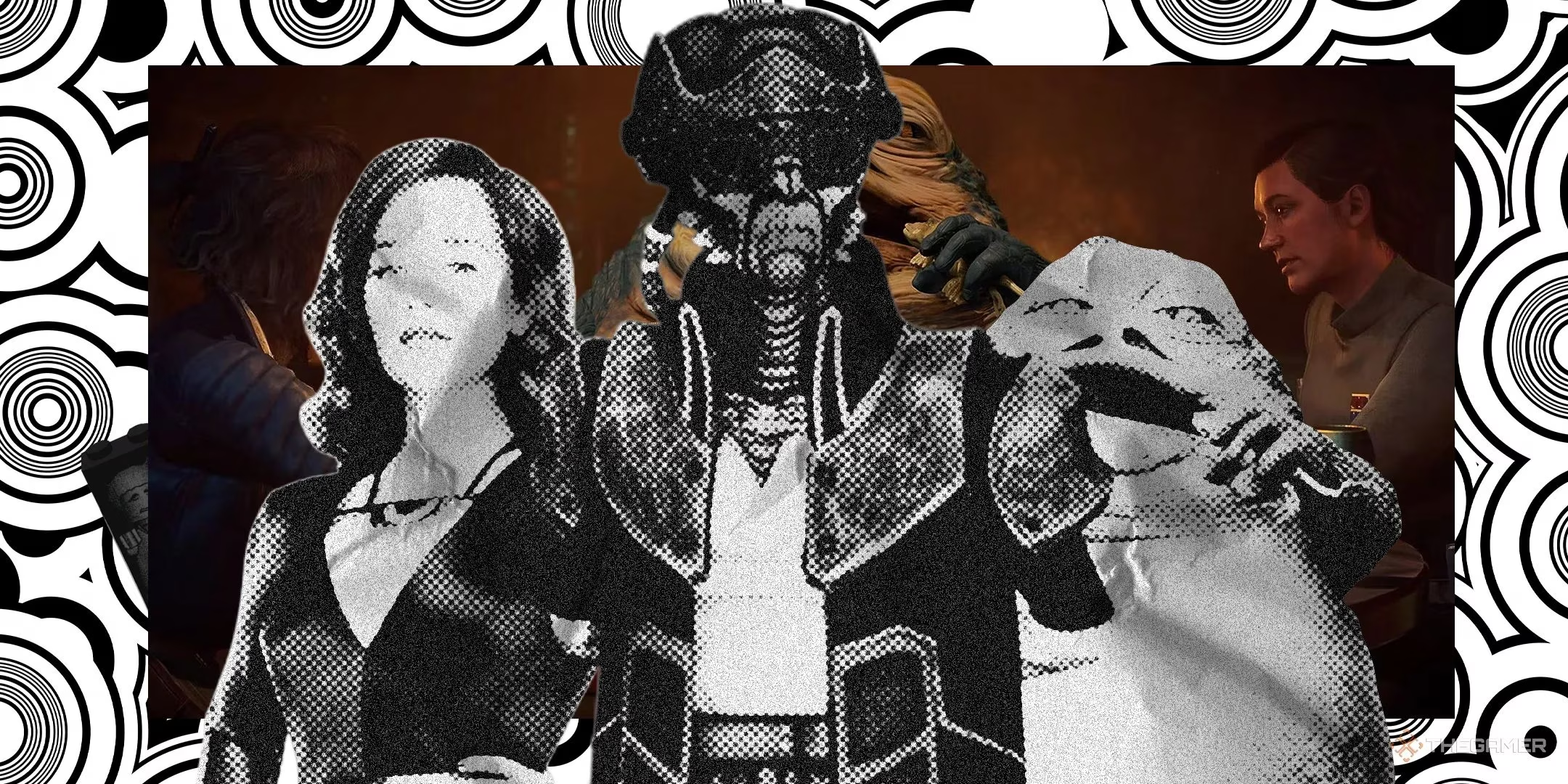
Fast forward to the modern era, and we have Star Wars Outlaws. The game bills itself as an 'original story' following scoundrel Kay Vess, but from the get-go, its marketing has been chock-full of 'Hey, remember this guy?!' moments. Let's break down the roster:
| Character | Origin | 'Glup Shitto' Status (For a Casual Fan) |
|---|---|---|
| Jabba the Hutt | Original Trilogy | Icon - Everyone knows the big slug. |
| Han Solo (in carbonite) | Original Trilogy | Icon - The most famous smuggler in the galaxy. |
| Lady Qi'ra | Solo: A Star Wars Story | Total Glup Shitto - From a movie many skipped or forgot. |
| Lando Calrissian | Original Trilogy | Borderline - Recognizable, but details get fuzzy. |
| Hondo Ohnaka | The Clone Wars, Rebels | Peak Glup Shitto - A deep-cut for animation fans only. |
The post-launch DLC roadmap sealed the deal. We're not just talking about a background easter egg; we're talking about major story expansions built around meeting these characters. The 'Wild Card' pack promises a team-up with Lando, and 'A Pirate's Fortune' centers on the 'veteran pirate' Hondo Ohnaka. For fans of the animated series, this is awesome sauce. For someone like me? It's a list of names that requires a Wookieepedia deep dive before I even boot up the game. It starts to feel less like an original adventure and more like a guided tour of the Star Wars expanded universe.
The Fine Line Between Fan Service and Story
Now, let's be clear: cameos aren't inherently evil. I absolutely loved Star Wars Jedi: Survivor, and the appearance of Darth Vader was a legitimately jaw-dropping, narrative-pivoting moment. It served the story, raised the stakes, and felt earned. The problem arises when cameos feel like checkboxes rather than crucial plot points.
In Outlaws, the argument is that it makes sense for a smuggler like Kay to run into crime lords like Jabba and Qi'ra, or a pirate like Hondo. Technically, yes, it's plausible. But in a galaxy with trillions of beings, countless systems, and infinite stories, why does our new protagonist keep bumping into the same handful of people we already know? It creates a weird paradox: the setting is marketed as vast, but the storytelling makes it feel like a small town where you can't swing a Gaffi stick without hitting a semi-celebrity.
This is the Marvel-ization of Star Wars. We're being trained to watch (and play) not for the core narrative, but for the post-credit scene or the surprise guest star. It's a pat on the head for the most dedicated fans, a reward for consuming every single piece of media in the franchise. The game seems to whisper, 'See? You watched Solo and seven seasons of Clone Wars! Your loyalty is noted and rewarded.' 🤝
A Galaxy Wide Enough for Everyone?
So, what's the verdict? As of 2026, the Glup Shitto debate rages on. For some, these cameos are the icing on the cake, a delightful weaving together of the tapestry they love. For others, it's a barrier to entry, a reminder that to fully 'get' a new story, you need a PhD in Star Wars lore.
My hope for the future of Star Wars gaming is simple: Balance. Give us our KOTOR-style, standalone epics that boldly go where no character has gone before. And sure, give us games like Outlaws that play in the familiar sandbox—but let them stand on their own two feet narratively. A cameo should be the spice, not the main ingredient. The galaxy is wide enough for both deep-cut delights and accessible, original adventures. Here's hoping future developers remember that the Force is strongest when it connects us to new stories, not just old memories.
Ultimately, I'll have to meet these Glup Shittos in-game to see if they win me over or just make me sigh. But one thing's for sure: the galaxy feels a lot more crowded than it used to. 🚀✨