The Rise of Indies and the Shifting Landscape of Game Development
Summer Game Fest 2026 spotlights indie games, revealing a vibrant industry shift from AAA dominance to innovative, heartfelt indie creations.
As I reflect on the state of the industry in 2026, I recall Geoff Keighley's Summer Game Fest a couple of years back as a pivotal moment. He began by tempering expectations, a wise move in an era where fans often demand impossible reveals like Elden Ring 2 or Silksong. Yet, his attempt to address the painful layoffs that had been plaguing developers felt rushed, glossed over in favor of getting to the "world premieres." It highlighted a tension that still exists: the spectacle of the show versus the real human cost behind the games. We, as players and observers, were asking for the bare minimum—acknowledgment and solidarity—but even that seemed complicated.
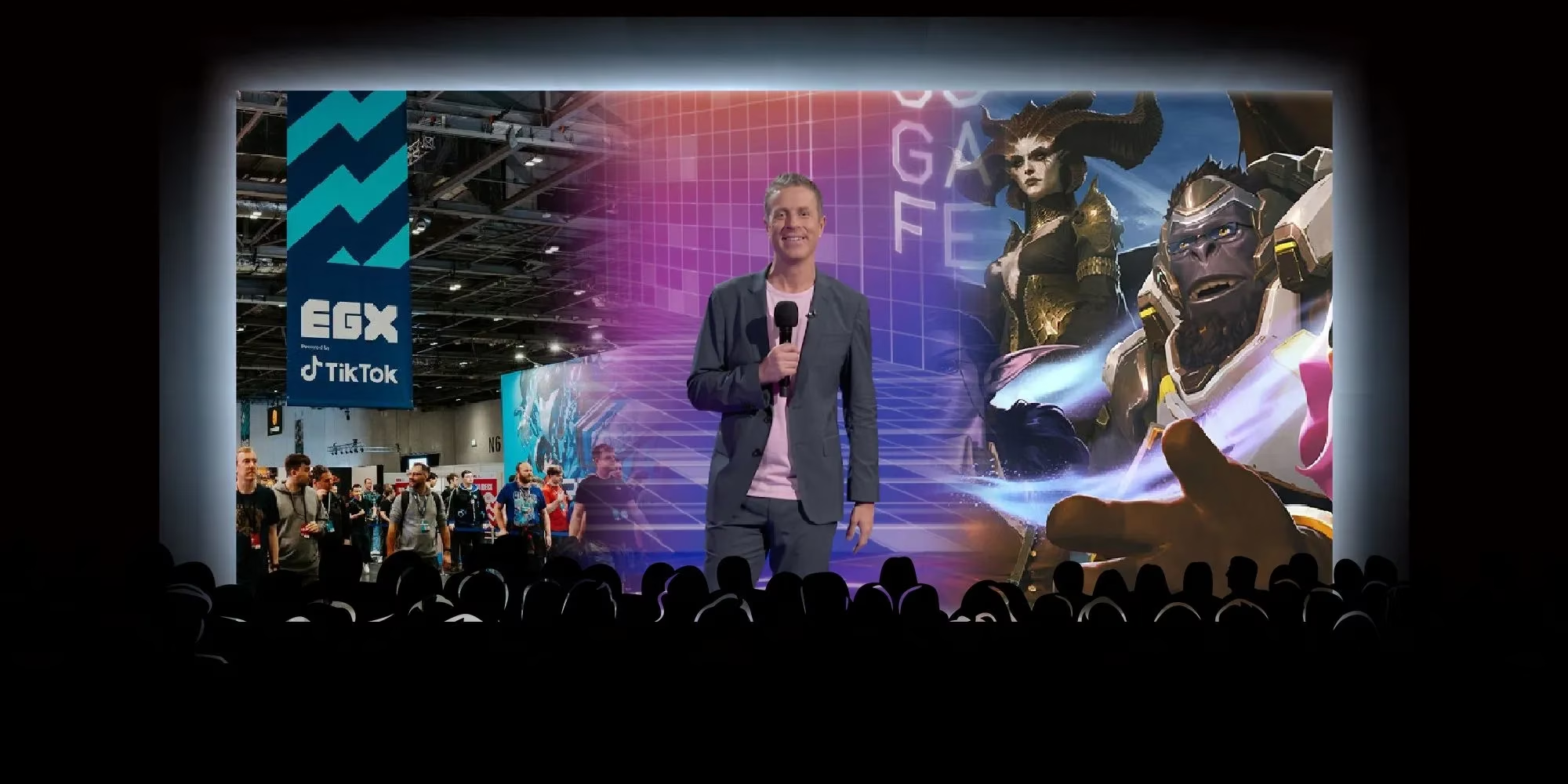
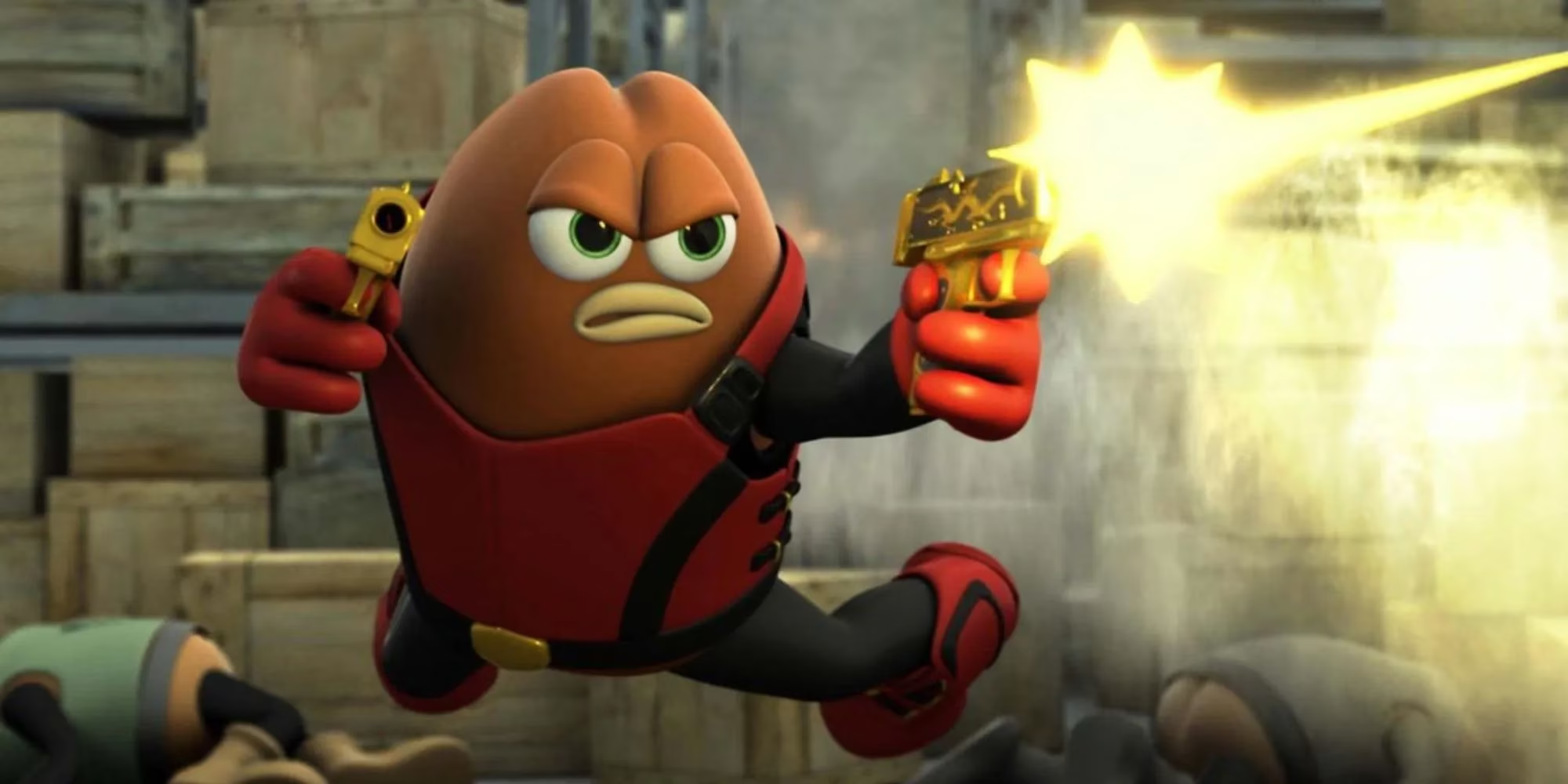
What followed was more telling. Keighley presented a slide showing the year's best-selling games, noting that eight out of ten came from small developers, indie teams, or solo creators. His point was clear, even if the definition of "small" was debatable (was Palworld from Pocketpair truly a small team?). The message resonated deeply: the spotlight was no longer reserved solely for the giants. The rest of that showcase confirmed the trend. The biggest name was a Lego spinoff of a PlayStation exclusive. The most buzzed-about title? A game about a bean with a gun. There was no grand Kojima appearance, no earth-shattering AAA trailer. Instead, the livestreams and showfloor hummed with the energy of independent projects.
In my circles, the conversations weren't about the next bloated open-world sequel. They were about games like:
-
Slitterhead: A bizarre and visceral action-horror experience.
-
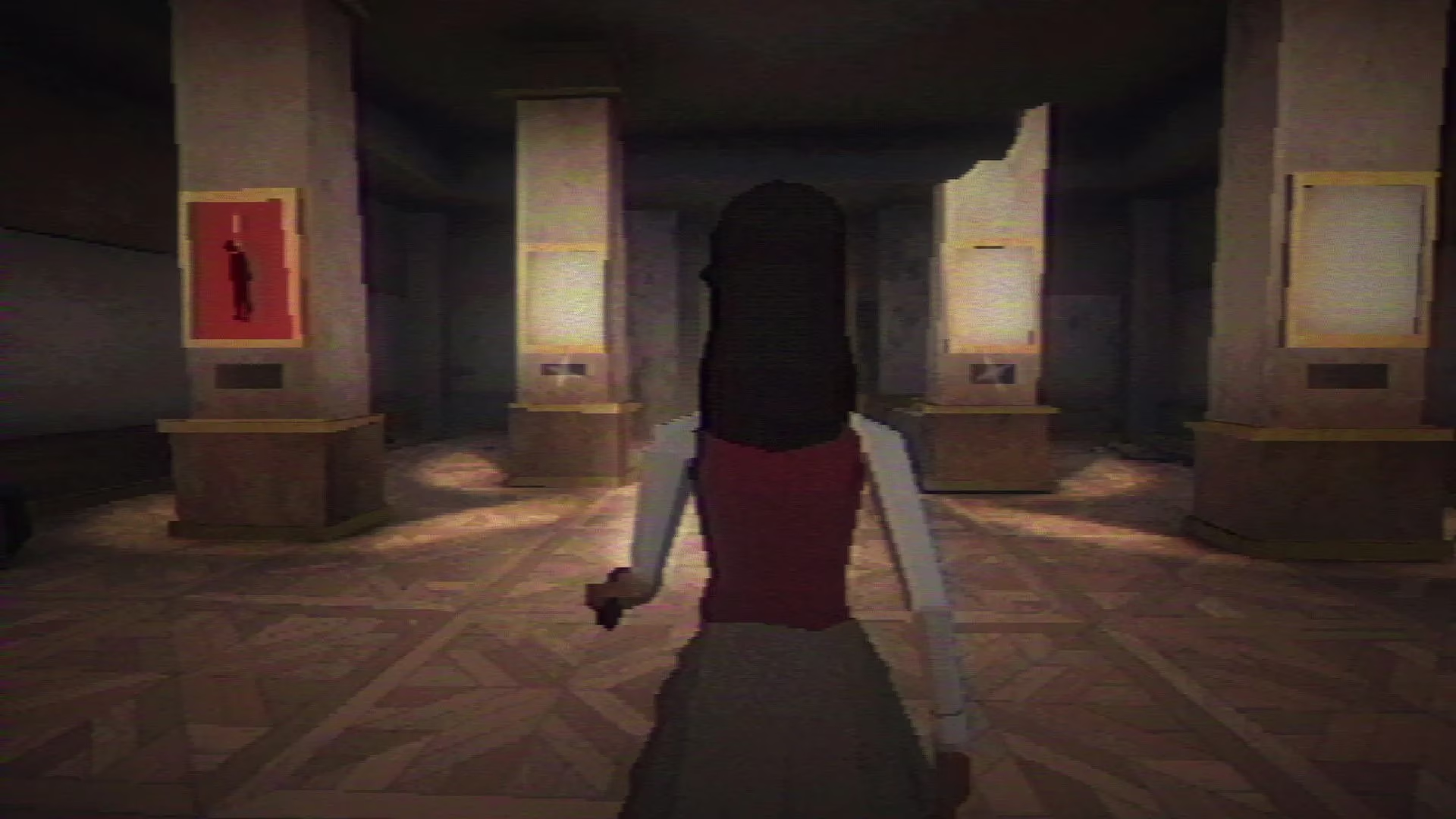
Fear the Spotlight: A nostalgic, spine-tingling teen horror adventure.
-
Afterlove EP: A poignant narrative-driven game about love and loss.
-
Neva: A beautiful, melancholic adventure from the makers of Gris.
-
Phantom Blade Zero: A stylish, fast-paced action title dripping with aesthetic.
These games, each targeting different audiences, were given room to breathe and shine precisely because the traditional AAA bombshells were absent. And thank goodness for that. The AAA model feels increasingly like a relic straining under its own weight. Consider the unsustainable cycle:
-
Budgets balloon into the hundreds of millions.
-
Development timelines stretch across entire console generations.
-
The pressure to sell tens of millions of copies becomes existential.
-
Failure leads to studio closures and massive layoffs.
Even a success like The Elder Scrolls 6 would, at this rate, mean a decade-long wait for a sequel. The gaps in between these monolithic releases are vast, and it's the indie scene that has stepped up to fill them, not just with games, but with innovation and heart.
The true highlights of that show, for me, weren't the games themselves, but the new models of support emerging. Two entities stood out: Blumhouse Games and Innersloth. They represent a fascinating, cooperative alternative to the high-stakes gambling of AAA.
I had assumed Blumhouse Games would announce some tie-in to a popular film. Instead, they revealed a strategy mirroring their film production model: making numerous small bets. They invested in a slate of half a dozen distinct horror games, each with a modest budget. This approach makes perfect sense. Horror, as a genre, thrives on creativity and tension—elements often heightened by constraints, not diminished by them. A smaller budget forces clever design, atmospheric storytelling, and unique mechanics, which is exactly where indie horror excels.
Then came Innersloth, the studio behind the cultural phenomenon Among Us. They announced the Outersloth Fund, a initiative to support independent developers. This wasn't just about writing checks. Their offer was comprehensive and genuinely supportive:
| Support Type | Description |
|---|---|
| Financial Grant | A pot of money for small teams working on weird, wonderful ideas. |
| Mentorship & Advice | Guidance for developers new to the industry's complexities. |
| IP Protection | A firm promise: they won't claim ownership of your ideas. |
This is an incredible act of giving back. It's a recognition that Among Us itself was once a small, overlooked game, and its success was an anomaly. By funding and nurturing the next generation of weird ideas, Innersloth is helping to plant the seeds for the industry's future. Who knows what the next Among Us will be? It might be funded by Outersloth.
This contrast defines the current landscape. While platform holders like Xbox and PlayStation continue their fierce, zero-sum competition for exclusive blockbusters, the indie world is moving in the opposite direction: cooperation. Studios and publishers are helping each other onto the pedestal that the aging giants have vacated. They share knowledge, resources, and spotlight.
As I look ahead, the path seems clear. The future of gaming isn't found in another iterative, risk-averse sequel from a major publisher. It's not in another licensed property stretched thin across a 100-hour map. The future is independent. It's in the small teams taking big creative swings. It's in the horror game made by a handful of people that scares you more than any $200 million production. It's in the heartfelt narrative experience that a solo developer crafted over years. The energy, the innovation, and the soul of the industry have migrated. The showcases might still feature the occasional AAA spectacle, but the heart of the conversation—and the heart of the art—beats strongest in the vibrant, collaborative, and daring world of indie games.