The Spectacular Redemption of Solo: From Box Office Disaster to Star Wars Legend in 2026
Solo: A Star Wars Story, once a box office failure, has risen to legendary status, influencing comics, books, and the hit game Star Wars Outlaws.
In the vast, tumultuous galaxy of cinematic history, few tales are as dramatic as the phoenix-like resurrection of Solo: A Star Wars Story. Once branded the solitary, colossal box office failure in the mighty 47-year saga of Star Wars, this underdog narrative has undergone a transformation so profound it has become the stuff of legend. As we stand in 2026, the film is no longer a cautionary footnote but a revered cornerstone, its legacy meticulously rebuilt through comics, books, and its monumental influence on the blockbuster video game Star Wars Outlaws. This is the story of a film that defied its own demise to become an indispensable chapter in the epic.
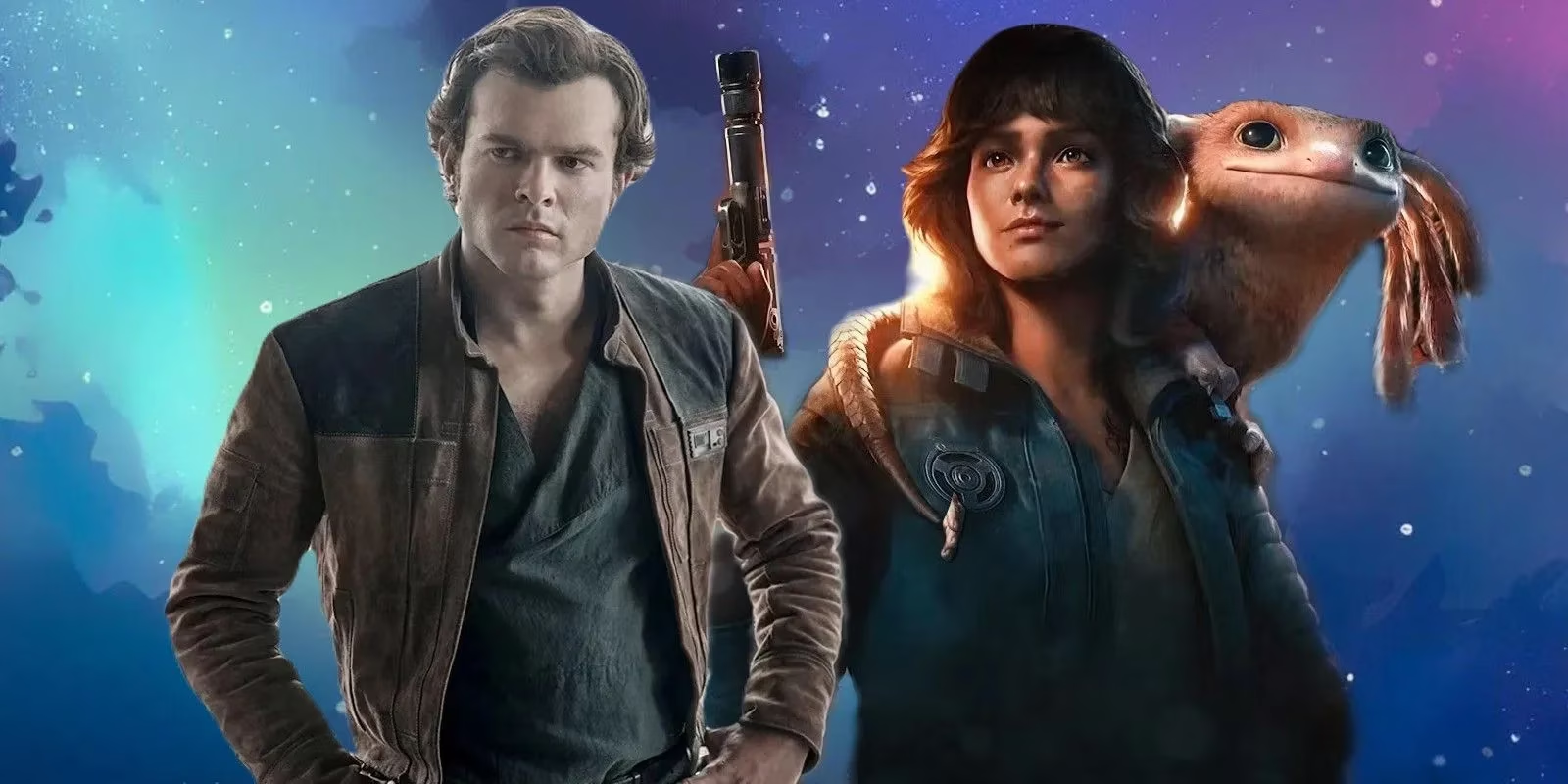
The Unprecedented Fall: A Galactic Empire Stumbles
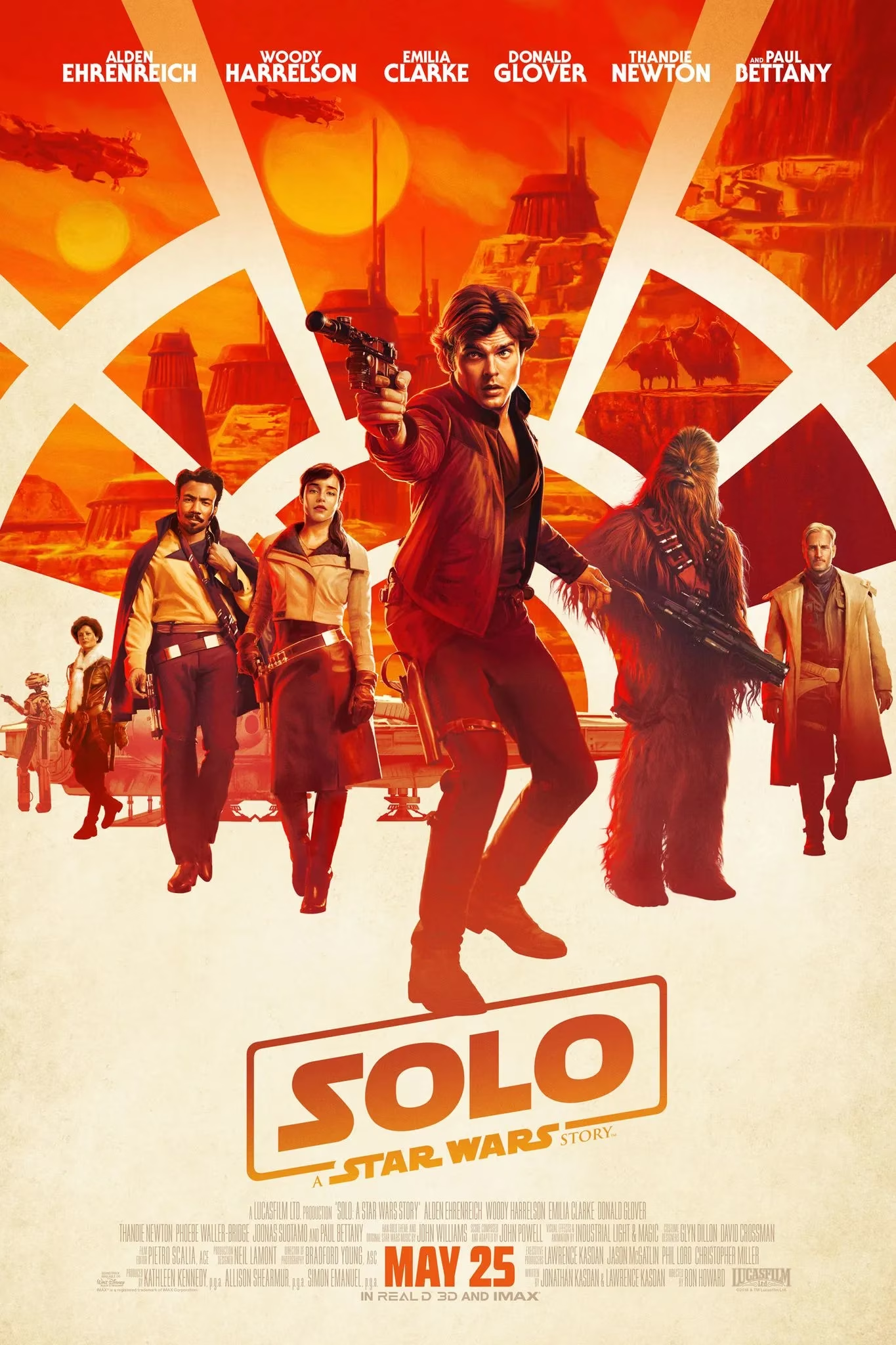
For decades, the Star Wars brand was synonymous with financial invincibility. Each cinematic release was not just a movie but a cultural event, a guaranteed tidal wave of box office revenue. Then came Solo. Its theatrical run was nothing short of a cataclysm. With a staggering budget estimated between $275-300 million, the film needed to earn at least double that to merely break even, a feat every single prior Star Wars film had achieved with ease. Yet, Solo sputtered to a halt at a meager $393 million worldwide. This wasn't just an underperformance; it was a historic, humiliating anomaly—the first and only Star Wars film to hemorrhage money in theaters. By comparison, even the critically panned Star Wars: The Clone Wars animated film had managed to triple its modest budget. The failure was so spectacular, so unexpected, it sent shockwaves through Hollywood.
The reasons for this debacle were a perfect storm of misfortune:
-
Release Date Catastrophe: Launching in May 2018, a mere two weeks after the universe-shattering Avengers: Infinity War, was commercial suicide. Solo was utterly eclipsed by the Marvel juggernaut.
-
Franchise Fatigue: The film arrived hot on the heels of the divisive Star Wars: The Last Jedi, leaving a significant portion of the fanbase disillusioned and hesitant.
-
Production Turmoil: The film's notorious director problems—with Phil Lord and Christopher Miller being replaced by Ron Howard mid-shoot—cast a long shadow of doubt over the project.
Critically, the film was far from a disaster, securing a respectable 69% on Rotten Tomatoes. Audiences who saw it often found a fun, swashbuckling adventure. But the external forces were too powerful, dooming Solo to its infamous status.
The Prequel Blueprint: A Path to Redemption
Star Wars has a history of rehabilitating its perceived failures. The most glorious precedent was the Prequel Trilogy (Episodes I-III). Universally lambasted upon release, they were accused of "ruining" the franchise. Yet, over time, through expansive world-building in shows like The Clone Wars and supplementary novels, these films were not just redeemed—they were canonized as beloved, foundational texts. Disney, having learned this lesson, applied the same meticulous, long-game strategy to Solo. The mission was clear: transform a box-office flop into narrative gold.
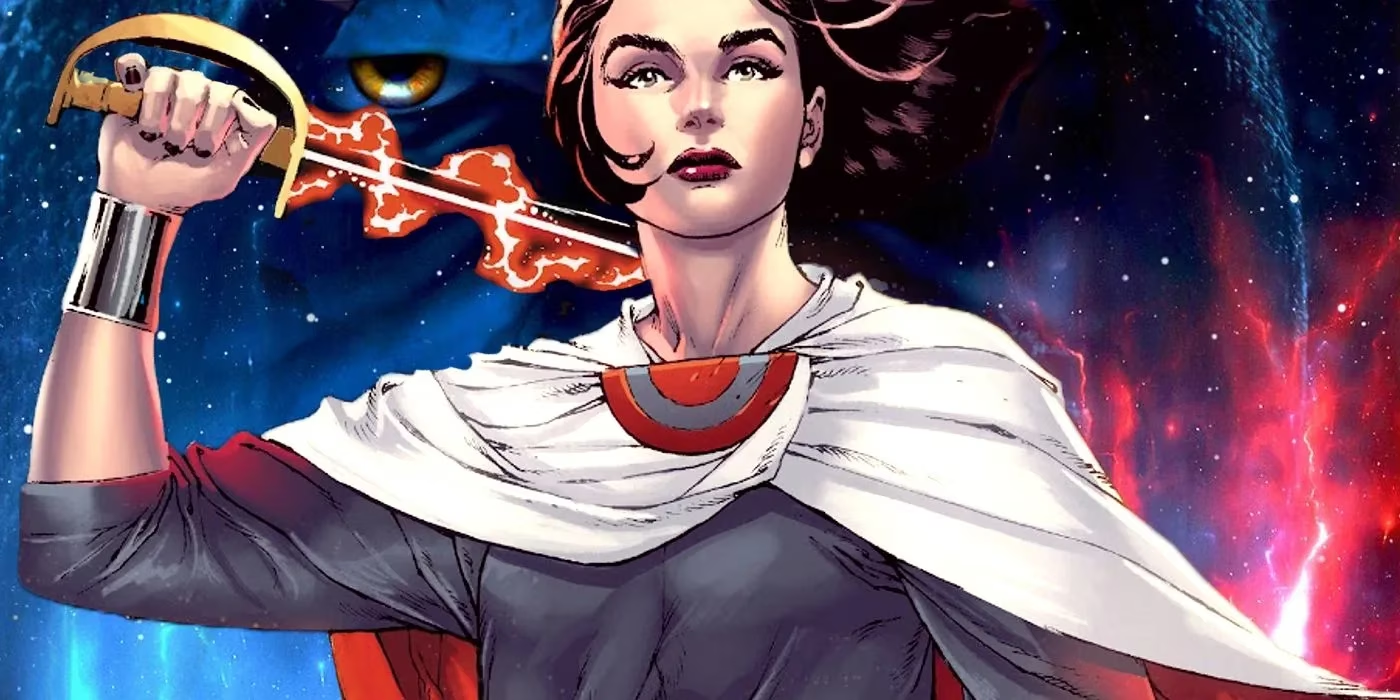
The Comic Book & Literary Renaissance
The first salvos in Solo's redemption came not from the screen, but from the page. Disney's Lucasfilm Publishing unleashed a torrent of comics and novels that dove deep into the film's most compelling elements:
| Medium | Key Titles | Impact on Solo's Legacy |
|---|---|---|
| Comics | War of the Bounty Hunters, Crimson Reign, Beckett | Expanded the epic saga of Qi'ra and Crimson Dawn, making them central to the galactic underworld. Gave depth to supporting characters like Tobias Beckett. |
| Novels | Most Wanted (prequel), Smuggler's Guide | Fleshed out Han Solo's early years and the intricate rules of the criminal galaxy, retroactively enriching the film's context. |
This literary expansion served a dual purpose: it satisfied fans hungry for more of the film's gritty, underworld vibe, and it wove Solo's characters and events firmly into the essential tapestry of Star Wars canon. Qi'ra, in particular, evolved from a supporting character into one of the most powerful and intriguing figures in the post-Empire landscape.
The Ultimate Vindication: Inspiring Star Wars Outlaws
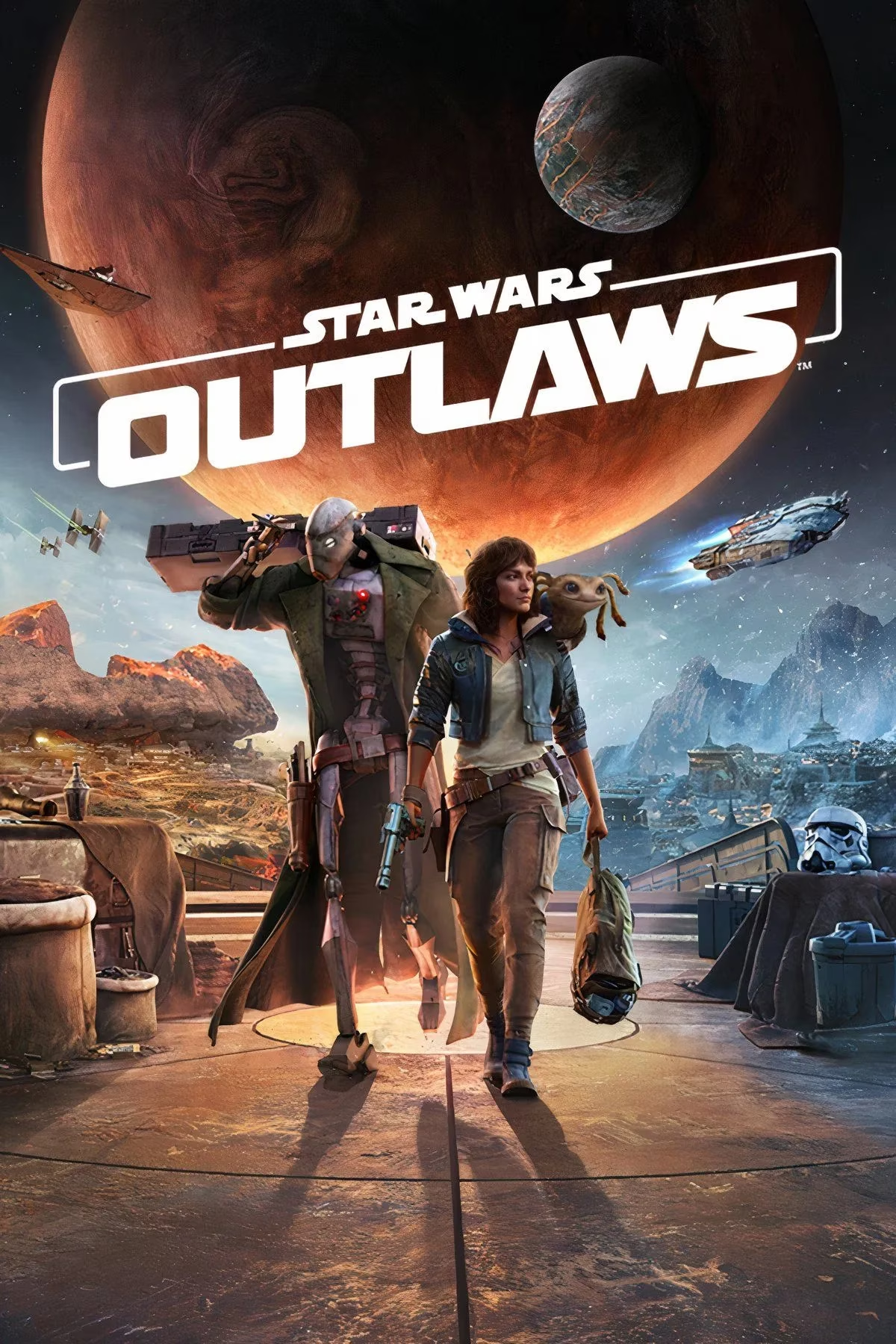
The masterstroke in Solo's redemption arc arrived with the seismic release of Star Wars Outlaws in 2024. This groundbreaking open-world video game is, in essence, the spiritual successor and ultimate validation of everything Solo attempted. The connections are not subtle; they are celebratory!
-
Core Concept: The game fully embraces the film's premise, letting players live as Kay Vess, a scoundrel navigating the treacherous criminal syndicates during the Empire's reign. This is the unfiltered, interactive version of Han Solo's smuggler life that fans craved.
-
Direct Character Integration: In a move that sent fans into a frenzy, Qi'ra returns as a major character! As the leader of the Crimson Dawn crime syndicate, she is a pivotal force in the game's narrative. Her inclusion is a powerful, explicit signal that Solo's story is vital, ongoing, and respected.
-
World-Building: The grimy ports, shady deals, and high-stakes heists that Solo introduced are now a fully explorable universe in Outlaws.
The game's critical and commercial success (boasting strong reviews and robust sales into 2026) has retroactively sanctified Solo. It proved the film wasn't a failure of idea, but of timing and circumstance. Outlaws demonstrated there was a massive, hungry audience for this exact corner of the Star Wars galaxy.
The New Legacy: A Foundational Text
As of 2026, the narrative has completely flipped. Solo: A Star Wars Story is now hailed not as a failure, but as a pioneering, foundational text. It is recognized as:
-
The Gateway to the Underworld: The film that first successfully brought the gritty, syndicate-run underbelly of the galaxy to the big screen.
-
The Origin of Modern Scoundrels: It recontextualized Han Solo's charm into a hard-earned survival skill, setting the template for characters like Kay Vess.
-
A Testament to Long-Term Storytelling: Its journey is the ultimate case study in how a rich expanded universe can resurrect and elevate a cinematic story.
The film that was once a box office pariah now stands tall. Its characters are pivotal, its aesthetic defines a whole subgenre of Star Wars games and books, and its spirit of adventure is more alive than ever. The redemption is complete. Solo didn't just get a second chance; it forged a new destiny, proving that in a galaxy far, far away, no story is ever truly over. Its legacy is now secured, not in box office receipts, but in the enduring, expanding heart of the saga itself.
Data referenced from Game Developer (Gamasutra) helps frame why Solo: A Star Wars Story could evolve from a box-office stumble into a long-tail “worldbuilding asset” for the franchise: when a setting and tone (the syndicate underworld, heists, and scoundrel fantasy) are robust enough to be extended across media, later tie-ins like comics and an open-world game can effectively revalidate the original creative premise by turning it into repeatable, player-driven systems—exactly the kind of transmedia feedback loop that Star Wars Outlaws capitalizes on.