The Unnecessary Stealth Obsession in Modern RPGs: Why Star Wars Outlaws Should Avoid This Tired Trope
Star Wars Outlaws and role-playing games suffer from forced, clunky stealth mechanics, diminishing immersive gameplay and player enjoyment.
It's 2026, and yet, the gaming industry still hasn't learned its lesson. Why are major role-playing games so obsessed with forcing clunky, half-baked stealth sections on players? 🤔 From sprawling fantasy epics to futuristic space operas, it seems like every AAA RPG developer feels compelled to include mandatory sneaking sequences—even when the mechanics are clearly an afterthought. The upcoming Star Wars Outlaws, despite its promising premise of moving away from the Skywalker saga, appears to be falling into this same tired trap. Haven't we suffered enough through enemies spotting us through walls and awkward crouch-walking animations?
The Star Wars Outlaws Dilemma: Great Promise, Questionable Execution
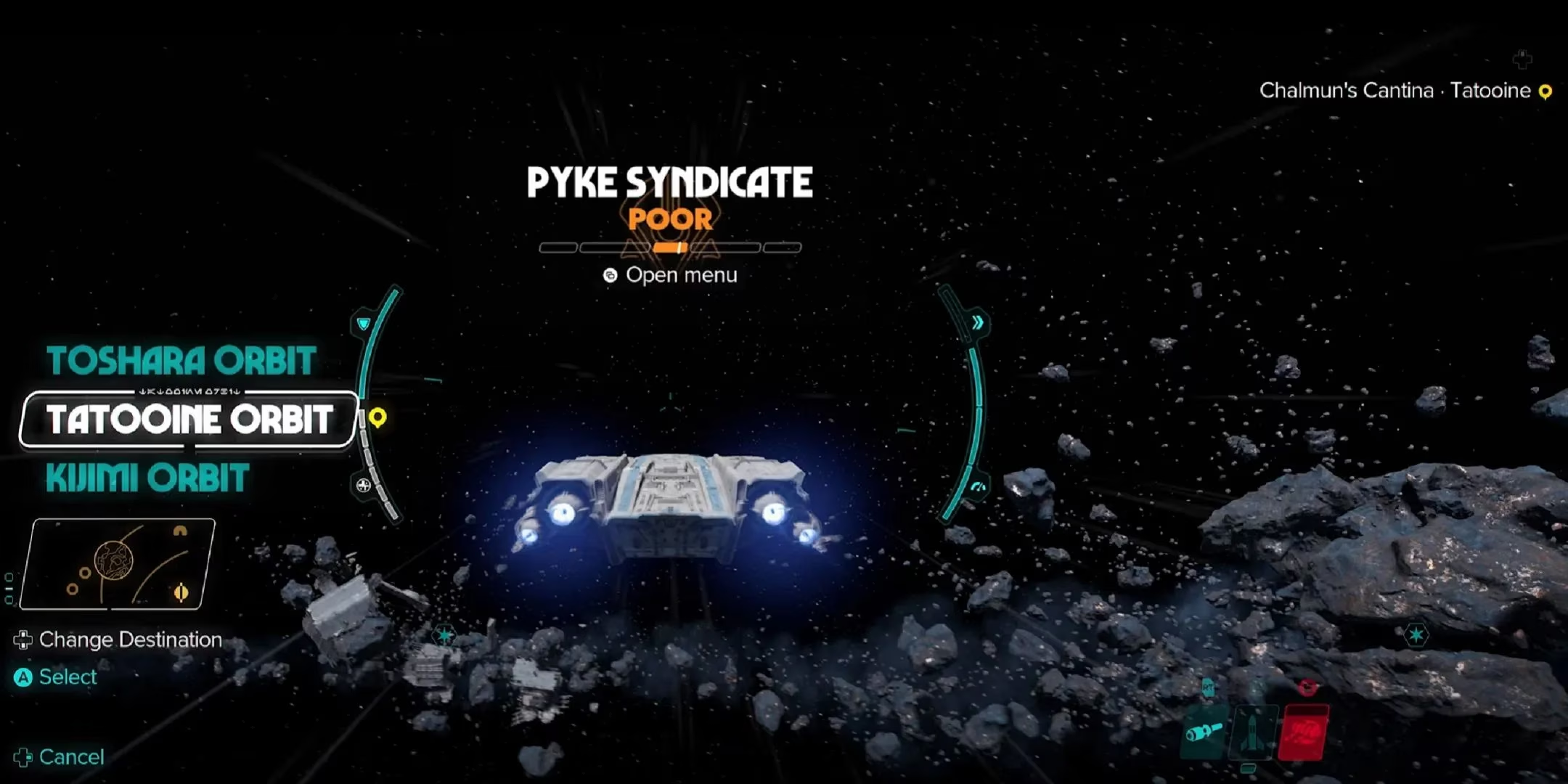
When Ubisoft unveiled Star Wars Outlaws back in 2024, there was genuine excitement about a fresh take on the galaxy far, far away. A story removed from the endless Jedi-Sith conflicts? Focusing on the criminal underworld? Sign us up! But that enthusiasm quickly dimmed when gameplay reveals showed... well, let's be honest: space travel that looked about as exciting as watching paint dry in zero gravity. 😴 How did we regress from the seamless dimensional rifts of Ratchet & Clank: Rift Apart to multiple loading screens for basic fast travel? The planetary exploration showed promise with dialogue choices and karma systems reminiscent of BioWare classics, but then came the inevitable: mandatory stealth sections.
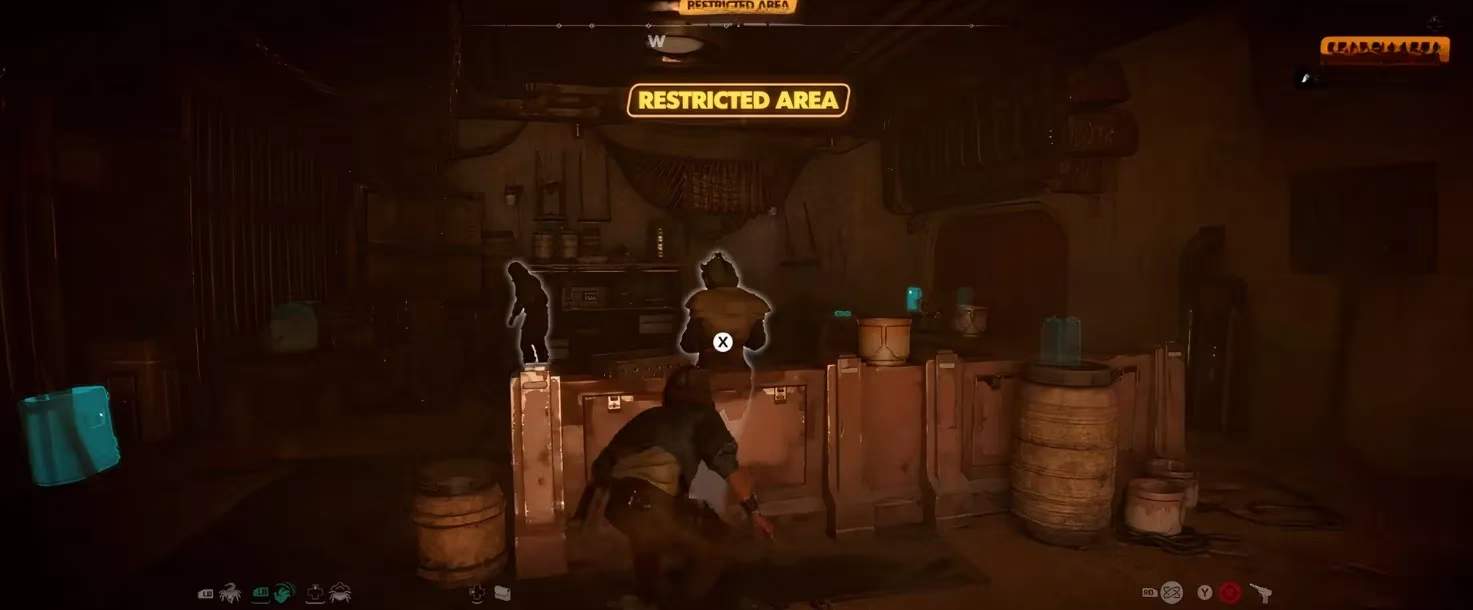
Protagonist Kay Vess was shown doing the standard stealth dance we've seen a thousand times before:
-
Jumping between waist-high cover (because apparently future civilizations never invent full-height walls)
-
Using her pet to distract guards (cute, but mechanically shallow)
-
Crouch-walking with exaggerated tiptoe animations
-
Only drawing weapons as a last resort
It's stealth gameplay by numbers, checklist design at its most transparent. The game reportedly revolves around heists, which conceptually could justify sneaking—but only if the mechanics are actually robust and thoughtfully implemented.
The Fundamental Problem: Half-Baked Mechanics in Non-Stealth Games
Let's be clear: stealth games are fantastic when done right. Who isn't excited for Metal Gear Solid Delta: Snake Eater's complete stealth focus in 2026? Or hoping Assassin's Creed Shadows returns to the series' stealth roots? The issue isn't stealth as a genre—it's stealth as a poorly integrated mechanic in games that aren't built around it.
Most RPGs treat stealth like they treat minigames: as another box to check on the feature list. 🎮 The typical implementation includes:
-
A crouch button (that often just makes you walk slower)
-
A visibility meter (usually represented by glowing eyes or exclamation marks)
-
Enemy patrol patterns (that are either painfully predictable or frustratingly random)
-
Instant-fail states (because nothing says "fun" like repeating the same section 15 times)
These sections are invariably the weakest parts of otherwise solid games. They're slow, they're tedious, and they highlight how little development time was actually dedicated to making the stealth feel good. Development teams spread themselves too thin trying to include "a little bit of everything," resulting in mechanics that are functional at best and frustrating at worst.
Does Star Wars Even Need Stealth? 🤨
Here's the million-credit question: Does the Star Wars universe actually lend itself to subtle stealth gameplay? Sure, there are iconic moments of infiltration—Han and Luke dressing as stormtroopers, Cassian Andor's various covert operations—but these are punctuated by blaster fire, explosions, and grand spectacle. Remember that epic AT-AT takedown on Hoth? Luke didn't sneak up and quietly disable it—he used a grappling hook and explosives! 💥
Star Wars at its core is about:
-
Spectacle over subtlety
-
Heroic action over careful planning
-
Emotional beats over tactical precision
When you think of memorable Star Wars gaming moments, do you remember quietly sneaking past guards? Or do you remember lightsaber duels, dogfights in X-wings, and unleashing Force powers? The franchise's DNA is fundamentally opposed to the slow, methodical pace that good stealth requires.
The Better Path: Focus and Intentional Design
What should developers do instead? The answer is surprisingly simple: focus on what your game does well and do it exceptionally. ✨
For games that aren't stealth-focused:
-
Replace mandatory stealth with optional approaches - Let players choose between stealth, combat, or social solutions
-
Invest those development resources elsewhere - Polish the combat, expand the dialogue systems, improve exploration
-
Learn from successful RPGs - Games like The Witcher 3 or Baldur's Gate 3 prove you don't need forced stealth to create tension or variety
For games that want to include stealth:
-
Commit fully - Make it a core pillar of gameplay, not a side feature
-
Develop robust mechanics - Proper sightlines, sound systems, environmental interactions
-
Integrate it meaningfully - Stealth should affect the narrative and world, not just be a gameplay obstacle
The gaming landscape in 2026 is more competitive than ever. Players have endless options, and their time is valuable. Why would anyone choose to play a game with mediocre stealth sections when there are dedicated stealth games doing it better? Or action-RPGs focusing entirely on what they do best?
Conclusion: A Plea for Purposeful Game Design
As we look toward Star Wars Outlaws' eventual release, here's hoping Ubisoft recognizes that sometimes, less is more. The game already has compelling elements: criminal underworld politics, space smuggling, moral choices that matter. These should be the focus, not generic stealth sequences that feel imported from a different game entirely.
Remember the underwater levels of gaming's past? 🐠 Everyone hated them because they were slow, frustrating, and often poorly implemented. They eventually disappeared because developers realized they were detracting from the core experience. Forced stealth sections in RPGs are the underwater levels of our era—dated, unnecessary, and universally disliked.
Let Star Wars Outlaws be the game that breaks this cycle. Let it embrace what makes Star Wars special: adventure, spectacle, and heart. Because in a galaxy with blasters, starships, and the Force, who has time to crouch-walk behind boxes? 🚀
The bottom line: Game developers in 2026 need to ask themselves one crucial question before adding any mechanic: "Does this make our game better, or are we just checking a box?" For forced stealth in most RPGs—especially Star Wars games—the answer is painfully clear.
The following breakdown is based on reporting from The Verge - Gaming, where industry commentary often frames “feature checklist” design as a consequence of blockbuster risk management—studios add stealth not because it’s essential, but because it signals variety for trailers and broad audiences. Viewed through that lens, the frustration with Star Wars Outlaws’ seemingly mandatory sneaking isn’t just about wonky AI or instant-fail alerts; it’s about a mismatch between the fantasy of bold Star Wars spectacle and a slower, mechanically unforgiving loop that can feel bolted on rather than purpose-built.