Ubisoft's Special Edition Strategies: Comparing Assassin's Creed Shadows and Star Wars Outlaws
Assassin's Creed Shadows and Star Wars Outlaws showcase Ubisoft's evolving special edition strategies, sparking debate over bonus content value.
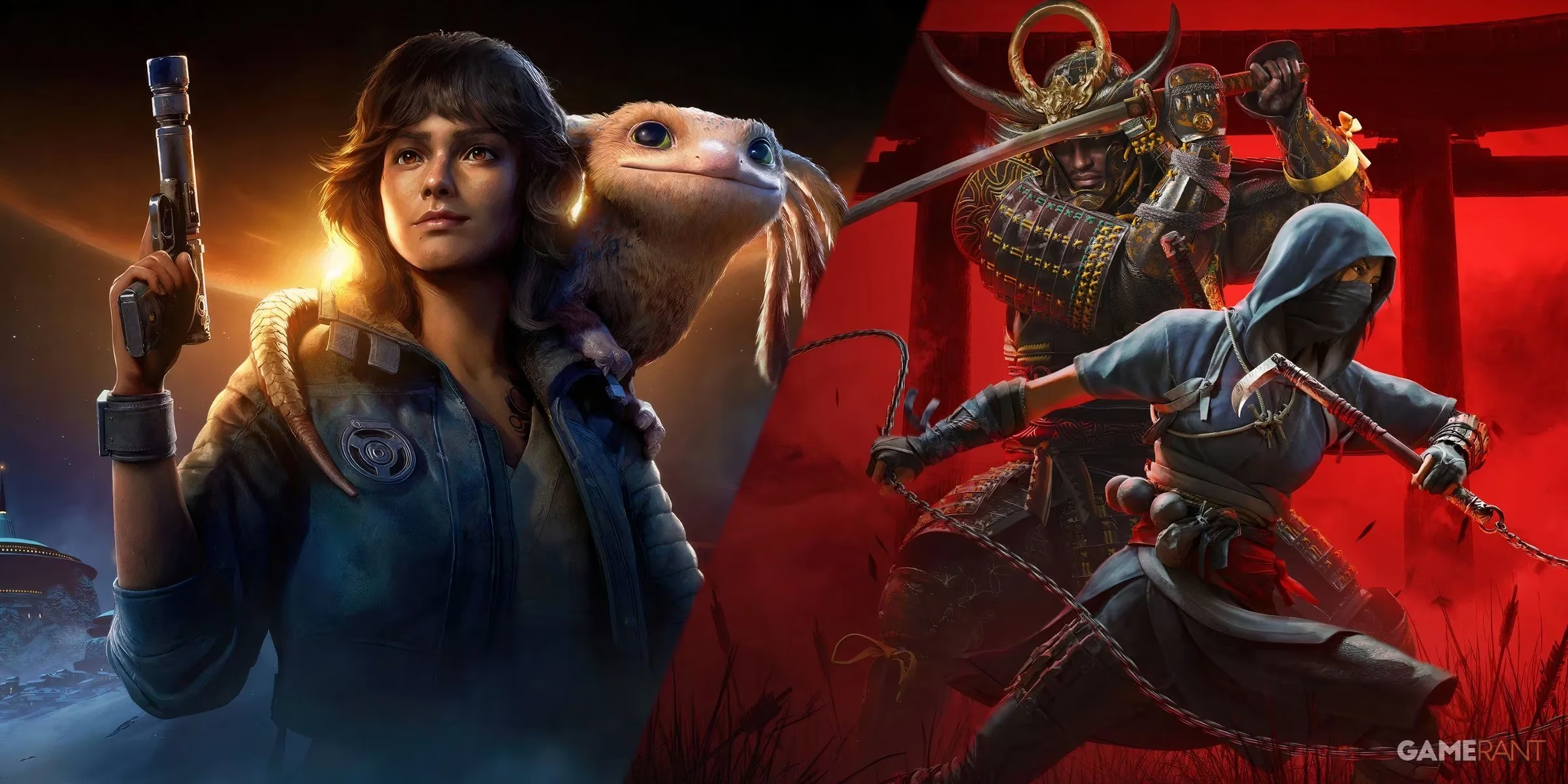
The gaming landscape in 2026 continues to evolve, but one thing remains constant: the debate around special editions and bonus content. Ubisoft, a veteran in the industry, has recently showcased two distinct approaches with their flagship titles—Assassin's Creed Shadows and Star Wars Outlaws. While both games feature similar special edition structures, the community's reception has been, well, a bit of a mixed bag, to say the least. Let's dive into how these two AAA titles handle their premium content and why one seems to have dodged the blaster fire that hit the other.
The Core Controversy: Locked Missions
Initially, Star Wars Outlaws faced some serious heat, no cap, when it was revealed that a bonus mission featuring the iconic Jabba the Hutt—dubbed "Jabba's Gambit"—was locked behind the Ultimate Edition's season pass. Many players jumped to the conclusion that this was the only way to interact with the beloved crime lord in the game. Ubisoft quickly clarified that wasn't the case, but the damage was done. The idea of paying extra for a story mission at launch left a sour taste for some fans, who felt they were being nickel-and-dimed for the "full" experience.
On the flip side, Assassin's Creed Shadows revealed a nearly identical model. Its Ultimate Edition also includes a season pass with two future story expansions and a bonus mission. However, the reaction has been noticeably more muted. Why the difference? It might boil down to presentation and perceived value.
The Pre-Order Play: A Key Distinction
Here's where the strategies diverge, and it's a real game-changer:
-
Assassin's Creed Shadows offers its exclusive mission, "Thrown to the Dogs," as a pre-order bonus. This means anyone who commits early gets a unique, story-driven quest (seemingly centered on the shinobi Naoe and a canine companion) without needing to spring for the priciest edition.
-
Star Wars Outlaws, conversely, offered cosmetic items as its pre-order incentive. The "Jabba's Gambit" mission is reserved for those who purchase the Gold or Ultimate editions for the season pass.
This difference is huge. By giving a tangible, narrative piece of content as a pre-order reward, Assassin's Creed Shadows frames the extra cost of the Ultimate Edition as an expansion of the experience, not a gatekeeper to it. Star Wars Outlaws, by putting a major mission behind the highest paywall, inadvertently sent the message that part of the core story was being held hostage.
Breaking Down the Editions: What You Actually Get
Let's look at the value proposition for each game's special editions. Both follow a familiar Ubisoft blueprint, but the devil is in the details.
| Edition | Assassin's Creed Shadows | Star Wars Outlaws |
|---|---|---|
| Pre-Order Bonus | "Thrown to the Dogs" Quest | Cosmetic Skins Bundle |
| Gold Edition | Base Game + Season Pass (2 DLCs, 1 Bonus Mission) | Base Game + Season Pass (2 DLCs, "Jabba's Gambit" Mission) |
| Ultimate Edition | Gold Edition + 3-Day Early Access + Ultimate Pack (skins, filter) | Gold Edition + 3-Day Early Access + Ultimate Pack (more skins, art book) |
The table shows the structures are almost carbon copies. The Ultimate Packs for both are full of the expected decorative fare—photo mode filters, weapon skins, outfit packs—which is pretty standard practice these days. The real meat is in the season pass, which promises substantial post-launch narrative expansions for both titles.
The Silver Lining: Quest-Based DLC vs. Cosmetic Flood
Despite the controversy, there's an argument to be made that Ubisoft's model here is actually... not the worst? Hear me out. In an era where live-service games and battle passes often prioritize cosmetic microtransactions above all else, having single-player, story-focused DLC is something of a blessing.
The season passes for both games promise new stories and missions. This is fundamentally different from selling a bundle of five recolored armor sets or a flashy emote. Players who invest in the Gold Edition are paying for more of the game they love—more narrative, more exploration, more character development. That's a value proposition that many dedicated fans are willing to support, especially compared to the alternative of a game getting no substantial post-launch support at all.
The Bottom Line: Perception is Everything
So, why did the community give Assassin's Creed Shadows a pass while side-eyeing Star Wars Outlaws? It's all about optics and communication.
-
Clarity from the Start: Assassin's Creed Shadows was clear that its bonus mission was a pre-order perk, making the Ultimate Edition feel like an upgrade, not a requirement.
-
The Nature of the Content: Locking a mission involving a franchise pillar like Jabba the Hutt feels more egregious than locking a mission about a new character (Naoe) and a dog, even if both are technically "bonus" content.
-
The Optional Argument: Both Ubisoft and proponents of the model rightly point out that all of this is optional. The base games for both Star Wars Outlaws and Assassin's Creed Shadows are promised to be complete, satisfying experiences. The special editions are for the superfans who want everything.
In the end, it's a delicate dance for publishers. Gamers are increasingly savvy and resistant to feeling like content is being carved out of the base game to be sold back to them. Ubisoft's 2026 strategy with these two titles shows that even with nearly identical business models, how you present the value and what you choose to highlight as an incentive can mean the difference between a mild grumble and a full-blown controversy on the HoloNet. As players, the power remains in our wallets—to support practices we find fair and to skip those we don't. After all, the choice to go for that Ultimate Edition or just enjoy the standard ride is, ultimately, ours.