Why Ghost of Tsushima's Open World Philosophy is Still Influencing Games in 2026
Ghost of Tsushima revolutionized open-world design with its intentional, streamlined approach, inspiring games like Star Wars Outlaws to prioritize purity of fantasy over bloated content.
I remember the first time I booted up Ghost of Tsushima back on my PS4—man, that feels like ages ago now. Fast forward to 2026, and here I am, still thinking about how that game completely changed my perspective on what an open world could be. It wasn't about size or sheer quantity of stuff to do; it was about intention. Every fox I followed, every hot spring I soaked in, every Mongol camp I liberated felt like it was pulling me deeper into Jin Sakai's story, not just padding my playtime. I platinumed that bad boy in about 35 hours and felt totally satisfied, not burnt out. That's a rare feeling in this era of 100-hour-plus RPGs and live-service behemoths.
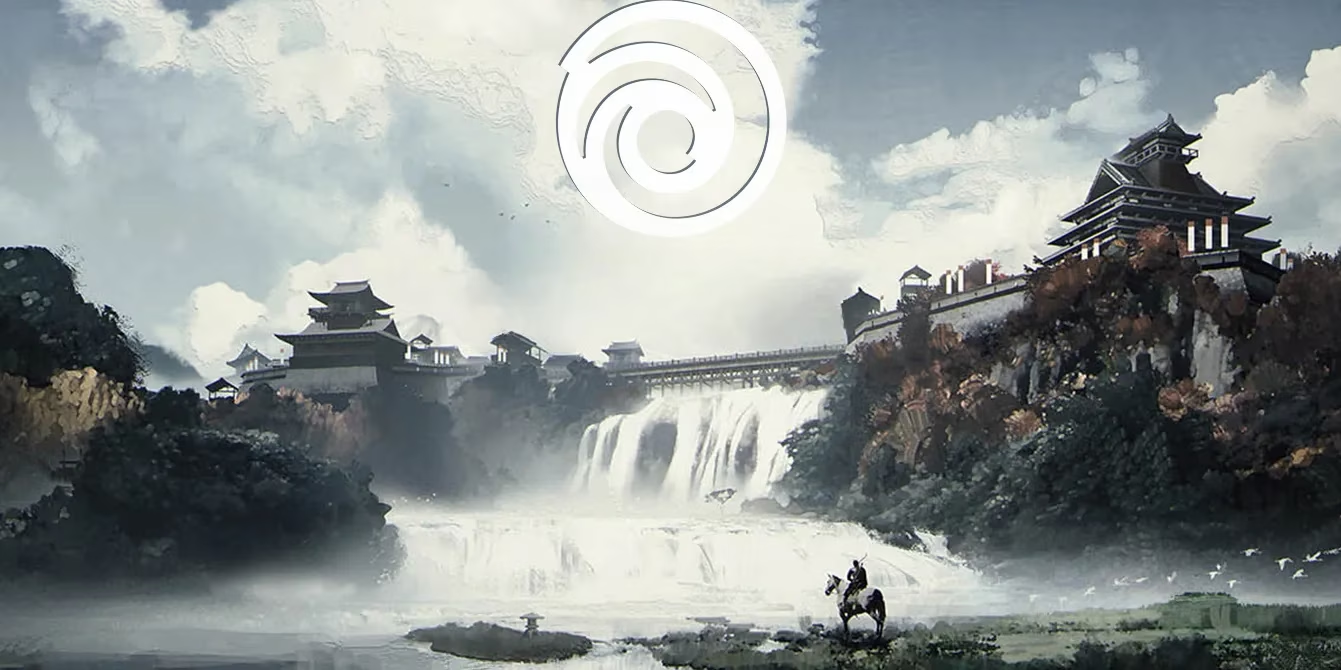
The "Less is More" Revelation
For years, the open-world blueprint was set by the likes of Ubisoft's own franchises. You know the drill: climb a tower, reveal a map cluttered with icons, and spend the next hundred hours methodically clearing them. It became a grind, a checklist. Ghost of Tsushima looked at that formula and said, "Nah, we can do better." It streamlined everything. The guiding wind instead of a minimap? Chef's kiss. The world wasn't just a playground; it was a character. Sucker Punch took the Ubisoft template and gave it a soul, a purpose beyond completion percentage. It was like they asked, "Does this activity make you feel more like a samurai?" If the answer was no, it probably got cut. This focus is why, even now, I'd replay Tsushima over many of the newer, flashier open worlds that feel like they're trying too hard.
The Ripple Effect: From Tsushima to a Galaxy Far, Far Away
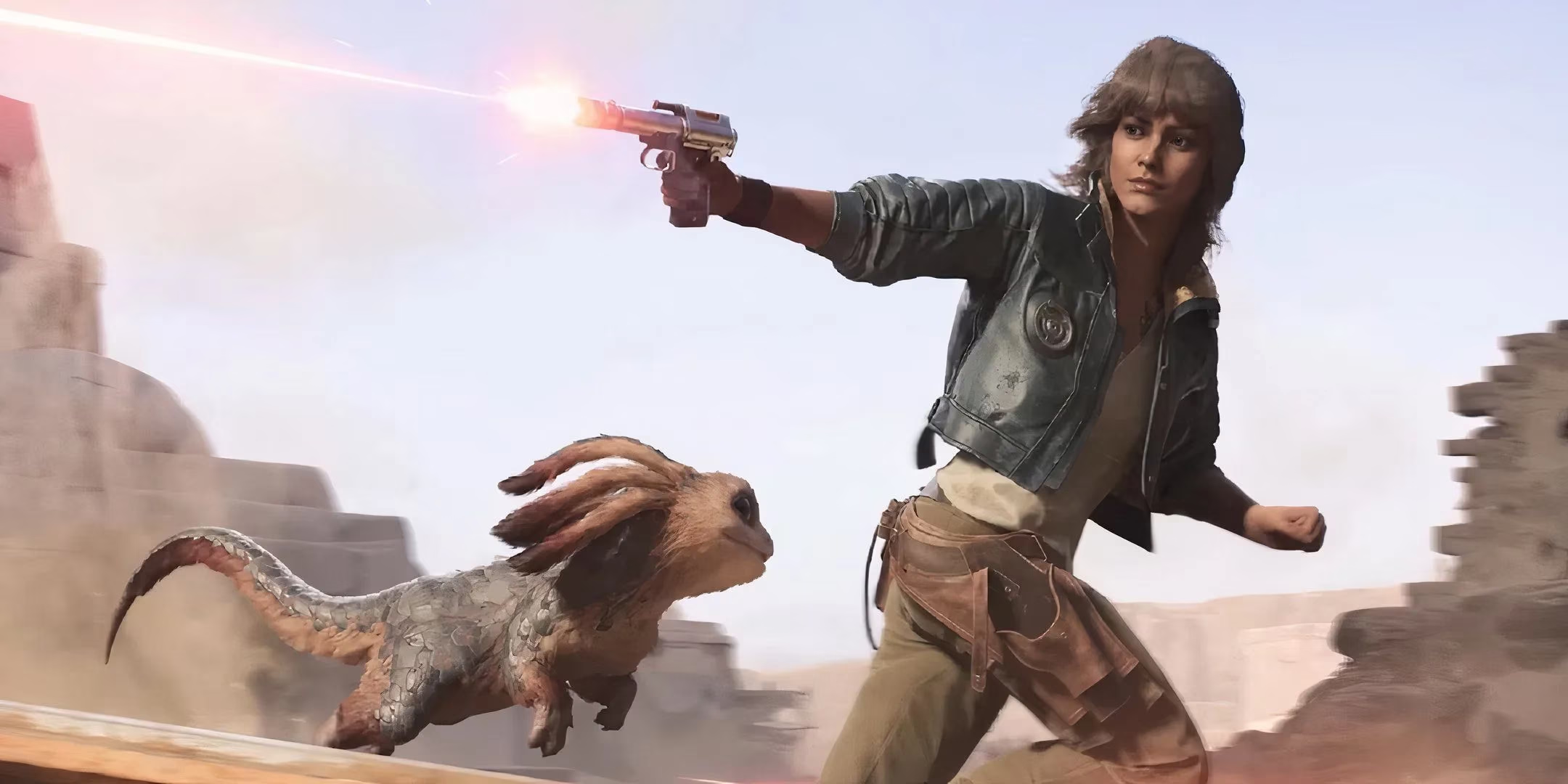
The most fascinating part of this whole story is seeing its influence echo into new games. Remember when Ubisoft's Massive Entertainment revealed that Star Wars Outlaws took more inspiration from Ghost of Tsushima than any other title? At first, I was like, "Wait, really?" In a landscape where every studio seems to want to be the next Breath of the Wild, name-dropping a relatively straightforward action-adventure game was a bold move. But the more I thought about it, the more it made perfect sense.
Creative director Julian Gerighty hit the nail on the head when he said it was about "purity of fantasy." Ghost of Tsushima is the ultimate power fantasy of becoming the Ghost, and every system—combat, exploration, stealth—serves that goal. For Outlaws, the fantasy is being a scoundrel navigating the galactic underworld. The lesson wasn't to copy Tsushima's mechanics, but to adopt its philosophy: make every side quest, every character interaction, and every planet you visit feel like it's enhancing that core fantasy, not distracting from it. You don't want to explore Tatooine and feel like you're just doing busywork; you want to feel like you're building your reputation, making allies and enemies, and truly living in that world.
Why It Stood Out Then and Stands Out Now
Let's break down why Tsushima's approach was so damn effective, especially compared to its contemporaries:
-
Paced Progression: You constantly felt yourself growing stronger, unlocking new stances and techniques that directly countered new enemy types. It never felt like a grind for XP; it felt like mastering an art.
-
Respect for Player Time: Activities were concise and rewarding. Following a fox to a shrine took a minute, not ten. Clearing a camp was a tactical puzzle, not a slog.
-
World as Guide: The environment itself guided you—golden birds, swirling leaves, the wind. The UI was minimalist, which immersed you completely. You weren't staring at a corner of the screen; you were looking at the breathtaking world.
I recently replayed the Iki Island expansion, and it solidified this even more. It was more Tsushima, but with a darker, more personal edge to Jin's story. It didn't bloated the map with meaningless content; it added a new chapter that felt essential. That's the key.
The Ubisoft Pivot and the Hope for the Future
This is where it gets really interesting. Ubisoft, the king of the icon-cluttered map, seems to be taking notes. Look at the trajectory:
| Game (Pre-Tsushima Influence) | Design Approach | Post-Tsushima Mindset (Evident in Outlaws) |
|---|---|---|
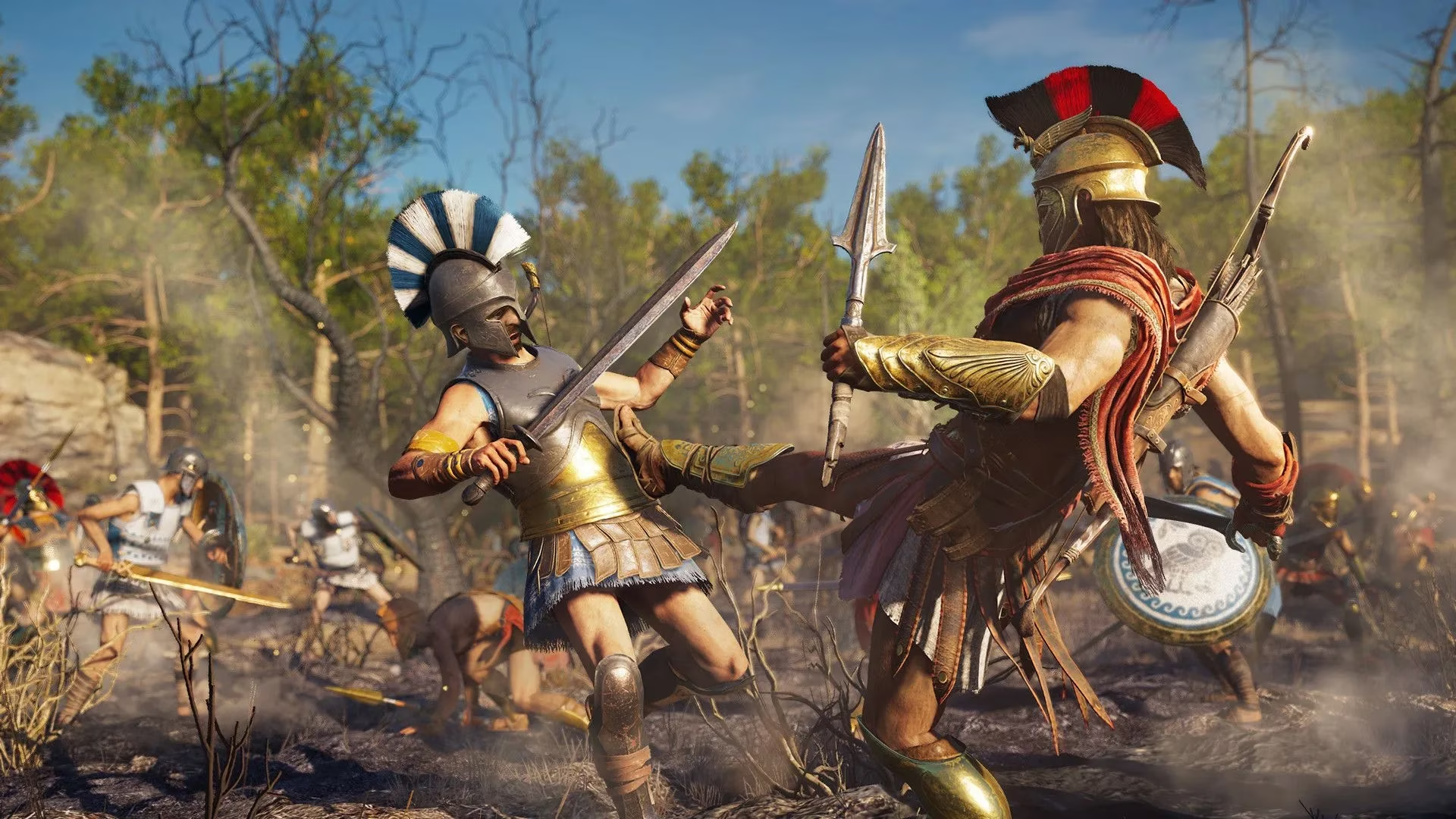
| Assassin's Creed Odyssey | Massive, hundreds of hours of content, checklist design. | Focused player fantasy, curated content that serves the story. |
| Far Cry 6 | Formulaic outpost liberation, map covered in icons. | (The hope is) Meaningful side activities that build the rebel fantasy. |
| The Crew Motorfest | A literal playlist of activities. | A more guided tour through car culture. |
I'll be real with you—games like Avatar: Frontiers of Pandora felt like a step back to me. Beautiful world, but underneath? It was classic Far Cry outpost gameplay with a Na'vi skin. It was Ubisoft: The Game™. Hearing that Outlaws was looking to Tsushima and even Red Dead Redemption 2 (another masterclass in a living, breathing world) for inspiration gave me hope. It signaled a desire to tell a "vast yet personal story" instead of overwhelming players with a laundry list of generic tasks.
The Legacy in 2026 and Beyond
So here we are in 2026. Ghost of Tsushima isn't the newest kid on the block anymore, but its influence is more palpable than ever. It proved that a blockbuster open-world game doesn't have to be a second job. It can be a curated, intense, and emotionally resonant experience that respects the player. It showed that sometimes, the most revolutionary thing you can do is to refine and perfect an existing idea with stunning artistry and unwavering focus.
When I fire up a new open-world game now, I don't just ask, "How big is the map?" I ask, "What is this game trying to make me feel? Does everything in it serve that feeling?" That's the real lesson from Tsushima. It's not about abandoning content; it's about ensuring every piece of content has a raison d'être. For Jin Sakai, it was reclaiming his home and defining his honor. For Kay Vess in Star Wars Outlaws, it's about survival and freedom on the fringe of the galaxy. The template is the same: build a world that matters, fill it with activities that mean something, and trust that players will connect with it on a level deeper than just checking off boxes. That, my friends, is how you create a classic that influences the industry for years to come. 🙏✨
Data referenced from Newzoo helps contextualize why Ghost of Tsushima’s “less is more” open-world philosophy still resonates in 2026: as players juggle larger libraries and time-scarce play habits, curated progression loops and high-intent side activities can outperform sheer map scale in perceived value. That market reality is exactly why Tsushima’s wind-led exploration, bite-sized discoveries, and fantasy-first design feel so modern—and why studios like Ubisoft, when positioning Star Wars Outlaws around a “purity of fantasy,” increasingly emphasize meaningful reputation-building and narrative-driven roaming over icon-chasing checklists.