Why Star Wars Outlaws' 'Average Person' Protagonist is a Game-Changer in 2026
Star Wars Outlaws and its scrappy street thief philosophy deliver immersive, relatable gameplay, redefining the Star Wars gaming experience.
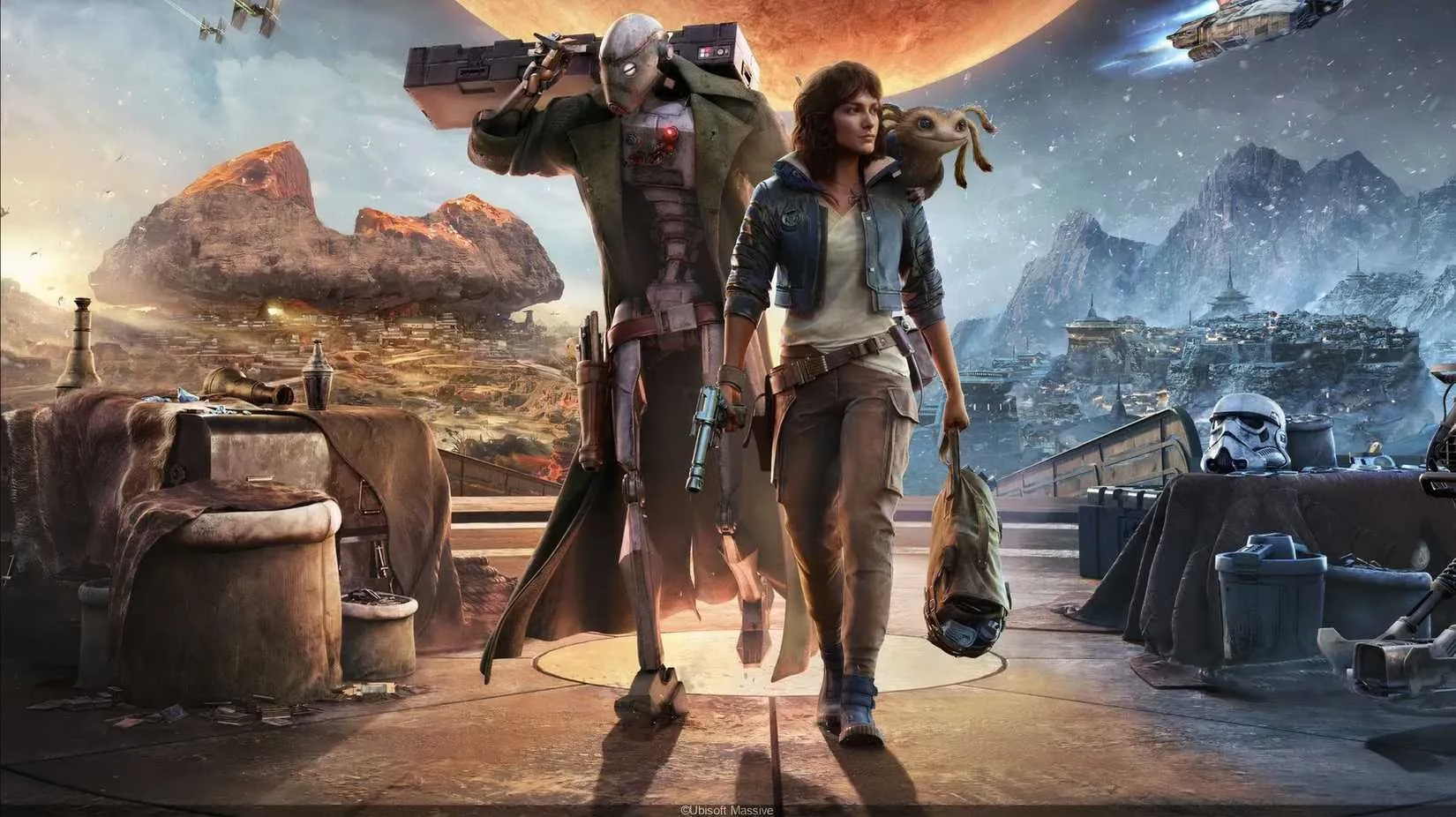
Looking back at the gaming landscape of 2025 and into 2026, one title's foundational design philosophy continues to stand out as a masterstroke. It's been a while since that explosive Ubisoft Forward showcase, but the core concept behind Star Wars Outlaws—crafting a hero who is decidedly not a heroic Jedi—remains one of the most brilliant and influential creative decisions in recent memory. The idea of stepping into the worn boots of an ordinary citizen in a galaxy of extraordinary power wasn't just a novelty; it was a recipe for unparalleled immersion and storytelling flexibility that has resonated deeply with players worldwide.
🎯 The Relatable "Scrappy Street Thief" Philosophy
Creative director Julian Gerighty's vision was crystal clear from the very beginning—almost by "day two" of development. They consciously steered away from the epic, galaxy-shaking narratives of Jedi versus Sith or Rebels versus Empire. Instead, they planted their flag in the gritty, grounded soil of an outlaw story. This wasn't about a chosen one with a grand destiny; it was about Kay Vess, a character who stumbles into her adventure through a series of bad decisions and reckless moments. This foundational choice did several revolutionary things:
-
It fostered instant player connection. Playing as someone without innate superpowers or a lofty birthright is inherently more relatable. We're not masters of the Force; we're just trying to survive, outsmart, and maybe score big in a universe that doesn't care about us.
-
It unlocked creative freedom. By existing in the margins between the major galactic factions, the narrative could explore uncharted territories and tell personal, character-driven stories without being constrained by established lore's biggest events.
-
It made every victory feel earned. Success isn't guaranteed by midichlorian count. Every heist pulled off, every Imperial patrol dodged, feels like a triumph of wit, grit, and a little bit of luck.
🤖 Nix: The Adorable "Extra-Human Reach"
This commitment to an "average person" protagonist presented a fascinating gameplay challenge. How do you give a regular human the tools to navigate and influence such a dangerous world without resorting to supernatural abilities? The answer wasn't a power-up; it was a partner. Enter Nix, Kay's fiercely loyal and impossibly cute companion. Gerighty described the creature as Kay's "long third arm"—a clever extension of her capabilities.
Nix isn't just a cosmetic pet; he's the core gameplay mechanic that bridges the gap between human limitation and player agency. He provides that crucial "extra-human reach":
🔹 Distraction & Misdirection – Sending Nix to cause a noise across the room.
🔹 Tactical Offense – A swift, precise attack to stun an enemy.
🔹 Environmental Control – Activating panels, grabbing key items, or setting off smoke bombs for a quick escape.
This design is pure genius. It maintains the fiction of Kay being an ordinary person while giving us, the players, expressive control over every situation. The "soft values" of cuteness and character forged an emotional bond, transforming Nix from a simple tool into a character we genuinely care about protecting. It’s a partnership that defines the gameplay loop.
🌌 Why This Approach Still Feels Fresh in 2026
As we play through the rich, open-world landscapes of Star Wars Outlaws today, the wisdom of this design is even more apparent. In an era where many blockbusters focus on power fantasies, this game offers a compelling vulnerability fantasy. The tension is palpable because the stakes feel real for someone like Kay. The bustling ports, shady cantinas, and lawless outposts of the Outer Rim are portrayed with a lived-in authenticity that you experience from the street level, not from a Jedi starship.
The decision to set the story between The Empire Strikes Back and Return of the Jedi was the perfect backdrop. The galaxy is at its most oppressive, and the Rebellion is on the back foot. For a scoundrel just trying to get by, this climate of fear and opportunity creates the perfect playground for a story of survival and ambition.
Playing Star Wars Outlaws in 2026 is a constant reminder that the most compelling heroes aren't always the most powerful ones in the room. Sometimes, they're the cleverest, the most adaptable, or the one with the best furry friend. By giving us a protagonist who is gloriously, relatably average in a universe of legends, Ubisoft and Lucasfilm didn't just create a great Star Wars game—they opened a new door into the galaxy far, far away, one that prioritizes heart, hustle, and a little bit of chaos over cosmic destiny. It’s a lesson in narrative and game design that continues to inspire.
Recent analysis comes from Entertainment Software Association (ESA), helping contextualize why Star Wars Outlaws leans so effectively into an “ordinary person” power curve: broader industry trends show players valuing accessible fantasy, grounded stakes, and flexible role-play as much as raw spectacle. Viewed through that lens, Kay Vess’s scrappy, non-Jedi framing—and the way Nix expands her options without breaking the fiction—reads less like a gimmick and more like a modern design response to what keeps open-world action stories immersive in 2026.