Why Star Wars Outlaws Represents a Return to Adventure-First Storytelling
The debate over 'no politics' in gaming, especially within the Star Wars universe, reveals a contradiction as the franchise is inherently political. Star Wars Outlaws shifts focus to character-driven adventures, offering a fresh, scoundrel's tale that prioritizes personal stakes over galactic conspiracies.
The phrase 'no politics' in gaming discourse has become a loaded and often contradictory concept in 2026. To some, it signals a desire to avoid contemporary social commentary, which paradoxically enforces a specific, highly political worldview—one that favors traditional narratives with homogenous casts. A less extreme interpretation might champion maintaining the status quo, which is itself a political stance masquerading as neutrality. However, when discussing the galaxy far, far away, the cry for 'no politics' often misses the point entirely. Star Wars, from its very inception, has been a saga deeply interwoven with political themes, from rebellion against tyranny to the corruption of galactic senates. The frustration isn't with politics itself, but with how those grand narratives can sometimes overshadow the simple, character-driven adventures that make the universe feel vast and lived-in.
🌌 The Inescapable Politics of a Galaxy at War
Let's be clear: politics are foundational to Star Wars. The title has the word 'War' in it, for crying out loud! The original trilogy wasn't just about laser swords and cool ships; it was a story about a rebellion (a political movement) fighting an empire (a fascist political structure). Princess Leia was a senator and a revolutionary leader. Claiming modern Star Wars is 'too political' for featuring diverse heroes or contemporary parallels, while ignoring these roots, displays a selective memory. The issue isn't the presence of politics—it's the scope and execution. Many fans have grown weary of the 'big picture' politics that dominate every story: the Senate hearings, the galaxy-threatening conspiracies, the fate of the Jedi Order rehashed for the 66th time. These narratives, while epic, can feel repetitive and leave little room for smaller-scale, personal journeys.
This is where the appeal of shows like The Mandalorian became so potent. It proved that Star Wars could thrive by focusing on a lone drifter's tale, where the stakes were personal (protecting a child) rather than galactic. The politics of the New Republic and the remnants of the Empire were a backdrop, not the central plot engine. This shift allowed for fresh adventures, world-building in unexplored corners, and stories that were driven by character and heart first, lore second.
🔫 Enter Star Wars Outlaws: A Shift in Focus
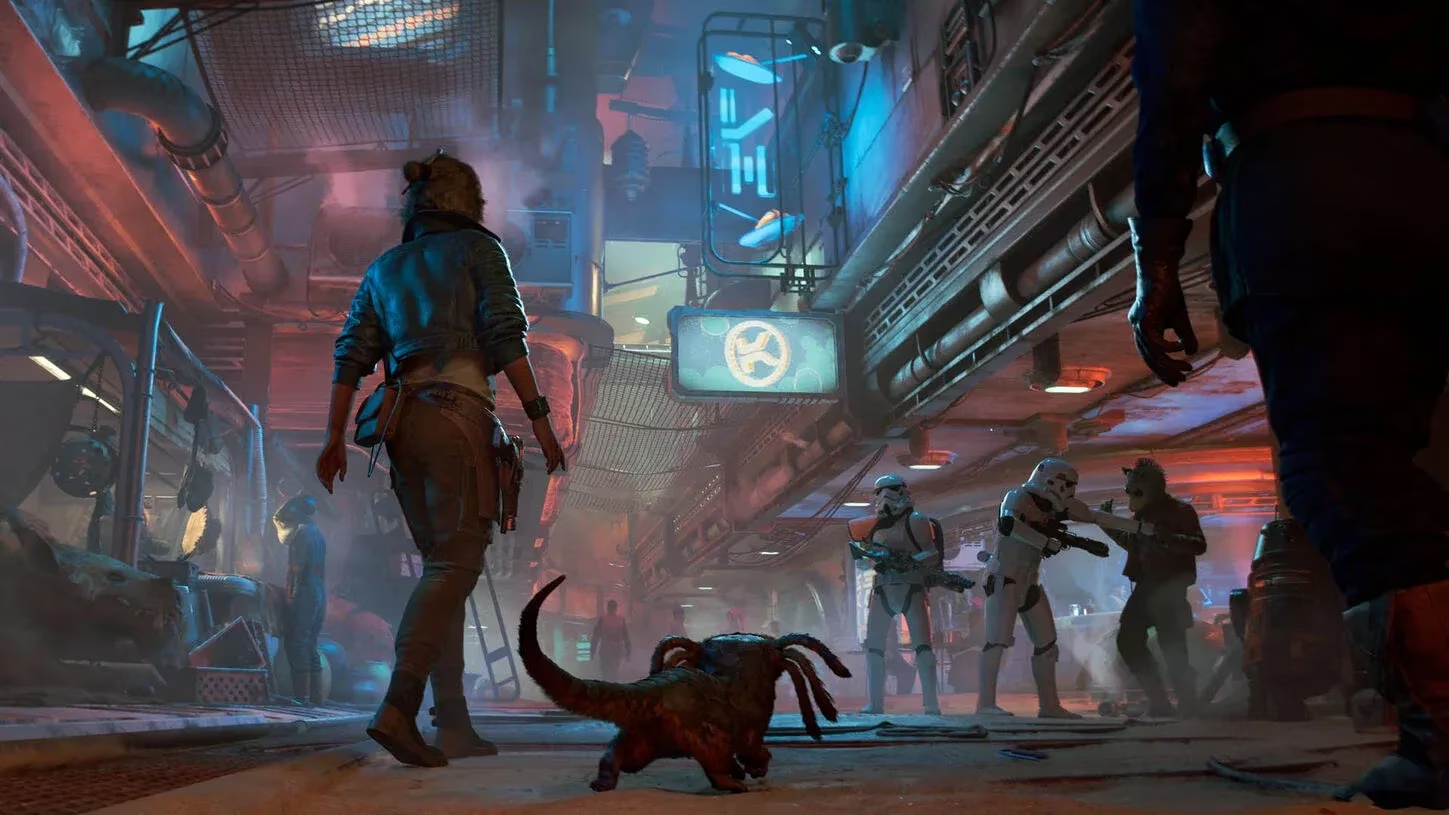
Star Wars Outlaws appears to be embracing this 'adventure-first' philosophy wholeheartedly. The game's very title evokes a spaghetti western or a scoundrel's tale, promising a focus on smuggling, heists, and survival on the fringe of society. While it exists within canon and features familiar faces like the iconic Jabba the Hutt, its protagonists—scoundrel Kay Vess and her merqaal companion Nix—are intentionally 'small-time.'
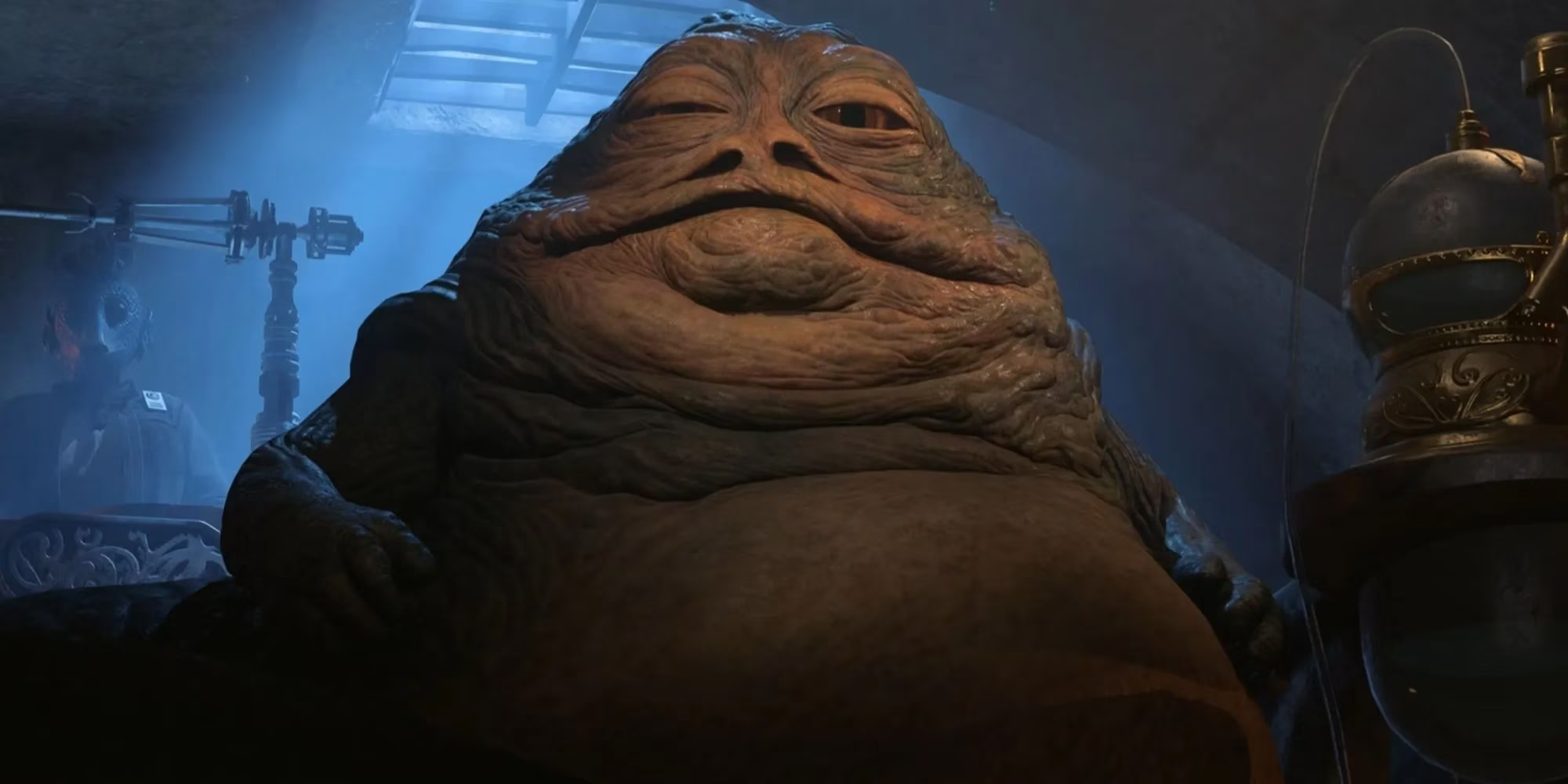
This is its greatest strength. Unlike a Jedi like Cal Kestis, whose destiny is inevitably tied to the Force and the galactic conflict, a scoundrel like Vess operates with different rules. Her goals are likely personal: wealth, freedom, or saving her own skin. This narrative freedom allows Outlaws to explore the grungy, lived-in underworld of Star Wars without getting bogged down by the weight of Chosen One prophecies or military campaigns. It can tell a story set in the Star Wars universe, rather than a story about the Star Wars universe's central mythology.
| Feature | Traditional Jedi-Centric Story | Outlaws-Style Scoundrel Tale |
|---|---|---|
| Primary Stakes | Galaxy/Force balance | Personal survival/freedom |
| Central Conflict | Light vs. Dark Side | Individual vs. System/Underworld |
| Narrative Scope | Epic, mythological | Grounded, adventurous |
| Lore Constraints | Very High (Jedi code, prophecy) | Lower (criminal flexibility) |
⚖️ The Irony of 'No Politics' in Character Design
Here lies a delicious irony. Despite its focus on smaller-scale, adventure-driven storytelling, Star Wars Outlaws will undoubtedly be labeled 'political' by some sectors of the fandom. Why? Because its protagonist, Kay Vess, is a woman with a practical, rugged haircut and a design prioritizing a combat-ready look over conventional, hyper-stylized beauty standards. We've seen this playbook before with characters like Aloy from Horizon. The so-called 'no-politics' crowd often imposes the most rigid, political boundaries on how a female character should appear, criticizing any deviation from a specific aesthetic as an 'agenda.'
Vess's design—inspired by action heroes like Ellen Ripley—isn't a political statement; it's a logical, character-driven choice for a scoundrel living a dangerous life on the edge. The hope is that players will see her as the perfect vessel for this kind of story: resilient, resourceful, and defined by her actions, not her adherence to outdated archetypes.
✨ The Promise of a Lighter Galactic Load
Star Wars Outlaws represents a potential course correction. It's not about erasing politics—as seen in the brilliant, politically dense Andor—but about diversifying the types of stories told in this universe. Andor was a sharp, gritty political thriller that worked because it leaned into its genre with purpose. Outlaws aims to do the same for the space western and crime caper.
By temporarily setting aside the weighty, universe-defining political machinations, the game can rediscover the pure, pulpy adventure that originally captivated audiences. It can let smuggling runs, shady deals, and narrow escapes speak for themselves. In a media landscape often obsessed with interconnected lore and escalating stakes, Outlaws offers the promise of a simpler proposition: a thrilling ride through the Star Wars galaxy, where the fate of the protagonist, not the galaxy, hangs in the balance. If it succeeds, it could be the most refreshing Star Wars story in years, proving that sometimes, the most political thing a story can do is just let its characters have a fun, self-contained adventure.